
In a world that is increasingly characterised by algorithms, screens and artificial intelligence, it is more urgent than ever to prepare young people to navigate the digital world critically, consciously and safely. The CIS Digital Camp, an initiative of the Portuguese Safer Internet Centre (CIS) coordinated by the Portuguese National Cybersecurity Centre (CNCS), is a bold and timely response to this challenge.

These three-day camps bring together secondary and vocational school students aged 15 to 18 from across Portugal and are held in different regions of the country. The CIS Digital Camp follows a dynamic and participatory methodology: workshops, debates, simulations, and creative challenges combine to promote digital citizenship based on ethics, empathy and critical thinking. Each edition focuses on a specific digital theme that aligns with the Council of Europe's European year of digital citizenship education 2025, and its three pillars: being online, wellbeing online, and rights and responsibilities online.
The first camp
The first camp took place from 23 to 25 July 2025 at the Polytechnic Institute of Lisbon under the theme “Cyberbullying: the impact is real”. It brought together 50 students to tackle the complex issue of cyberbullying. The opening session, led by the Portuguese Safer Internet Centre, highlighted the psychological and social impact of online violence, emphasising its persistence, anonymity and potential for escalation through images and videos.
Participants explored the differences between traditional and digital bullying and learnt about support services offered such as Linha Internet Segura. The topics of freedom of expression, digital empathy and the role of opinion leaders were discussed in interactive sessions. These included provocative questions such as “Does humour have limits?” and “Should public figures be held accountable for online statements?”.
Testimonials, such as that of Ana Baía, 17, from Évora, confirmed the relevance of the topic: “We are the generation of technology, it is part of our lives. These activities make it real and help us to think together.”
Workshops on media literacy and real-life digital dilemmas encouraged students to examine their own digital behaviour and suggest responsible alternatives.
The second camp
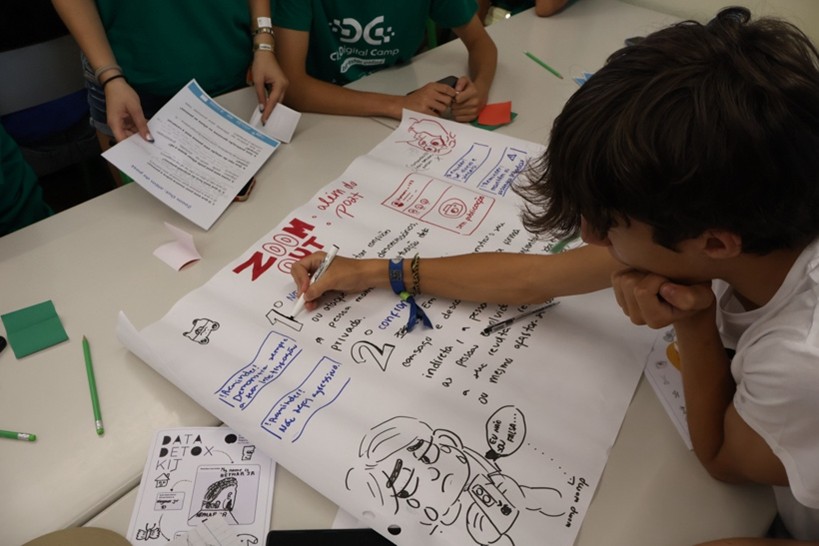
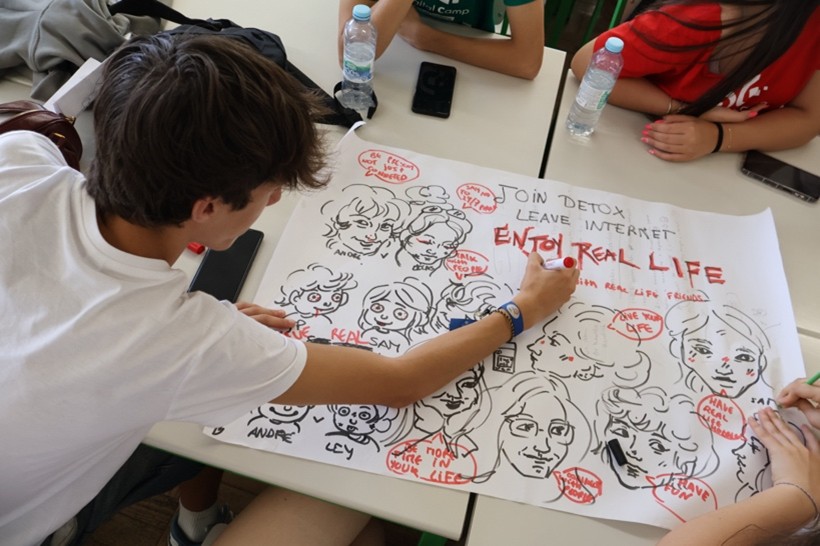
Hosted by the Polytechnic Institute in Santarém from 4 to 6 August 2025 and under the theme “Online wellbeing: conscious choices”, the second CIS Digital Camp shifted the focus to digital health and balance. The opening speech emphasised the link between digital safety and wellbeing. The workshop led by the UNESCO Chair stimulated critical discussions on screen time, social comparisons, digital stress and online pressure.
Group discussions under the question “Are you in control or is it your phone?” led to lively discussions about screen addiction and the illusion of perfection on social media. Beatriz Jorge, 18, from Setúbal said: “These conversations show us that we are not alone with these challenges”.
The sessions on privacy, misinformation and digital detox were supported by experts from APAV, Microsoft, IPDJ and ERC, who explored the role of design, data and algorithmic filtering in shaping mental health. During these days, students were invited to create multimedia campaigns to promote digital wellbeing, combining creative outputs with critical reflection.
The third camp
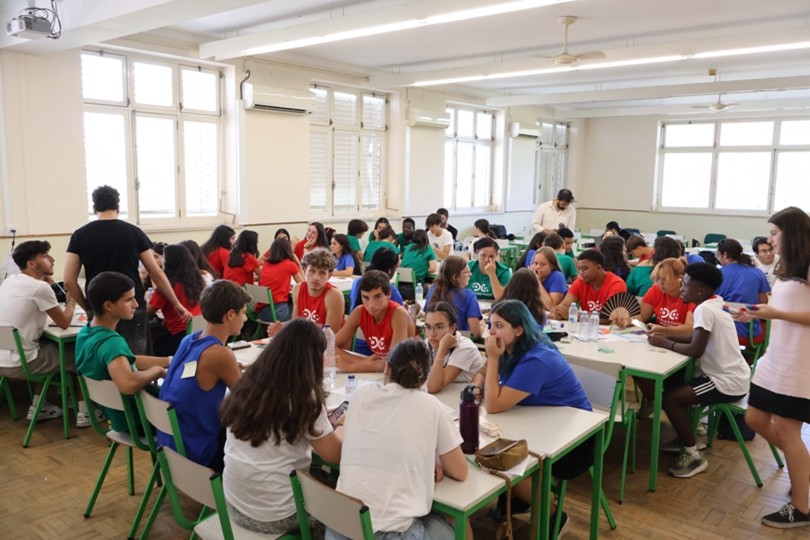
The third CIS Digital Camp took place at the Colégio da Imaculada Conceição and gathered 30 students under the theme “Artificial intelligence, used wisely”. The Portuguese Safer Internet Centre opened the event by demystifying the everyday presence of AI and emphasising the importance of understanding its risks and responsibilities. Sessions led by APAV, Microsoft, IPDJ and CNCS discussed topics such as filter bubbles, deepfakes, identity theft, surveillance and the fine line between free speech and online hate speech.
From analysing real and AI-generated images, to participating in structured debates on the topic of “Are humans losing their power to AI?”, students were made to reflect on their agency and ethical compass in a data-driven world.
“It is important to see AI as a helper and not as the creator of our work”
Íris Nunes, 18, aspiring graphic designer
The camp culminated with the development of an awareness-raising campaign on the topic that will be disseminated in the project social media channels.
The CIS Digital Camp is a national commitment to digital empowerment. In the first three editions of 2025, the initiative has already reached over 130 young people from all over Portugal, equipping them not only with knowledge, but also with self-confidence and a sense of community.
Find more information about the work of the Portuguese Safer Internet Centre, including its awareness raising, helpline, hotline, and youth participation services, or find similar information for other Safer Internet Centres throughout Europe.


In a world that is increasingly characterised by algorithms, screens and artificial intelligence, it is more urgent than ever to prepare young people to navigate the digital world critically, consciously and safely. The CIS Digital Camp, an initiative of the Portuguese Safer Internet Centre (CIS) coordinated by the Portuguese National Cybersecurity Centre (CNCS), is a bold and timely response to this challenge.
These three-day camps bring together secondary and vocational school students aged 15 to 18 from across Portugal and are held in different regions of the country. The CIS Digital Camp follows a dynamic and participatory methodology: workshops, debates, simulations, and creative challenges combine to promote digital citizenship based on ethics, empathy and critical thinking. Each edition focuses on a specific digital theme that aligns with the Council of Europe's European year of digital citizenship education 2025, and its three pillars: being online, wellbeing online, and rights and responsibilities online.
The first camp
The first camp took place from 23 to 25 July 2025 at the Polytechnic Institute of Lisbon under the theme “Cyberbullying: the impact is real”. It brought together 50 students to tackle the complex issue of cyberbullying. The opening session, led by the Portuguese Safer Internet Centre, highlighted the psychological and social impact of online violence, emphasising its persistence, anonymity and potential for escalation through images and videos.
Participants explored the differences between traditional and digital bullying and learnt about support services offered such as Linha Internet Segura. The topics of freedom of expression, digital empathy and the role of opinion leaders were discussed in interactive sessions. These included provocative questions such as “Does humour have limits?” and “Should public figures be held accountable for online statements?”.
Testimonials, such as that of Ana Baía, 17, from Évora, confirmed the relevance of the topic: “We are the generation of technology, it is part of our lives. These activities make it real and help us to think together.”
Workshops on media literacy and real-life digital dilemmas encouraged students to examine their own digital behaviour and suggest responsible alternatives.
The second camp
Hosted by the Polytechnic Institute in Santarém from 4 to 6 August 2025 and under the theme “Online wellbeing: conscious choices”, the second CIS Digital Camp shifted the focus to digital health and balance. The opening speech emphasised the link between digital safety and wellbeing. The workshop led by the UNESCO Chair stimulated critical discussions on screen time, social comparisons, digital stress and online pressure.
Group discussions under the question “Are you in control or is it your phone?” led to lively discussions about screen addiction and the illusion of perfection on social media. Beatriz Jorge, 18, from Setúbal said: “These conversations show us that we are not alone with these challenges”.
The sessions on privacy, misinformation and digital detox were supported by experts from APAV, Microsoft, IPDJ and ERC, who explored the role of design, data and algorithmic filtering in shaping mental health. During these days, students were invited to create multimedia campaigns to promote digital wellbeing, combining creative outputs with critical reflection.
The third camp
The third CIS Digital Camp took place at the Colégio da Imaculada Conceição and gathered 30 students under the theme “Artificial intelligence, used wisely”. The Portuguese Safer Internet Centre opened the event by demystifying the everyday presence of AI and emphasising the importance of understanding its risks and responsibilities. Sessions led by APAV, Microsoft, IPDJ and CNCS discussed topics such as filter bubbles, deepfakes, identity theft, surveillance and the fine line between free speech and online hate speech.
From analysing real and AI-generated images, to participating in structured debates on the topic of “Are humans losing their power to AI?”, students were made to reflect on their agency and ethical compass in a data-driven world.
“It is important to see AI as a helper and not as the creator of our work”
Íris Nunes, 18, aspiring graphic designer
The camp culminated with the development of an awareness-raising campaign on the topic that will be disseminated in the project social media channels.
The CIS Digital Camp is a national commitment to digital empowerment. In the first three editions of 2025, the initiative has already reached over 130 young people from all over Portugal, equipping them not only with knowledge, but also with self-confidence and a sense of community.
Find more information about the work of the Portuguese Safer Internet Centre, including its awareness raising, helpline, hotline, and youth participation services, or find similar information for other Safer Internet Centres throughout Europe.
- artificial intelligence (AI) cyberbullying digital health screen time misinformation
Related content
- < Previous article
- Next article >
- < Previous
- Next >
Related articles


