
At the event, digital literacy, online safety and digital citizenship were promoted in a playful way, and a gamified environment stimulated critical thinking and problem-solving skills.

Lisbon Games Week (LGW) is the largest video game event in Portugal, bringing together the gaming, e-sports, cosplay, and pop culture communities to showcase industry news, new releases, and immersive experiences. It serves as a meeting point for enthusiasts of all ages – particularly children and young people – with dedicated areas for games, competitions, virtual reality, and racing simulations (Sim Racing).
At the same time, the event also featured an institutional, pedagogical, and technological dimension, with a focus on the future of professions linked to this ecosystem. A strong educational component highlighted the role of new technologies in education, online safety, and digital citizenship.
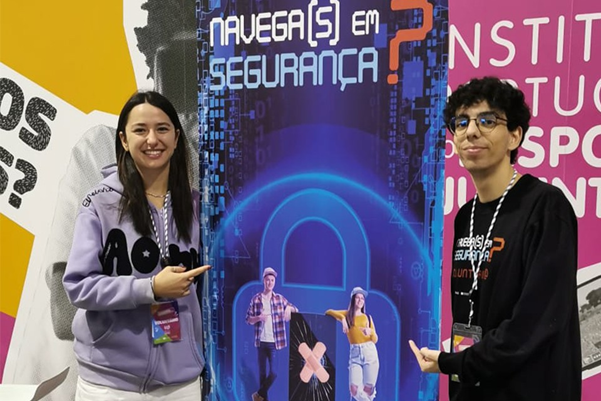
The Portuguese Safer Internet Centre at the event
The presence of IPDJ (part of the Portuguese Safer Internet Centre) aimed to promote digital literacy from an early age:
- engage young people, parents, and teachers in discussions on online safety and digital citizenship,
- stimulate critical thinking and problem-solving through a gamified approach,
- raise awarenees about IPDJ initiatives, particularly within the framework of the Safer Internet Centre (SIC).
From a pedagogical perspective, the IPDJ booth combined entertainment, information, and counselling on internet safety, digital citizenship and participation, raising awareness of topics such as:
- gaming and social integration
- online addiction
- fake news
- Cyberbullying
- internet of things
- hate speech
- artificial Intelligence
- social networks, among others topics.
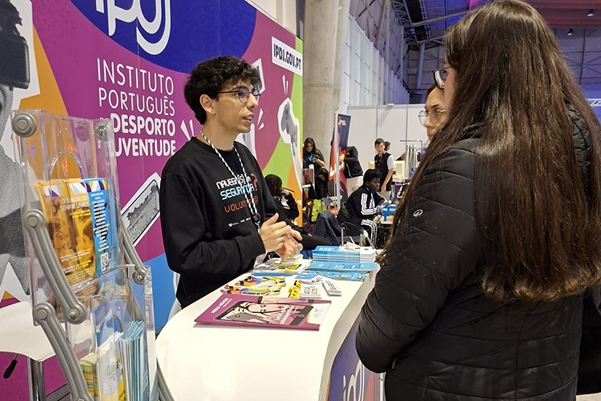
The activities at the IPDJ booth included:
- an information and advice area, with a strong focus on internet safety and digital citizenship;
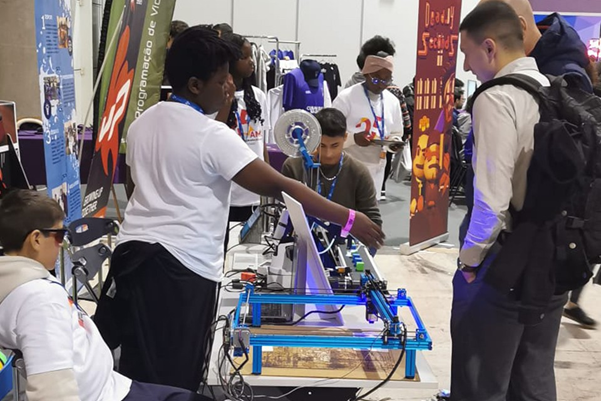
- a robotics, programming, microelectronics, modelling, and 3D printing zone, run by young people from the Escolhas Programme, with the support of monitors;
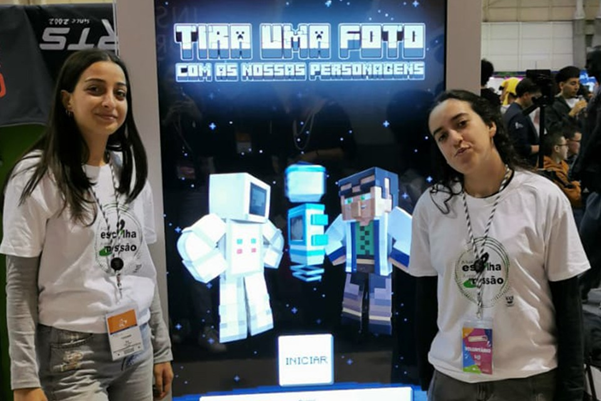
- a magic mirror app, a digital augmented-reality device that allowed users to take photos with digital characters from the Minecraft game “Cyberstation Space Atlas”, developed by the National Cybersecurity Centre (CNCS). This provided an educational experience within the Minecraft Education universe;
- a gaming area featuring a special Minecraft skin – Cyberstation Space Atlas – a virtual world designed to teach basic internet safety practices to elementary and secondary school students through interactive challenges and engaging narratives, such as creating strong passwords, using two-factor authentication, rebuilding firewalls, and recognising fake profiles
As part of the parallel sessions of the fair, IPDJ organised the following initiatives:
- two workshops on 20 and 21 November: online gaming and addiction
led by volunteers from the IPDJ programme “Navig@s em Segurança?”: João Brás, Simão Dias, and Yaroslava Kryvokhyzha.
Using non-formal education methods, the volunteers addressed the topic in an interactive way with young visitors from elementary and secondary schools, as well as teachers attending LGW. - talk on 21 November: “Brains in network: gaming, social media and the labyrinth of well-being”
Organised within the scope of the Cuida-te programme, this session featured two psychologists from the national coordination of the programme. Encouraging audience interaction, the speakers started from basic concepts related to the persuasive design of gaming and social networks and went on to systematise attitudes that help minimise the negative impacts of their use in the short, medium, and long term.
Find more information about the work of the Portuguese Safer Internet Centre, including its awareness raising, helpline, hotline, and youth participation services, or find similar information for other Safer Internet Centres throughout Europe.
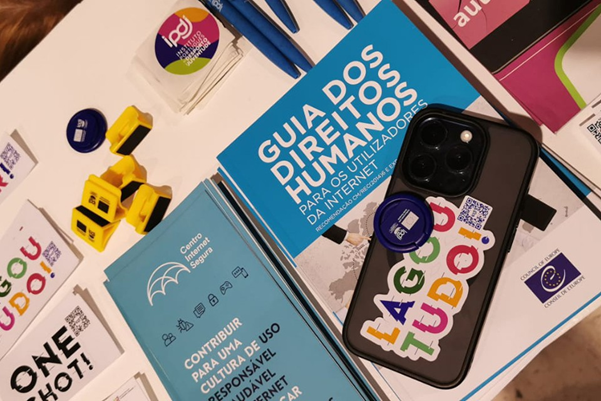


At the event, digital literacy, online safety and digital citizenship were promoted in a playful way, and a gamified environment stimulated critical thinking and problem-solving skills.
Lisbon Games Week (LGW) is the largest video game event in Portugal, bringing together the gaming, e-sports, cosplay, and pop culture communities to showcase industry news, new releases, and immersive experiences. It serves as a meeting point for enthusiasts of all ages – particularly children and young people – with dedicated areas for games, competitions, virtual reality, and racing simulations (Sim Racing).
At the same time, the event also featured an institutional, pedagogical, and technological dimension, with a focus on the future of professions linked to this ecosystem. A strong educational component highlighted the role of new technologies in education, online safety, and digital citizenship.
The Portuguese Safer Internet Centre at the event
The presence of IPDJ (part of the Portuguese Safer Internet Centre) aimed to promote digital literacy from an early age:
- engage young people, parents, and teachers in discussions on online safety and digital citizenship,
- stimulate critical thinking and problem-solving through a gamified approach,
- raise awarenees about IPDJ initiatives, particularly within the framework of the Safer Internet Centre (SIC).
From a pedagogical perspective, the IPDJ booth combined entertainment, information, and counselling on internet safety, digital citizenship and participation, raising awareness of topics such as:
- gaming and social integration
- online addiction
- fake news
- Cyberbullying
- internet of things
- hate speech
- artificial Intelligence
- social networks, among others topics.
The activities at the IPDJ booth included:
- an information and advice area, with a strong focus on internet safety and digital citizenship;
- a robotics, programming, microelectronics, modelling, and 3D printing zone, run by young people from the Escolhas Programme, with the support of monitors;
- a magic mirror app, a digital augmented-reality device that allowed users to take photos with digital characters from the Minecraft game “Cyberstation Space Atlas”, developed by the National Cybersecurity Centre (CNCS). This provided an educational experience within the Minecraft Education universe;
- a gaming area featuring a special Minecraft skin – Cyberstation Space Atlas – a virtual world designed to teach basic internet safety practices to elementary and secondary school students through interactive challenges and engaging narratives, such as creating strong passwords, using two-factor authentication, rebuilding firewalls, and recognising fake profiles
As part of the parallel sessions of the fair, IPDJ organised the following initiatives:
- two workshops on 20 and 21 November: online gaming and addiction
led by volunteers from the IPDJ programme “Navig@s em Segurança?”: João Brás, Simão Dias, and Yaroslava Kryvokhyzha.
Using non-formal education methods, the volunteers addressed the topic in an interactive way with young visitors from elementary and secondary schools, as well as teachers attending LGW. - talk on 21 November: “Brains in network: gaming, social media and the labyrinth of well-being”
Organised within the scope of the Cuida-te programme, this session featured two psychologists from the national coordination of the programme. Encouraging audience interaction, the speakers started from basic concepts related to the persuasive design of gaming and social networks and went on to systematise attitudes that help minimise the negative impacts of their use in the short, medium, and long term.
Find more information about the work of the Portuguese Safer Internet Centre, including its awareness raising, helpline, hotline, and youth participation services, or find similar information for other Safer Internet Centres throughout Europe.
- gaming cybersecurity online safety video-games
Related content
- < Previous article
- Next article >
- < Previous
- Next >
Related articles


