

The Hungarian Safer Internet Centre (SIC), operated by the International Children’s Safety Service (ICSS), organised its Media and Internet Conference on 11-12 September 2025. A wide range of speakers were invited to present their perspectives on how digital child welfare can be enhanced, to share insights into current trends, and to put forward recommendations.

The conference proved to be an excellent forum for professionals and representatives of related fields to meet, exchange experiences, and establish new forms of cooperation. For this reason, the SIC invited policy makers, psychologists, social media experts, ethical hackers, lawyers, teachers, police officers, family safety expert, cybersecurity specialists, linguists, and child protection professionals.
Emphasis was placed on ensuring that children were not only spoken about, but also given the opportunity to share their voices and experiences themselves. To this end, the SIC organised a special youth panel, where three young participants shared their online habits and experiences.
Conference topics
For this edition, the conference focused on the most severe online risks, such as cyberbullying, sexting, gaming, and the challenges posed by the presence of child sexual abuse material in the online space. Artificial intelligence was also one of the main topics, addressed from several perspectives: its use within families and the education system, parasocial interactions, loneliness, regulatory issues, and an envisioned version of an AI-assisted future. One session focused specifically on how online child protection should be integrated into public education, and what kind of training is needed for professionals working in this field.
Several panel discussions also took place. The first focused on young victims of cybercrime, highlighting how easily children themselves can become involved in committing cyber offenses. Another discussion addressed the mental health challenges of young people, and was open to audience participation through an online platform, where viewers could submit questions. Among the questions raised was whether bullying should be considered a “normal” group dynamic phenomenon and how it can best be addressed.
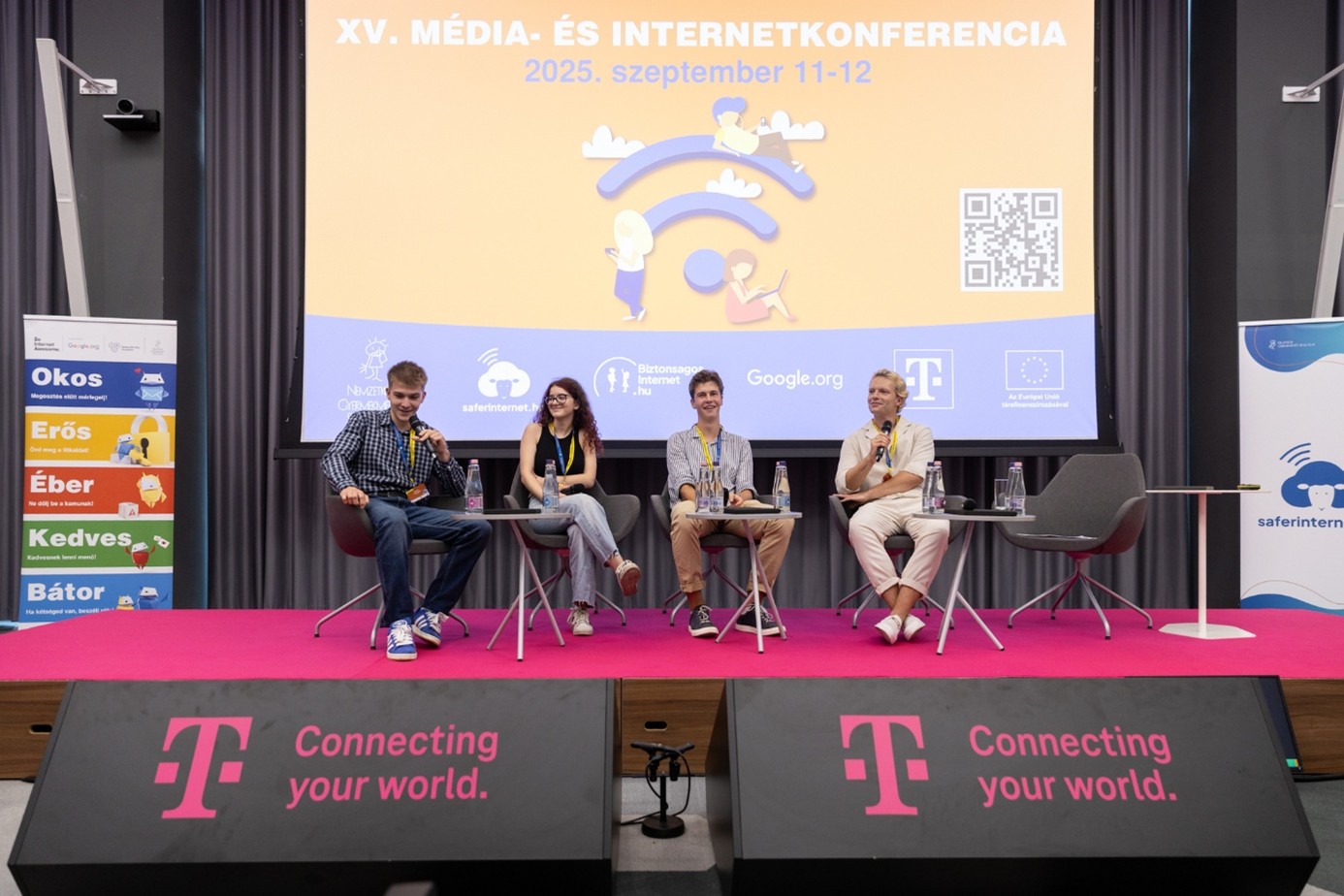
At the youth panel, participants expressed their views on the presence of public figures on TikTok, described how consciously they manage their own presence on social media, how much attention they pay to their digital footprint, and whether it is possible to create content that is both meaningful and popular.
Over the course of the two-day conference, more than two hundred participants attended the presentations in person, while many others followed the event online. Recordings are already available on the International Children’s Safety Service’s YouTube channel. Next year’s conference will partly focus on the impact of media and the internet on children’s physical well-being and health.
The venue for the event was once again provided by Magyar Telekom.
Find more information about the work of the Hungarian Safer Internet Centre, including their awareness raising, helpline, hotline and youth participation services, or find similar information for other Safer Internet Centres throughout Europe.


More from this author


The Hungarian Safer Internet Centre (SIC), operated by the International Children’s Safety Service (ICSS), organised its Media and Internet Conference on 11-12 September 2025. A wide range of speakers were invited to present their perspectives on how digital child welfare can be enhanced, to share insights into current trends, and to put forward recommendations.
The conference proved to be an excellent forum for professionals and representatives of related fields to meet, exchange experiences, and establish new forms of cooperation. For this reason, the SIC invited policy makers, psychologists, social media experts, ethical hackers, lawyers, teachers, police officers, family safety expert, cybersecurity specialists, linguists, and child protection professionals.
Emphasis was placed on ensuring that children were not only spoken about, but also given the opportunity to share their voices and experiences themselves. To this end, the SIC organised a special youth panel, where three young participants shared their online habits and experiences.
Conference topics
For this edition, the conference focused on the most severe online risks, such as cyberbullying, sexting, gaming, and the challenges posed by the presence of child sexual abuse material in the online space. Artificial intelligence was also one of the main topics, addressed from several perspectives: its use within families and the education system, parasocial interactions, loneliness, regulatory issues, and an envisioned version of an AI-assisted future. One session focused specifically on how online child protection should be integrated into public education, and what kind of training is needed for professionals working in this field.
Several panel discussions also took place. The first focused on young victims of cybercrime, highlighting how easily children themselves can become involved in committing cyber offenses. Another discussion addressed the mental health challenges of young people, and was open to audience participation through an online platform, where viewers could submit questions. Among the questions raised was whether bullying should be considered a “normal” group dynamic phenomenon and how it can best be addressed.
At the youth panel, participants expressed their views on the presence of public figures on TikTok, described how consciously they manage their own presence on social media, how much attention they pay to their digital footprint, and whether it is possible to create content that is both meaningful and popular.
Over the course of the two-day conference, more than two hundred participants attended the presentations in person, while many others followed the event online. Recordings are already available on the International Children’s Safety Service’s YouTube channel. Next year’s conference will partly focus on the impact of media and the internet on children’s physical well-being and health.
The venue for the event was once again provided by Magyar Telekom.
Find more information about the work of the Hungarian Safer Internet Centre, including their awareness raising, helpline, hotline and youth participation services, or find similar information for other Safer Internet Centres throughout Europe.
- artificial intelligence (AI) cybercrime mental health sexting gaming
Related content
- < Previous article
- Next article >
More from this author
Related articles


