
This article explores what the EU Action plan against cyberbullying could mean in practice. It examines how existing national measures might evolve in response to the action plan’s priorities and highlights key considerations that may shape implementation in the years ahead.

The digital engagement and online presence of young people continues to expand worldwide, bringing both opportunities and risks. In recent years, cyberbullying has remained one of the most persistent concerns identified through the European Safer Internet Centres. This trend is also reflected in evidence from multiple sources. The World Health Organisation (WHO) findings show that 1 in 6 adolescents have experienced cyberbullying, and 1 in 8 admit to having participated in it. Against this backdrop, the European Commission adopted the EU Action plan against cyberbullying on 10 February 2026, to foster a common approach to strengthen prevention, improve reporting, and enhance support for victims across the EU. The plan presents 22 concrete actions: 13 of them will be implemented by the European Commission, and 9 should be delivered by the Member States to better align efforts, make data easier to compare, and strengthen cooperation between key actors.
This article explores what this framework could mean in practice. It examines how existing national measures might evolve in response to the action plan’s priorities and highlights key considerations that may shape implementation in the years ahead.
The EU action plan: key elements
The action plan outlines an EU-wide approach to cyberbullying and builds on existing national and EU efforts. It is organised around three interlinked pillars and states clearly that tackling cyberbullying requires collaboration at all levels of governance […] as well as a whole-of-society approach.
At a high level, Pillar I focuses on strengthening coordination and the conditions for a more comparable knowledge across Member States; Pillar II focuses on prevention through digital literacy and awareness; and Pillar III emphasises improving pathways for reporting and access to support for victims.
The following section translates these priorities into practical considerations, focusing on how the main components of prevention, reporting and support may need to connect in practice.
From plan to practice
The EU action plan does not set out one standard approach to tackling cyberbullying. Instead, it identifies the core elements that should be strengthened and aligned across EU countries:
- A clearer common understanding of cyberbullying.
- A stronger evidence base for policymaking.
- Effective prevention measures.
- More user-friendly reporting options.
- Timely and effective responses to cyberbullying incidents.
- More reliable support pathways for victims.
Common understanding and policy alignment
A major theme in the action plan is the need for a shared understanding of cyberbullying, including how it relates to other forms of online illegal and harmful content and offline bullying. While a large number of EU countries have enacted (direct or indirect) legislation to address this phenomenon, recent analysis suggests that only around a third provide a definition of it.
A widely accepted understanding matters because cyberbullying is a multifaceted and evolving phenomenon, articulated through a range of behaviours, which can change quickly as technologies evolve; consequently, it rarely fits neatly within a single policy or service framework. This complexity can create uncertainty about what is in scope and how responsibilities are divided among actors.
In practical terms, a shared understanding can facilitate more coordinated monitoring and response strategies at Member State level, by helping different sectors and countries recognise and record the same phenomenon more consistently. It would also support countries in designing common research and measurement tools, comparing findings, and building a stronger evidence base for effective interventions. Over time, this can help clarify how cyberbullying incidents are recorded for monitoring purposes and when cases may need to move beyond a school-based response to specialised support.
Evidence base
The action plan also highlights the need to strengthen the evidence base and improve data comparability. It thus recognises that inconsistent measurement makes it difficult to identify trends and assess policy responses to the issue of cyberbullying.
Translating this into practice will involve agreeing on a set of indicators that can be used across countries and sectors, and clarifying how different data sources relate to one another – for example, data from helplines, school incident reports, survey findings, and, where relevant, law enforcement data. It also implies using evidence more actively: data should not only be collected but also used to inform, for instance, prevention strategies, training needs for professionals, and the allocation of resources.
Making evidence more comparable and actionable will depend on a few fundamentals: using methods that allow consistent comparisons across countries, establishing clear responsibilities for collecting, validating and analysing information across sectors, and ensuring the privacy and protection of children. To this end, the Commission will, within the framework of the action plan, issue guidance on a common data collection framework and indicators.
Prevention measures
The prevention and awareness pillar of the action plan emphasises the importance of digital literacy, professional training and continued action to reduce the likelihood and impact of cyberbullying. Prevention is most effective when it is part of day-to-day work in schools/youth settings, not just a one-off awareness campaign.
Putting this into practice can involve making digital citizenship (i.e., responsible and respectful online behaviour) a normal part of school learning, and equipping teachers and youth workers with practical guidance on early identification and responses to cyberbullying.
This can include regular classroom discussions, clear school rules on online behaviour, and agreed procedures for staff on how to respond when problems arise. It also helps when the advice children receive is consistent across schools, Safer Internet Centres and other support services, and when training materials are updated as new patterns emerge in helpline and other survey data.
Reporting options
The action plan places particular emphasis on how children and young people can report cyberbullying in ways that are clear, trusted and accessible. In practice, this goes beyond having just a reporting channel. Children need to be able to find the right channel promptly, understand what will happen after they report, and feel confident they will not lose control of the situation or be exposed to further harm. Reporting mechanisms also need to fit the places and contexts where cyberbullying takes place, rather than being designed for a single online environment.
Accordingly, one concrete action mentioned in this context is the European Commission’s intention to support the development and uptake of an online safety app across all Member States, intended to help children and young people report incidents and access support services in a straightforward way.
However, the action plan emphasises that reporting is only the first step, as it should lead to a timely response, including access to multidisciplinary support (online and offline) and involvement of all relevant authorities. In practice, this means that children may seek help through different routes – for example, via a school contact point, a helpline, a newly designed app, or a platform’s own reporting tool; the key question is how these reporting routes connect to each other without operating as “separate islands”, and in a way that responsibilities are clear. On this, the action plan is explicit that online platforms remain responsible for effective reporting mechanisms, and that the success of the online safety app depends on the availability of national support and follow-up.
Responses to incidents
The action plan makes clear that reporting must be accompanied by an effective response system. Once a cyberbullying incident is reported, the main point is that this should lead to a timely, coordinated response, and access to proportionate support – both online and offline – including psychological support, help from educators and, where needed, child protection services. The effectiveness of response systems also depends on capacity. Even well-designed reporting tools will have limited impact if national support services lack the resources needed to respond quickly to reported issues.
Finally, service continuity is essential: support should not end after the first contact but must include follow-ups to ensure children are not targeted again and that interventions genuinely improve their well-being and safety. As different services handle different aspects of the response, it is crucial that handovers between them are seamless so victims are not passed from one contact point to another without care and coordination.
What’s next?
The action plan signals several strands of work envisaged for 2026 that will shape how cyberbullying is addressed across the EU policy toolbox. In relation to platform governance, the European Commission plans to expand the focus on cyberbullying in the review of the Digital Services Act (DSA) guidelines on the protection of minors and to adopt DSA guidelines on trusted flaggers, clarifying their role in tackling illegal content.
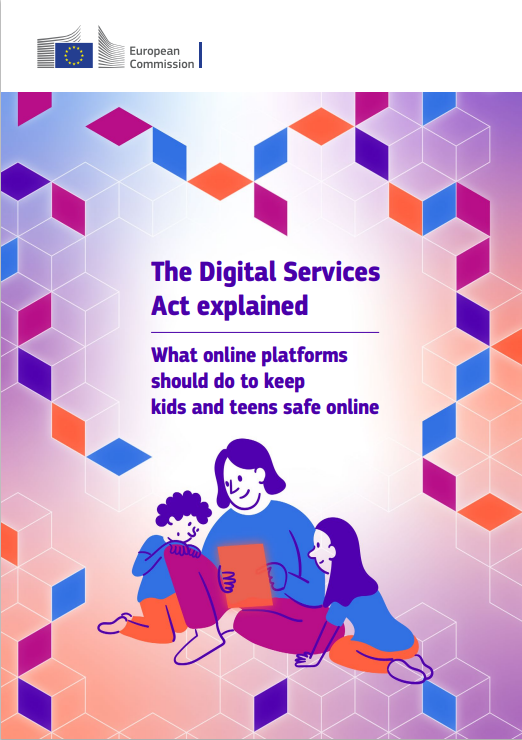 | Read the family-friendly booklet: "The Digital Services Act (DSA) explained. What online platforms should do to keep kids and teens safe online". |
In parallel, the evaluation of the Audiovisual Media Services Directive (AVMSD) will assess ways to address cyberbullyingon video-sharing platforms. The action plan also notes the relevance of the AI Act provisions on prohibited AI practices for addressing cyberbullying.
For prevention and awareness, in 2026, the Commission intends to address cyberbullying in an update of guidelines for teachers and educators on tackling disinformation and promoting digital literacy. The Commission also aims to expand cyberbullying resources and training for schools and non-formal and informal education (for example, via the BIK platform, Safer Internet Centres, and other EU channels such as the European Youth Portal). Further work on digital competence, cyberbullying prevention and digital well-being is expected through the 2030 roadmap on the future of digital education and skills, alongside a contribution to the forthcoming EU action plan on the protection of children against crime towards the end of the year.
On reporting and support, a key development to watch from late summer onwards is the Commission’s preparatory work on an online safety app, building on existing national models. The action plan describes it as a tool for easy reporting, secure storing of evidence, and tailored assistance; however, any broader deployment is expected to unfold over time and will depend on Member States' uptake. The app is also envisaged as something online platforms could integrate into their own reporting and user-support tools.
Overall, the action plan points towards a more coordinated approach, bringing together efforts by Member States, Safer Internet Centres, civil society, industry, international organisations, and children themselves. In practice, progress will depend less on any single measure than on how well prevention, reporting and support pathways connect end-to-end, and on whether evidence can be gathered and used more consistently across countries. As the 2026 work strands develop, the BIK Knowledge hub will continue to follow these developments and share relevant resources and emerging practices.
Interested in more?

Explore other relevant research in the Research and reports directory of the BIK Knowledge hub. Together with the BIK Policy monitor, it is updated annually and collates research that informs the implementation of the BIK+ strategy across the EU Member States, Iceland, and Norway.


More from this author


This article explores what the EU Action plan against cyberbullying could mean in practice. It examines how existing national measures might evolve in response to the action plan’s priorities and highlights key considerations that may shape implementation in the years ahead.
The digital engagement and online presence of young people continues to expand worldwide, bringing both opportunities and risks. In recent years, cyberbullying has remained one of the most persistent concerns identified through the European Safer Internet Centres. This trend is also reflected in evidence from multiple sources. The World Health Organisation (WHO) findings show that 1 in 6 adolescents have experienced cyberbullying, and 1 in 8 admit to having participated in it. Against this backdrop, the European Commission adopted the EU Action plan against cyberbullying on 10 February 2026, to foster a common approach to strengthen prevention, improve reporting, and enhance support for victims across the EU. The plan presents 22 concrete actions: 13 of them will be implemented by the European Commission, and 9 should be delivered by the Member States to better align efforts, make data easier to compare, and strengthen cooperation between key actors.
This article explores what this framework could mean in practice. It examines how existing national measures might evolve in response to the action plan’s priorities and highlights key considerations that may shape implementation in the years ahead.
The EU action plan: key elements
The action plan outlines an EU-wide approach to cyberbullying and builds on existing national and EU efforts. It is organised around three interlinked pillars and states clearly that tackling cyberbullying requires collaboration at all levels of governance […] as well as a whole-of-society approach.
At a high level, Pillar I focuses on strengthening coordination and the conditions for a more comparable knowledge across Member States; Pillar II focuses on prevention through digital literacy and awareness; and Pillar III emphasises improving pathways for reporting and access to support for victims.
The following section translates these priorities into practical considerations, focusing on how the main components of prevention, reporting and support may need to connect in practice.
From plan to practice
The EU action plan does not set out one standard approach to tackling cyberbullying. Instead, it identifies the core elements that should be strengthened and aligned across EU countries:
- A clearer common understanding of cyberbullying.
- A stronger evidence base for policymaking.
- Effective prevention measures.
- More user-friendly reporting options.
- Timely and effective responses to cyberbullying incidents.
- More reliable support pathways for victims.
Common understanding and policy alignment
A major theme in the action plan is the need for a shared understanding of cyberbullying, including how it relates to other forms of online illegal and harmful content and offline bullying. While a large number of EU countries have enacted (direct or indirect) legislation to address this phenomenon, recent analysis suggests that only around a third provide a definition of it.
A widely accepted understanding matters because cyberbullying is a multifaceted and evolving phenomenon, articulated through a range of behaviours, which can change quickly as technologies evolve; consequently, it rarely fits neatly within a single policy or service framework. This complexity can create uncertainty about what is in scope and how responsibilities are divided among actors.
In practical terms, a shared understanding can facilitate more coordinated monitoring and response strategies at Member State level, by helping different sectors and countries recognise and record the same phenomenon more consistently. It would also support countries in designing common research and measurement tools, comparing findings, and building a stronger evidence base for effective interventions. Over time, this can help clarify how cyberbullying incidents are recorded for monitoring purposes and when cases may need to move beyond a school-based response to specialised support.
Evidence base
The action plan also highlights the need to strengthen the evidence base and improve data comparability. It thus recognises that inconsistent measurement makes it difficult to identify trends and assess policy responses to the issue of cyberbullying.
Translating this into practice will involve agreeing on a set of indicators that can be used across countries and sectors, and clarifying how different data sources relate to one another – for example, data from helplines, school incident reports, survey findings, and, where relevant, law enforcement data. It also implies using evidence more actively: data should not only be collected but also used to inform, for instance, prevention strategies, training needs for professionals, and the allocation of resources.
Making evidence more comparable and actionable will depend on a few fundamentals: using methods that allow consistent comparisons across countries, establishing clear responsibilities for collecting, validating and analysing information across sectors, and ensuring the privacy and protection of children. To this end, the Commission will, within the framework of the action plan, issue guidance on a common data collection framework and indicators.
Prevention measures
The prevention and awareness pillar of the action plan emphasises the importance of digital literacy, professional training and continued action to reduce the likelihood and impact of cyberbullying. Prevention is most effective when it is part of day-to-day work in schools/youth settings, not just a one-off awareness campaign.
Putting this into practice can involve making digital citizenship (i.e., responsible and respectful online behaviour) a normal part of school learning, and equipping teachers and youth workers with practical guidance on early identification and responses to cyberbullying.
This can include regular classroom discussions, clear school rules on online behaviour, and agreed procedures for staff on how to respond when problems arise. It also helps when the advice children receive is consistent across schools, Safer Internet Centres and other support services, and when training materials are updated as new patterns emerge in helpline and other survey data.
Reporting options
The action plan places particular emphasis on how children and young people can report cyberbullying in ways that are clear, trusted and accessible. In practice, this goes beyond having just a reporting channel. Children need to be able to find the right channel promptly, understand what will happen after they report, and feel confident they will not lose control of the situation or be exposed to further harm. Reporting mechanisms also need to fit the places and contexts where cyberbullying takes place, rather than being designed for a single online environment.
Accordingly, one concrete action mentioned in this context is the European Commission’s intention to support the development and uptake of an online safety app across all Member States, intended to help children and young people report incidents and access support services in a straightforward way.
However, the action plan emphasises that reporting is only the first step, as it should lead to a timely response, including access to multidisciplinary support (online and offline) and involvement of all relevant authorities. In practice, this means that children may seek help through different routes – for example, via a school contact point, a helpline, a newly designed app, or a platform’s own reporting tool; the key question is how these reporting routes connect to each other without operating as “separate islands”, and in a way that responsibilities are clear. On this, the action plan is explicit that online platforms remain responsible for effective reporting mechanisms, and that the success of the online safety app depends on the availability of national support and follow-up.
Responses to incidents
The action plan makes clear that reporting must be accompanied by an effective response system. Once a cyberbullying incident is reported, the main point is that this should lead to a timely, coordinated response, and access to proportionate support – both online and offline – including psychological support, help from educators and, where needed, child protection services. The effectiveness of response systems also depends on capacity. Even well-designed reporting tools will have limited impact if national support services lack the resources needed to respond quickly to reported issues.
Finally, service continuity is essential: support should not end after the first contact but must include follow-ups to ensure children are not targeted again and that interventions genuinely improve their well-being and safety. As different services handle different aspects of the response, it is crucial that handovers between them are seamless so victims are not passed from one contact point to another without care and coordination.
What’s next?
The action plan signals several strands of work envisaged for 2026 that will shape how cyberbullying is addressed across the EU policy toolbox. In relation to platform governance, the European Commission plans to expand the focus on cyberbullying in the review of the Digital Services Act (DSA) guidelines on the protection of minors and to adopt DSA guidelines on trusted flaggers, clarifying their role in tackling illegal content.
| Read the family-friendly booklet: "The Digital Services Act (DSA) explained. What online platforms should do to keep kids and teens safe online". |
In parallel, the evaluation of the Audiovisual Media Services Directive (AVMSD) will assess ways to address cyberbullyingon video-sharing platforms. The action plan also notes the relevance of the AI Act provisions on prohibited AI practices for addressing cyberbullying.
For prevention and awareness, in 2026, the Commission intends to address cyberbullying in an update of guidelines for teachers and educators on tackling disinformation and promoting digital literacy. The Commission also aims to expand cyberbullying resources and training for schools and non-formal and informal education (for example, via the BIK platform, Safer Internet Centres, and other EU channels such as the European Youth Portal). Further work on digital competence, cyberbullying prevention and digital well-being is expected through the 2030 roadmap on the future of digital education and skills, alongside a contribution to the forthcoming EU action plan on the protection of children against crime towards the end of the year.
On reporting and support, a key development to watch from late summer onwards is the Commission’s preparatory work on an online safety app, building on existing national models. The action plan describes it as a tool for easy reporting, secure storing of evidence, and tailored assistance; however, any broader deployment is expected to unfold over time and will depend on Member States' uptake. The app is also envisaged as something online platforms could integrate into their own reporting and user-support tools.
Overall, the action plan points towards a more coordinated approach, bringing together efforts by Member States, Safer Internet Centres, civil society, industry, international organisations, and children themselves. In practice, progress will depend less on any single measure than on how well prevention, reporting and support pathways connect end-to-end, and on whether evidence can be gathered and used more consistently across countries. As the 2026 work strands develop, the BIK Knowledge hub will continue to follow these developments and share relevant resources and emerging practices.
Interested in more?
Explore other relevant research in the Research and reports directory of the BIK Knowledge hub. Together with the BIK Policy monitor, it is updated annually and collates research that informs the implementation of the BIK+ strategy across the EU Member States, Iceland, and Norway.
- cyberbullying hate speech policy harmful content
Related content
- < Previous article
- Next article >
More from this author
Related articles


