
The Insafe network of helplines collects data about the calls received, and this is analysed every three months in order to look at possible trends and emerging issues.

The most recent helpline data covers the period from July to September 2025. Helplines received over 14,300 contacts during this time, a slight reduction from the previous reporting period, which is to be expected as the timeframe encompasses the summer holidays when many helplines have fewer contacts. Teens (aged 12 to 18) are the group most commonly reaching out to helplines, accounting for almost two-thirds of all contacts.
Cyberbullying continues to be the most common reason to reach out to a helpline, with 15 per cent of contacts related to this.
The online sexual coercion and extortion of children (sometimes referred to as sextortion) accounts for almost nine per cent of all contacts, which reflects the growing global concern about this issue. E-crime was also a significant concern, accounting for almost 10 per cent of contacts, and helplines have reported an increase in contacts about hacked accounts, scams, phishing emails, and similar issues. Safer Internet Centres are developing additional resources to address these issues.
Contact by phone is the most common way to reach a helpline, accounting for 48 per cent of contacts. This does represent a decrease from the previous reporting period, but, as mentioned previously, the reporting period covers the school holidays, with some helplines noting that it is more difficult for young people to make a voice call to a helpline during this time. In total, 24 per cent of callers use chat, with a further eight per cent using email, and four per cent an online form.
Where possible, helplines capture where a particular issue occurred. During this reporting period, of the cases where a particular platform or service was referenced, 44 per cent were on messaging platforms (such as WhatsApp, Signal, or Telegram) and 29 per cent were on social media platforms. Furthermore, 14 per cent took place within gaming environments and a further 12 per cent in XR/AR/VR environments.
Artificial intelligence (AI) continues to feature regularly in helpline reports, with counsellors noting that, in some cases, children and young people have used AI tools to help them generate their initial messages. Of course, this in itself is not problematic, but helplines have noted that it removes any personal insights from the message, which are often useful in determining an individual's state of mind and the best ways to provide support. Counsellors do, however, recognise that if these tools help users better articulate their situation, this can be positive.
The table below shows the percentage of contacts assigned to each category.
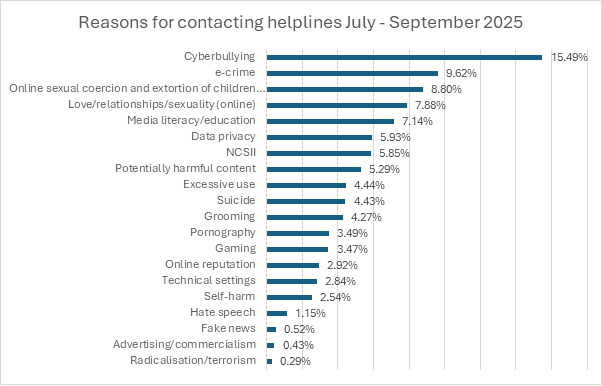
Figure 1 (above). Main reasons for contacting a helpline in Q3 2025 (July - September 2025)
Table 1 (below). Main reasons for contacting a helpline in Q3 2025 (July - September 2025)
Radicalisation/terrorism | 0.29% |
Advertising/commercialism | 0.43% |
Fake news | 0.52% |
Hate speech | 1.15% |
Technical settings | 2.84% |
Online reputation | 2.92% |
Gaming | 3.47% |
Pornography | 3.49% |
Grooming | 4.27% |
Suicide | 4.43% |
Excessive use | 4.44% |
Potentially harmful content | 5.29% |
NCSII | 5.85% |
Data privacy | 5.93% |
Media literacy/education | 7.14% |
Love/relationships/sexuality (online) | 7.88% |
Online sexual coercion and extortion of children (sextortion) | 8.80% |
e-crime | 9.62% |
Cyberbullying | 15.49% |
The infographic below provides a visual representation of many of the key points in the third quarter of 2025, all in the text above, from July to September 2025.

Figure 2 (above). Infographic summarising the main reasons for contacting a helpline in Q3 2025 (July – September 2025)
Click the image to see the infographic in full size.
Find out more about country-based helpline services, operating as part of the national Safer Internet Centre and keep up to date with news on helpline services and trends.


The Insafe network of helplines collects data about the calls received, and this is analysed every three months in order to look at possible trends and emerging issues.
The most recent helpline data covers the period from July to September 2025. Helplines received over 14,300 contacts during this time, a slight reduction from the previous reporting period, which is to be expected as the timeframe encompasses the summer holidays when many helplines have fewer contacts. Teens (aged 12 to 18) are the group most commonly reaching out to helplines, accounting for almost two-thirds of all contacts.
Cyberbullying continues to be the most common reason to reach out to a helpline, with 15 per cent of contacts related to this.
The online sexual coercion and extortion of children (sometimes referred to as sextortion) accounts for almost nine per cent of all contacts, which reflects the growing global concern about this issue. E-crime was also a significant concern, accounting for almost 10 per cent of contacts, and helplines have reported an increase in contacts about hacked accounts, scams, phishing emails, and similar issues. Safer Internet Centres are developing additional resources to address these issues.
Contact by phone is the most common way to reach a helpline, accounting for 48 per cent of contacts. This does represent a decrease from the previous reporting period, but, as mentioned previously, the reporting period covers the school holidays, with some helplines noting that it is more difficult for young people to make a voice call to a helpline during this time. In total, 24 per cent of callers use chat, with a further eight per cent using email, and four per cent an online form.
Where possible, helplines capture where a particular issue occurred. During this reporting period, of the cases where a particular platform or service was referenced, 44 per cent were on messaging platforms (such as WhatsApp, Signal, or Telegram) and 29 per cent were on social media platforms. Furthermore, 14 per cent took place within gaming environments and a further 12 per cent in XR/AR/VR environments.
Artificial intelligence (AI) continues to feature regularly in helpline reports, with counsellors noting that, in some cases, children and young people have used AI tools to help them generate their initial messages. Of course, this in itself is not problematic, but helplines have noted that it removes any personal insights from the message, which are often useful in determining an individual's state of mind and the best ways to provide support. Counsellors do, however, recognise that if these tools help users better articulate their situation, this can be positive.
The table below shows the percentage of contacts assigned to each category.
Figure 1 (above). Main reasons for contacting a helpline in Q3 2025 (July - September 2025)
Table 1 (below). Main reasons for contacting a helpline in Q3 2025 (July - September 2025)
Radicalisation/terrorism | 0.29% |
Advertising/commercialism | 0.43% |
Fake news | 0.52% |
Hate speech | 1.15% |
Technical settings | 2.84% |
Online reputation | 2.92% |
Gaming | 3.47% |
Pornography | 3.49% |
Grooming | 4.27% |
Suicide | 4.43% |
Excessive use | 4.44% |
Potentially harmful content | 5.29% |
NCSII | 5.85% |
Data privacy | 5.93% |
Media literacy/education | 7.14% |
Love/relationships/sexuality (online) | 7.88% |
Online sexual coercion and extortion of children (sextortion) | 8.80% |
e-crime | 9.62% |
Cyberbullying | 15.49% |
The infographic below provides a visual representation of many of the key points in the third quarter of 2025, all in the text above, from July to September 2025.
Figure 2 (above). Infographic summarising the main reasons for contacting a helpline in Q3 2025 (July – September 2025)
Click the image to see the infographic in full size.
Find out more about country-based helpline services, operating as part of the national Safer Internet Centre and keep up to date with news on helpline services and trends.
- < Previous article
- Next article >
- < Previous
- Next >
Related articles


