
This article is part of the campaign DSA for YOUth - Protecting minors by design, focusing on the DSA guidelines for the protection of minors under the DSA, including the age verification (AV) and age-appropriate (AA) measures, and translating these rules into clear, practical, and jargon-free resources. In this insight series, we explore how different Safer Internet Centres are working at the national level to raise awareness about the DSA and how it impacts the everyday lives of young people, their parents or caregivers, and teachers and educators.

The European Union has established a modern framework to ensure a transparent, accountable, and safe digital environment, with a particular focus on protecting children and young people. In Romania, the Safer Internet Centre (SIC Romania), coordinated by Save the Children Romania, has taken an active role in translating these principles into practice at the educational level. Through a national educational initiative launched on 26 September 2025, the Romanian SIC promotes digital education as a key driver for the practical implementation of the DSA across the national school community.
From regulation to educational practice
While the DSA introduces clear obligations for digital platforms, child protection online cannot rely solely on technical or regulatory measures. It also requires empowering children through education, developing critical thinking, awareness of online risks, and understanding of digital rights.
Based on this vision, SIC Romania has developed a comprehensive educational resources package that translates legal principles into age-appropriate, engaging classroom activities. They can be accessed on the SIC’s Ora de Net website.
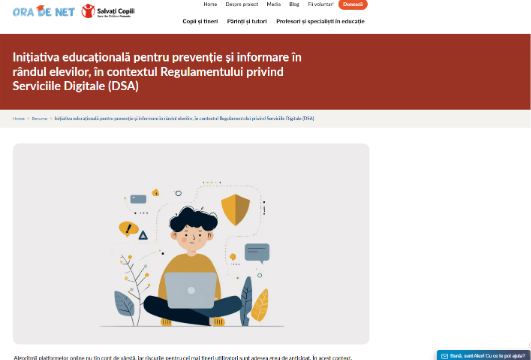
A comprehensive educational resources package introduces the key features of the DSA for students.
The resources educational package includes:
- a concept note explaining the DSA’s implications for child protection online;
- lesson plans and activity sheets for all educational levels (from preschool to high school);
- interactive exercises and games addressing key DSA themes such as data privacy, harmful content, and the role of trusted flaggers;
- access to the VoluntApp.ro platform, where teachers can report the activities.
Within four weeks, teachers had already downloaded the materials and implemented DSA-based learning sessions in their classrooms, demonstrating how European regulation can be meaningfully integrated into national education, In total, 48 sessions took place, informing 1,168 children and 113 parents.
Romanian Ministry of Education and Research endorses the national educational initiative on digital awareness
The educational initiative has been officially disseminated to all pre-university education institutions through a communication issued by the Bucharest School Inspectorate, on behalf of the Ministry of Education and Research, and signed by the General School Inspector and the School Inspector for Extracurricular Activities.
This communication reaffirms institutional support for the involvement of teachers in the activities carried out within the online safety programme and highlights the importance of promoting digital safety, responsible online behaviour, and children’s well-being in schools.
Good practice from schools
One of the most illustrative examples comes from an activity held with 5th and 6th graders, using the “Me in the digital world – How can I stay safe Online?” resource pack developed under the Ora de Net programme.
“I used the ‘Me in the digital world – How can I stay safe online?’ resources from the SIC’s platform. Starting from the story of the magical city of Pixelopolis, students identified the dangers they might face online and worked in teams to define key safety rules. They played a ‘True or False’ game to learn about the DSA and the obligations it sets for platforms. Finally, the teams created posters showing the rules that should be followed in Pixelopolis and presented them to their classmates.” (Teacher, Galați, Romania).
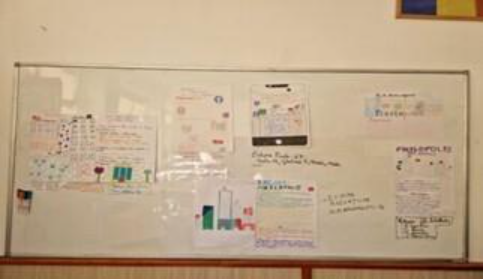
A storytelling-based approach transforms legal concepts into experiential learning.
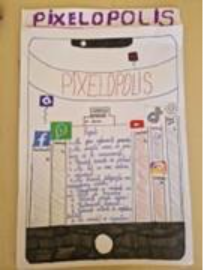
Students engage emotionally, connecting digital rules with real-life situations and developing the capacity to act responsibly online.
A trusted flagger perspective
Beyond its educational role, Save the Children Romania also acts as a trusted flagger under the DSA, officially recognised for identifying and reporting illegal online content. This dual expertise, both as a reporting authority and as an educational provider, ensures that the messages delivered to children and teens are grounded in real-life experience of digital risk management and cooperation with online platforms.
Looking ahead
The experience so far confirms that education is an important dimension of DSA implementation. Legal provisions can establish obligations for platforms, but only informed and empowered users can bring about lasting change in the digital environment.
Looking ahead, the Romanian Safer Internet Centre plans to:
- expand the network of teacher-trainers on online safety and DSA;
- facilitate training for peer-to-peer activities on the DSA;
- foster European-level exchanges of good practice among SICs to integrate legislation into classroom education.
Through these efforts, Romania contributes to operationalising the DSA across Europe proving that regulation becomes truly effective when it is understood, taught, and lived by young people in schools.
Interested in learning more about the DSA?
Explore the DSA for YOUth toolkit to learn how the Digital Services Act (DSA) protects minors by design. There, you will find a family-friendly booklet explaining the DSA guidelines on what online platforms should do to keep kids and teens safe online, easy-to-read explainers, a quiz, and other resources.
Interested in learning more about activities in Romania?
Find more information about the work of the Romanian Safer Internet Centre, including its awareness raising, helpline, hotline, and youth participation services – or find similar information for Safer Internet Centres throughout Europe.


This article is part of the campaign DSA for YOUth - Protecting minors by design, focusing on the DSA guidelines for the protection of minors under the DSA, including the age verification (AV) and age-appropriate (AA) measures, and translating these rules into clear, practical, and jargon-free resources. In this insight series, we explore how different Safer Internet Centres are working at the national level to raise awareness about the DSA and how it impacts the everyday lives of young people, their parents or caregivers, and teachers and educators.
The European Union has established a modern framework to ensure a transparent, accountable, and safe digital environment, with a particular focus on protecting children and young people. In Romania, the Safer Internet Centre (SIC Romania), coordinated by Save the Children Romania, has taken an active role in translating these principles into practice at the educational level. Through a national educational initiative launched on 26 September 2025, the Romanian SIC promotes digital education as a key driver for the practical implementation of the DSA across the national school community.
From regulation to educational practice
While the DSA introduces clear obligations for digital platforms, child protection online cannot rely solely on technical or regulatory measures. It also requires empowering children through education, developing critical thinking, awareness of online risks, and understanding of digital rights.
Based on this vision, SIC Romania has developed a comprehensive educational resources package that translates legal principles into age-appropriate, engaging classroom activities. They can be accessed on the SIC’s Ora de Net website.
A comprehensive educational resources package introduces the key features of the DSA for students.
The resources educational package includes:
- a concept note explaining the DSA’s implications for child protection online;
- lesson plans and activity sheets for all educational levels (from preschool to high school);
- interactive exercises and games addressing key DSA themes such as data privacy, harmful content, and the role of trusted flaggers;
- access to the VoluntApp.ro platform, where teachers can report the activities.
Within four weeks, teachers had already downloaded the materials and implemented DSA-based learning sessions in their classrooms, demonstrating how European regulation can be meaningfully integrated into national education, In total, 48 sessions took place, informing 1,168 children and 113 parents.
Romanian Ministry of Education and Research endorses the national educational initiative on digital awareness
The educational initiative has been officially disseminated to all pre-university education institutions through a communication issued by the Bucharest School Inspectorate, on behalf of the Ministry of Education and Research, and signed by the General School Inspector and the School Inspector for Extracurricular Activities.
This communication reaffirms institutional support for the involvement of teachers in the activities carried out within the online safety programme and highlights the importance of promoting digital safety, responsible online behaviour, and children’s well-being in schools.
Good practice from schools
One of the most illustrative examples comes from an activity held with 5th and 6th graders, using the “Me in the digital world – How can I stay safe Online?” resource pack developed under the Ora de Net programme.
“I used the ‘Me in the digital world – How can I stay safe online?’ resources from the SIC’s platform. Starting from the story of the magical city of Pixelopolis, students identified the dangers they might face online and worked in teams to define key safety rules. They played a ‘True or False’ game to learn about the DSA and the obligations it sets for platforms. Finally, the teams created posters showing the rules that should be followed in Pixelopolis and presented them to their classmates.” (Teacher, Galați, Romania).
A storytelling-based approach transforms legal concepts into experiential learning.
Students engage emotionally, connecting digital rules with real-life situations and developing the capacity to act responsibly online.
A trusted flagger perspective
Beyond its educational role, Save the Children Romania also acts as a trusted flagger under the DSA, officially recognised for identifying and reporting illegal online content. This dual expertise, both as a reporting authority and as an educational provider, ensures that the messages delivered to children and teens are grounded in real-life experience of digital risk management and cooperation with online platforms.
Looking ahead
The experience so far confirms that education is an important dimension of DSA implementation. Legal provisions can establish obligations for platforms, but only informed and empowered users can bring about lasting change in the digital environment.
Looking ahead, the Romanian Safer Internet Centre plans to:
- expand the network of teacher-trainers on online safety and DSA;
- facilitate training for peer-to-peer activities on the DSA;
- foster European-level exchanges of good practice among SICs to integrate legislation into classroom education.
Through these efforts, Romania contributes to operationalising the DSA across Europe proving that regulation becomes truly effective when it is understood, taught, and lived by young people in schools.
Interested in learning more about the DSA?
Explore the DSA for YOUth toolkit to learn how the Digital Services Act (DSA) protects minors by design. There, you will find a family-friendly booklet explaining the DSA guidelines on what online platforms should do to keep kids and teens safe online, easy-to-read explainers, a quiz, and other resources.
Interested in learning more about activities in Romania?
Find more information about the work of the Romanian Safer Internet Centre, including its awareness raising, helpline, hotline, and youth participation services – or find similar information for Safer Internet Centres throughout Europe.
- DSAforYOUth DSA (Digital Services Act)
Related content
- < Previous article
- Next article >
- < Previous
- Next >
Related articles


