
Safer Internet Day 2026 brought together schools, families, professionals, young people, and the wider community across Malta to reflect on how to build a safer, more respectful, and emotionally supportive digital environment.

As the Maltese Safer Internet Centre, BeSmartOnline! broadened the focus this year to place digital well-being firmly at the heart of national awareness efforts.
Rather than limiting activities to a single day, initiatives were rolled out throughout February to encourage sustained reflection and practical action.

Practical resources to support digital well-being
A new series of wellbeing-focused articles was launched within the BeSmartOnline! toolkit. These resources explored everyday aspects of young people’s digital lives, including managing screen time, recognising mindless scrolling, building confidence beyond social media validation, developing healthier online habits, and understanding the impact of technology use on sleep and mental health.
The aim was to provide accessible, evidence-informed guidance that families and educators could continue using beyond Safer Internet Day itself.
Engaging the public and school communities
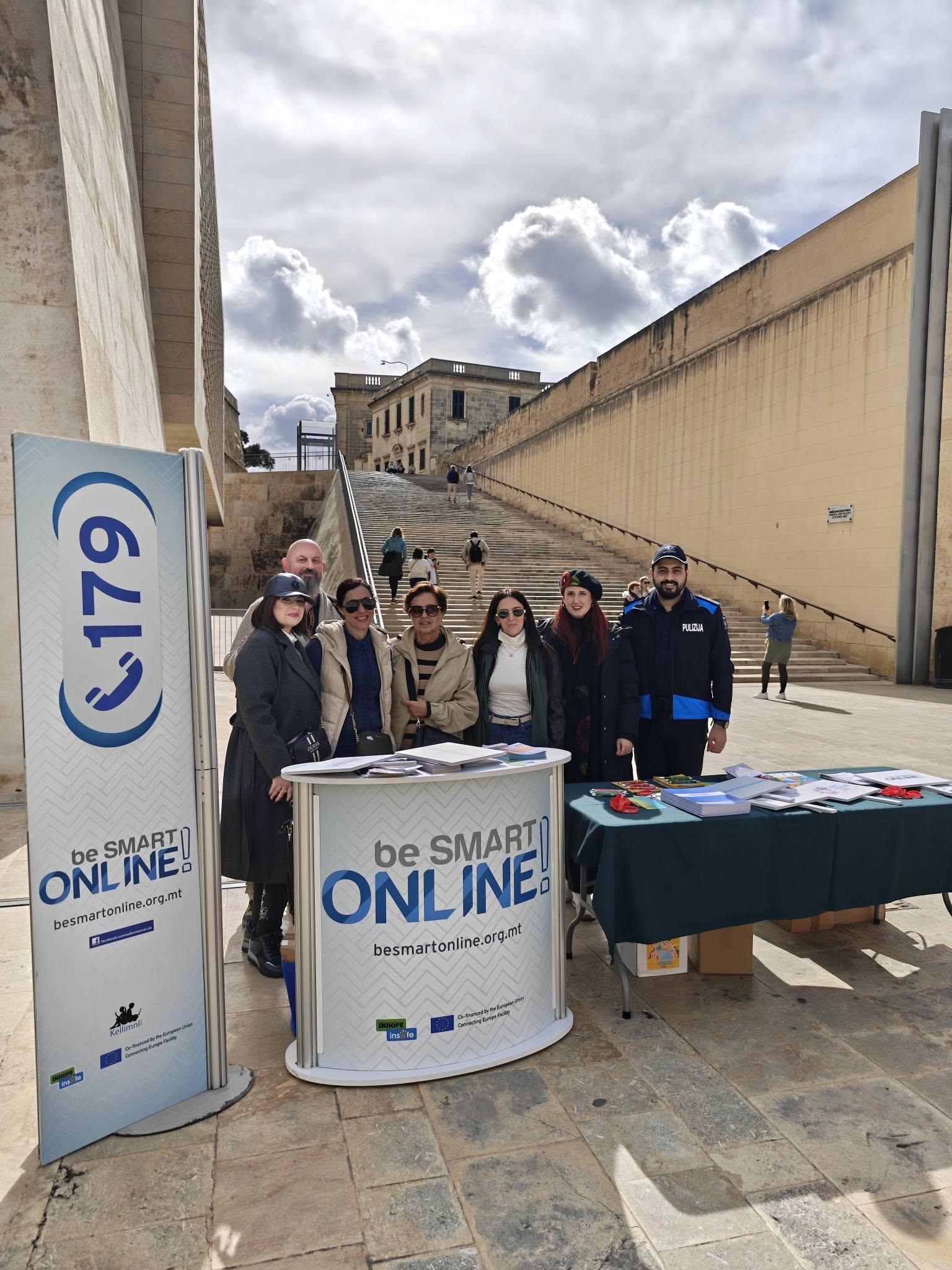
Public outreach remained a key element of SID 2026. On 10 February 2026, an awareness event was organised in Valletta, where members of the public engaged in direct conversations about online safety and well-being. These face-to-face discussions helped make digital well-being a visible and relatable topic within everyday life.
Schools across Malta were actively involved. In the weeks leading up to Safer Internet Day, a national circular was sent to 150 schools inviting participation and encouraging a focus on digital well-being, balanced screen use, and critical thinking. This early coordination enabled schools to plan meaningful activities aligned with the year’s theme.
Students participated in age-appropriate sessions addressing both online risks and the emotional and social dimensions of digital life. In addition to classroom workshops, school assemblies were delivered, allowing key messages to reach wider student groups. Educators were supported through structured lesson plans and toolkit resources designed to integrate SID themes into existing curricula in practical and engaging ways.

Youth participation and media outreach
Young people played a central role in this year’s activities. The BeSmartOnline! youth panel produced a series of short videos sharing their perspectives and experiences of digital life:
 What do you expect from adults to help you stay safe online? |
|
How can we ensure everyone has a positive experience online? |
|
These were circulated to schools as part of SID activities and later published online to reach a broader audience. By amplifying youth voices, SID 2026 reinforced the importance of involving young people as active contributors in conversations about digital safety and well-being.
To extend outreach further, key messages were shared through television and radio programmes, ensuring families across Malta could engage with discussions around responsible technology use and emerging online challenges.

Given growing interest in artificial intelligence, a series of dedicated awareness videos on AI was also developed. The video introduced AI in an accessible way and encouraged children and young people to question and critically evaluate online content, recognising that not everything encountered online is accurate or trustworthy. This initiative supported digital literacy and critical thinking in an evolving technological landscape.
|
Learn more about AI – Primary school edition (with EN subtitles) |
Learn more about AI – Secondary school edition (with EN subtitles) |
A shared responsibility
Safer Internet Day 2026 in Malta demonstrated that promoting a better internet requires collective commitment. Through educational resources, school engagement, youth participation, public outreach, and media collaboration, the initiative strengthened national efforts to create digital spaces that prioritise safety, well-being, respect, and inclusion.
By working together, communities across Malta reaffirmed their commitment to ensuring that the online world remains a space where children and young people can learn, connect, and thrive safely.
Find out more about Safer Internet Day in Malta. Alternatively, find more information about the work of the Maltese Safer Internet Centre, including its awareness raising, helpline, hotline, and youth participation services, or find similar information for other Safer Internet Centres throughout Europe.
More on Internet usage, practices and engagement


Safer Internet Day 2026 brought together schools, families, professionals, young people, and the wider community across Malta to reflect on how to build a safer, more respectful, and emotionally supportive digital environment.
As the Maltese Safer Internet Centre, BeSmartOnline! broadened the focus this year to place digital well-being firmly at the heart of national awareness efforts.
Rather than limiting activities to a single day, initiatives were rolled out throughout February to encourage sustained reflection and practical action.
Practical resources to support digital well-being
A new series of wellbeing-focused articles was launched within the BeSmartOnline! toolkit. These resources explored everyday aspects of young people’s digital lives, including managing screen time, recognising mindless scrolling, building confidence beyond social media validation, developing healthier online habits, and understanding the impact of technology use on sleep and mental health.
The aim was to provide accessible, evidence-informed guidance that families and educators could continue using beyond Safer Internet Day itself.
Engaging the public and school communities
Public outreach remained a key element of SID 2026. On 10 February 2026, an awareness event was organised in Valletta, where members of the public engaged in direct conversations about online safety and well-being. These face-to-face discussions helped make digital well-being a visible and relatable topic within everyday life.
Schools across Malta were actively involved. In the weeks leading up to Safer Internet Day, a national circular was sent to 150 schools inviting participation and encouraging a focus on digital well-being, balanced screen use, and critical thinking. This early coordination enabled schools to plan meaningful activities aligned with the year’s theme.
Students participated in age-appropriate sessions addressing both online risks and the emotional and social dimensions of digital life. In addition to classroom workshops, school assemblies were delivered, allowing key messages to reach wider student groups. Educators were supported through structured lesson plans and toolkit resources designed to integrate SID themes into existing curricula in practical and engaging ways.
Youth participation and media outreach
Young people played a central role in this year’s activities. The BeSmartOnline! youth panel produced a series of short videos sharing their perspectives and experiences of digital life:
What do you expect from adults to help you stay safe online? |
|
How can we ensure everyone has a positive experience online? |
|
These were circulated to schools as part of SID activities and later published online to reach a broader audience. By amplifying youth voices, SID 2026 reinforced the importance of involving young people as active contributors in conversations about digital safety and well-being.
To extend outreach further, key messages were shared through television and radio programmes, ensuring families across Malta could engage with discussions around responsible technology use and emerging online challenges.
Given growing interest in artificial intelligence, a series of dedicated awareness videos on AI was also developed. The video introduced AI in an accessible way and encouraged children and young people to question and critically evaluate online content, recognising that not everything encountered online is accurate or trustworthy. This initiative supported digital literacy and critical thinking in an evolving technological landscape.
|
Learn more about AI – Primary school edition (with EN subtitles) |
Learn more about AI – Secondary school edition (with EN subtitles) |
A shared responsibility
Safer Internet Day 2026 in Malta demonstrated that promoting a better internet requires collective commitment. Through educational resources, school engagement, youth participation, public outreach, and media collaboration, the initiative strengthened national efforts to create digital spaces that prioritise safety, well-being, respect, and inclusion.
By working together, communities across Malta reaffirmed their commitment to ensuring that the online world remains a space where children and young people can learn, connect, and thrive safely.
Find out more about Safer Internet Day in Malta. Alternatively, find more information about the work of the Maltese Safer Internet Centre, including its awareness raising, helpline, hotline, and youth participation services, or find similar information for other Safer Internet Centres throughout Europe.
- Safer Internet Day (SID) SID
Related content
- < Previous article
- Next article >
More on Internet usage, practices and engagement
- < Previous
- Next >
More on Internet usage, practices and engagement
Related articles


