
Young people are among the most active internet users, yet their voices are often missing from discussions about digital policies and online safety. To address this, the North Macedonian Safer Internet Centre (MKSafeNet) Safer Internet Centre organised the youth panel event “Our voice for a safer digital Europe”, bringing together young people, experts and institutional representatives in Skopje on 20 February 2026.

The event was organised within the framework of the Digital Europe Programme and aimed to create a safe and inclusive space where young people could openly share their experiences, concerns and ideas about the digital world.
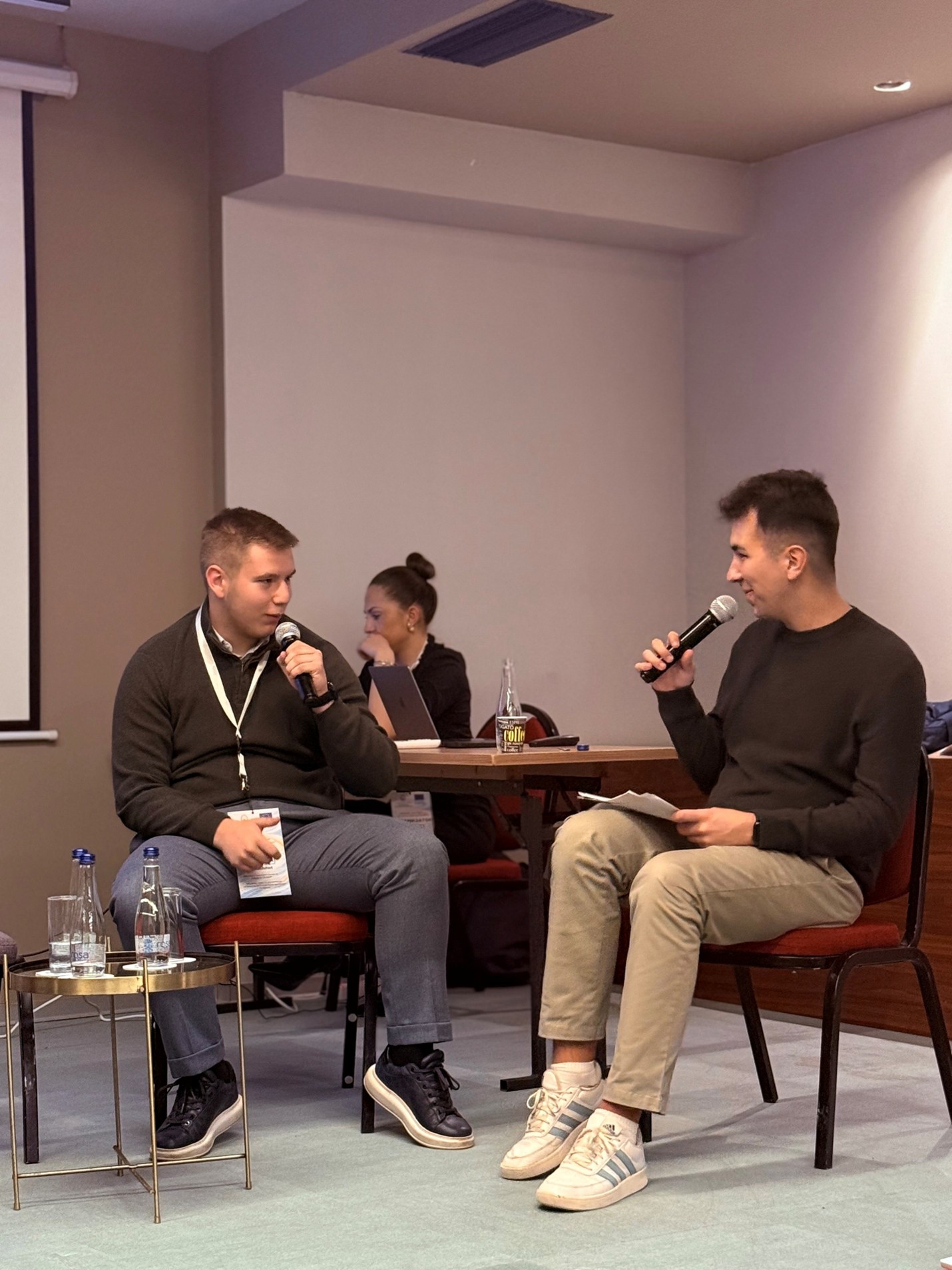
Students aged 12–16 from the primary school “Dimitar Makedonski”, youth organisation representatives and academic experts took part in the panel discussions. The session was moderated by Stefan Nikoloski, a youth volunteer from MKSafeNet, ensuring an engaging and youth-friendly discussion environment.
Throughout the event, participants explored four key topics related to young people’s online experiences.
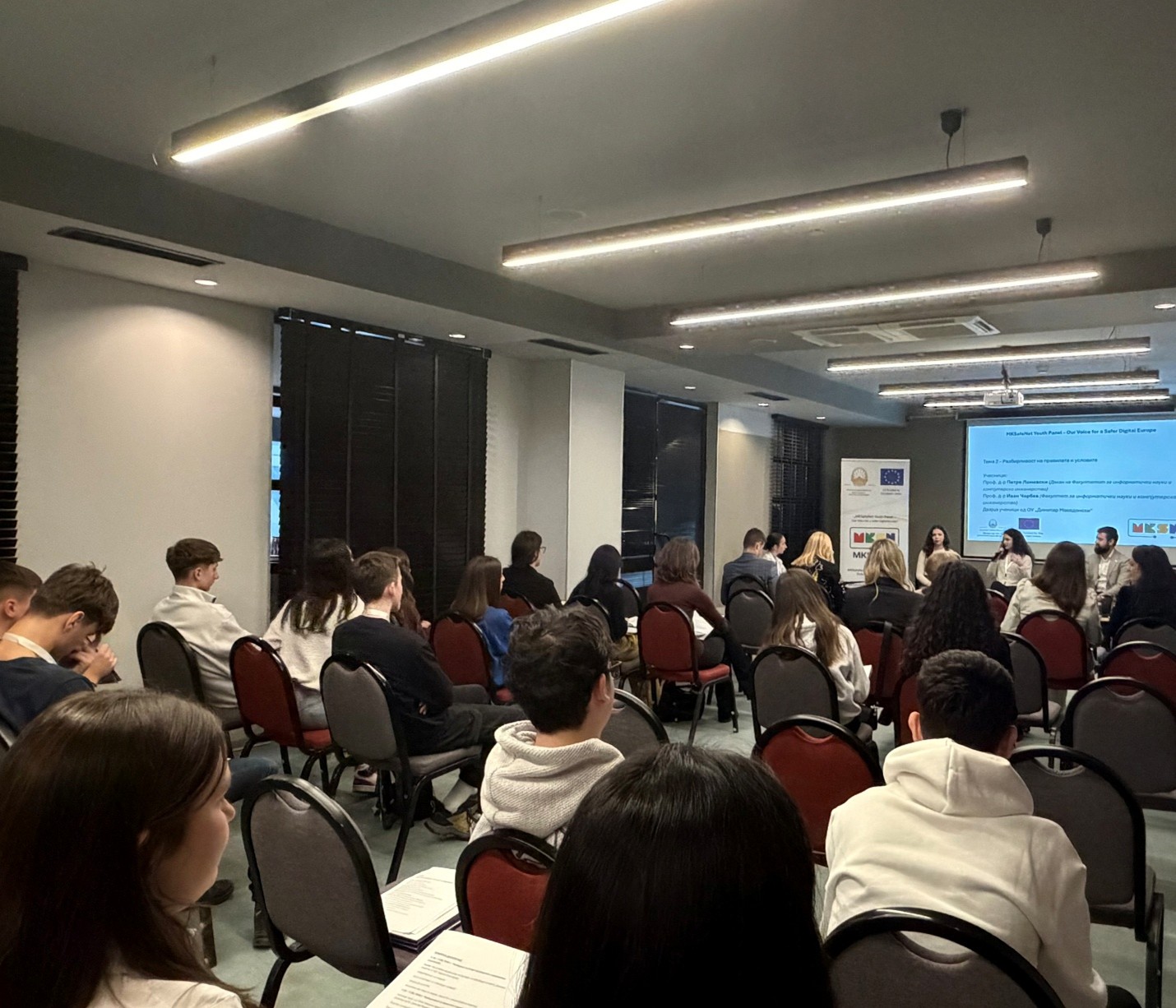
The importance of reporting
The first discussion focused on raising awareness about online risks, and the importance of reporting harmful content and abuse. Gordana Klincharova, national coordinator of the Safer Internet Centre and state secretary at the Ministry of Digital Transformation, highlighted that awareness among young people is gradually improving thanks to educational initiatives and cooperation with schools.
However, she emphasised that continuous efforts are needed to ensure that young users understand where and how they can report online violence, hate speech or harmful content.
Complex terms and conditions
The second discussion addressed the complexity of online platforms’ terms and conditions. Many students admitted that they rarely read these documents because they are too long and difficult to understand.
Experts from the Faculty of Computer Science and Engineering (FINKI) explained that while legal requirements often make such documents complex, platforms should consider more accessible formats, including simplified language, visual explanations and interactive summaries.
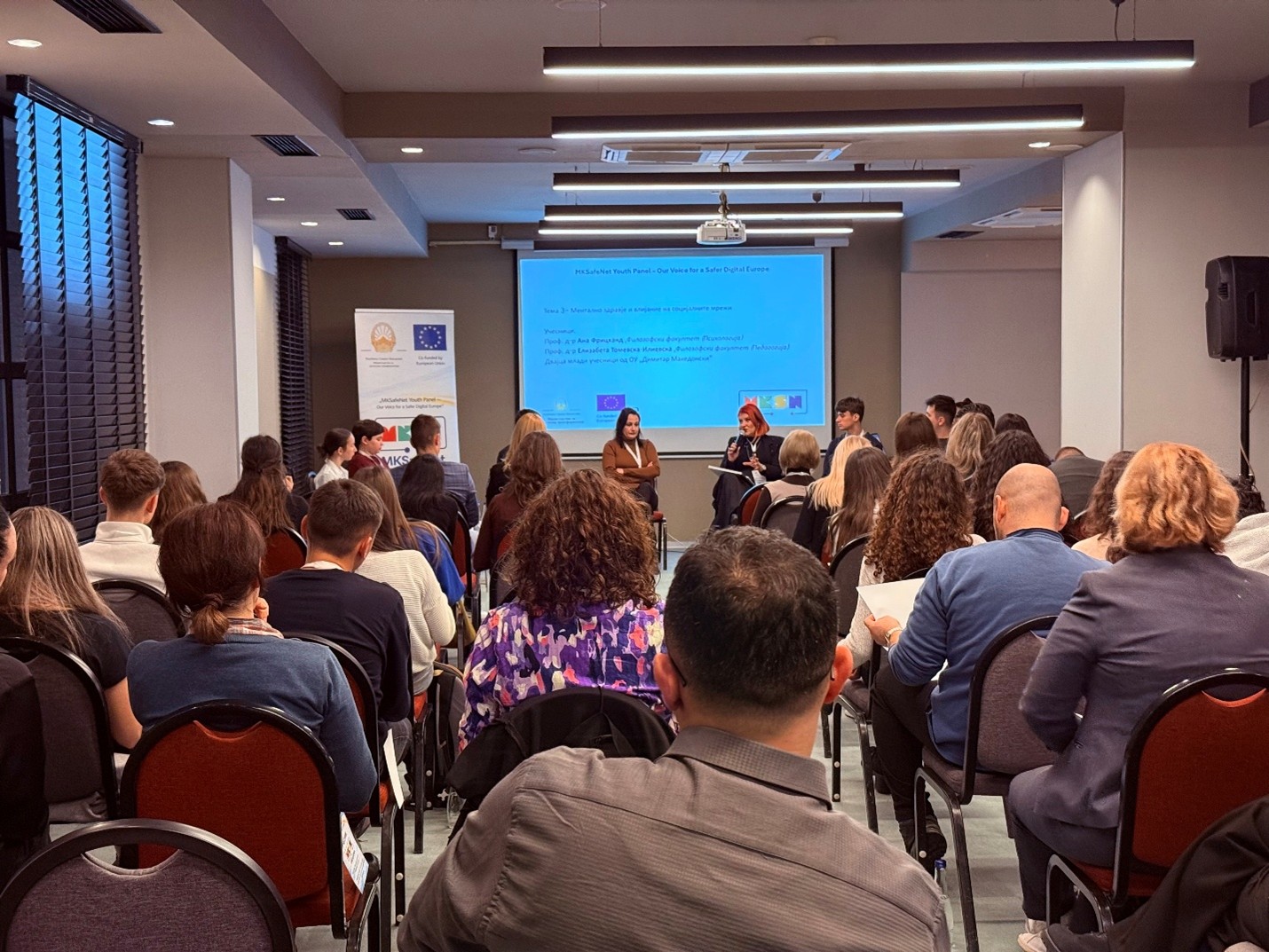
Mental health
Mental health and the impact of social media formed the third theme of the panel. Students spoke openly about online pressure, unrealistic standards and the emotional effects of social media content. Experts from the Faculty of Philosophy highlighted the importance of developing digital emotional literacy, helping young people build resilience and maintain a healthy relationship with technology.
Peer-to-peer initiatives
The final discussion focused on the power of peer-to-peer initiatives. Youth organisations shared how workshops, social media campaigns and creative formats such as short videos and digital challenges can effectively engage young audiences and raise awareness about online safety.
The panel also included insights from Damjan Jolakoski, a youth representative who participated in the Safer Internet Forum 2025 in Brussels. Sharing his experience, he emphasised the importance of youth participation in shaping European digital policies and ensuring that young people’s perspectives are reflected in future online safety initiatives.
The SIC North Macedonia youth panel demonstrated that meaningful youth participation is essential for building a safer and more inclusive digital environment. By listening to young people’s experiences and ideas, policymakers, educators and organisations can better respond to the real challenges young users face online.
More information on the event is available on MKSafeNet’s Facebook page.
Find more information about the work of the North Macedonian Safer Internet Centre, including its awareness raising, helpline, hotline, and youth participation services, or find similar information for other Safer Internet Centres throughout Europe.


Young people are among the most active internet users, yet their voices are often missing from discussions about digital policies and online safety. To address this, the North Macedonian Safer Internet Centre (MKSafeNet) Safer Internet Centre organised the youth panel event “Our voice for a safer digital Europe”, bringing together young people, experts and institutional representatives in Skopje on 20 February 2026.
The event was organised within the framework of the Digital Europe Programme and aimed to create a safe and inclusive space where young people could openly share their experiences, concerns and ideas about the digital world.
Students aged 12–16 from the primary school “Dimitar Makedonski”, youth organisation representatives and academic experts took part in the panel discussions. The session was moderated by Stefan Nikoloski, a youth volunteer from MKSafeNet, ensuring an engaging and youth-friendly discussion environment.
Throughout the event, participants explored four key topics related to young people’s online experiences.
The importance of reporting
The first discussion focused on raising awareness about online risks, and the importance of reporting harmful content and abuse. Gordana Klincharova, national coordinator of the Safer Internet Centre and state secretary at the Ministry of Digital Transformation, highlighted that awareness among young people is gradually improving thanks to educational initiatives and cooperation with schools.
However, she emphasised that continuous efforts are needed to ensure that young users understand where and how they can report online violence, hate speech or harmful content.
Complex terms and conditions
The second discussion addressed the complexity of online platforms’ terms and conditions. Many students admitted that they rarely read these documents because they are too long and difficult to understand.
Experts from the Faculty of Computer Science and Engineering (FINKI) explained that while legal requirements often make such documents complex, platforms should consider more accessible formats, including simplified language, visual explanations and interactive summaries.
Mental health
Mental health and the impact of social media formed the third theme of the panel. Students spoke openly about online pressure, unrealistic standards and the emotional effects of social media content. Experts from the Faculty of Philosophy highlighted the importance of developing digital emotional literacy, helping young people build resilience and maintain a healthy relationship with technology.
Peer-to-peer initiatives
The final discussion focused on the power of peer-to-peer initiatives. Youth organisations shared how workshops, social media campaigns and creative formats such as short videos and digital challenges can effectively engage young audiences and raise awareness about online safety.
The panel also included insights from Damjan Jolakoski, a youth representative who participated in the Safer Internet Forum 2025 in Brussels. Sharing his experience, he emphasised the importance of youth participation in shaping European digital policies and ensuring that young people’s perspectives are reflected in future online safety initiatives.
The SIC North Macedonia youth panel demonstrated that meaningful youth participation is essential for building a safer and more inclusive digital environment. By listening to young people’s experiences and ideas, policymakers, educators and organisations can better respond to the real challenges young users face online.
More information on the event is available on MKSafeNet’s Facebook page.
Find more information about the work of the North Macedonian Safer Internet Centre, including its awareness raising, helpline, hotline, and youth participation services, or find similar information for other Safer Internet Centres throughout Europe.
- youth panel youth empowerment peer to peer
Related content
- < Previous article
- Next article >
- < Previous
- Next >
Related articles


