

The Hungarian Safer Internet Centre, operated by the International Children's Safety Service, organised a special internet safety event at the Magyar Telekom headquarters in Budapest to mark Safer Internet Day. Sixty participating children joined interactive sessions led by IT specialists and ethical hackers, while adults attended presentations by renowned experts. One of the highlights of the day was the ceremonial announcement of the results of the national poster competition connected to the event.

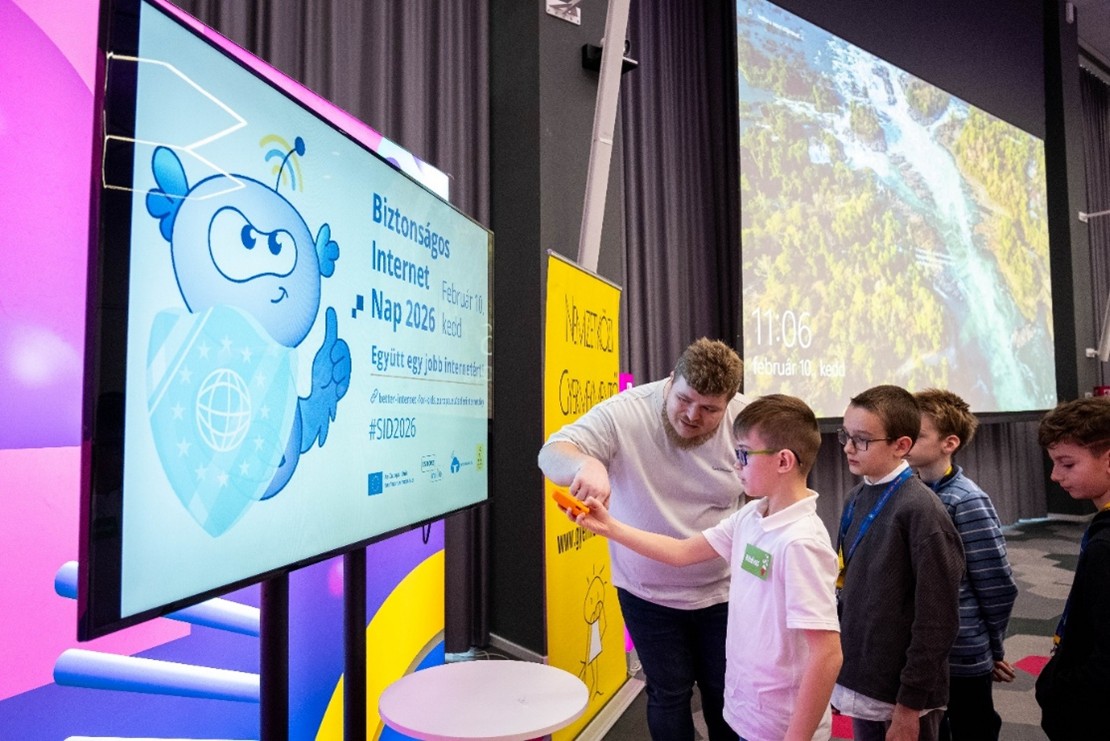
The children’s program was hosted by ethical hacker Krisztián Frey. Through interactive games, participants learned about the risks of using open Wi-Fi networks and the dangers of charging devices through USB ports in public places. They also had the opportunity to try out devices such as the Flipper Zero, which can be used to test wireless networks, and the usb Rubber Ducky, a tool used for testing USB security vulnerabilities. The young people particularly enjoyed the creative activities, the photo wall, and the selfie machine.
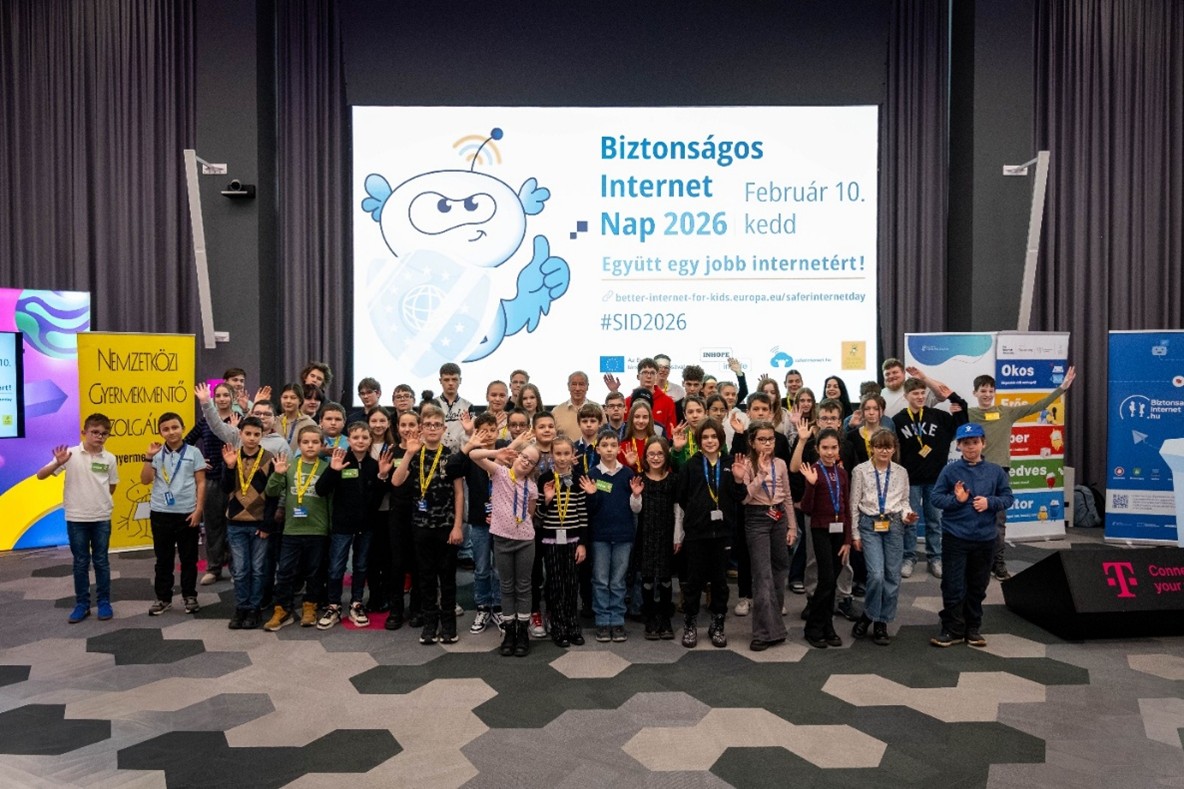
Over 150 children and young people participate in national AI poster competition
More than 150 entries were submitted to the national poster competition by children aged 8-15, showcasing humorous mistakes made by artificial intelligence. The 20 top entries in each age group were invited to the event for a special awards ceremony. First-place winners received a VR experience and premium LEGO prizes, while second- and third-place winners were also awarded LEGO sets. Fourth- to sixth-place winners received board games as recognition of their creativity and effort.
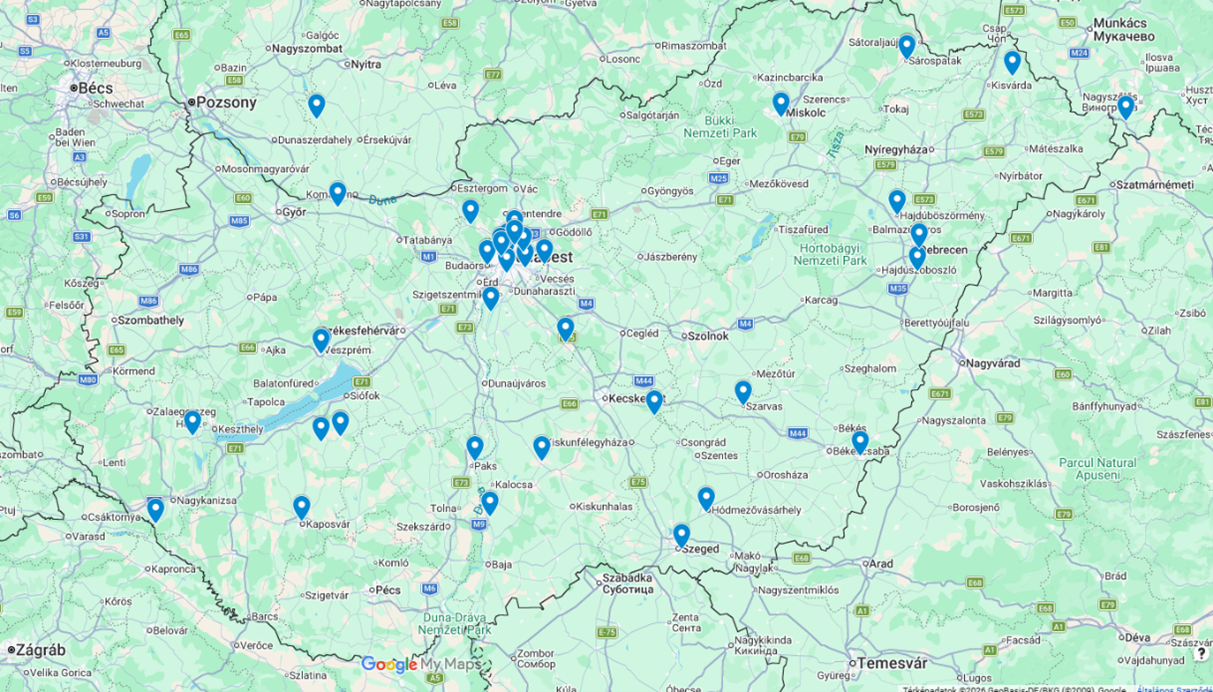
The Safer Internet Centre received entries from almost every region of the country, including two submissions from abroad. Participation was balanced, with boys and girls represented in roughly equal numbers across all three age groups. In addition, some teachers have been regularly engaging in the competitions alongside their students for years, integrating conscious and responsible internet use into both the curriculum and everyday life.
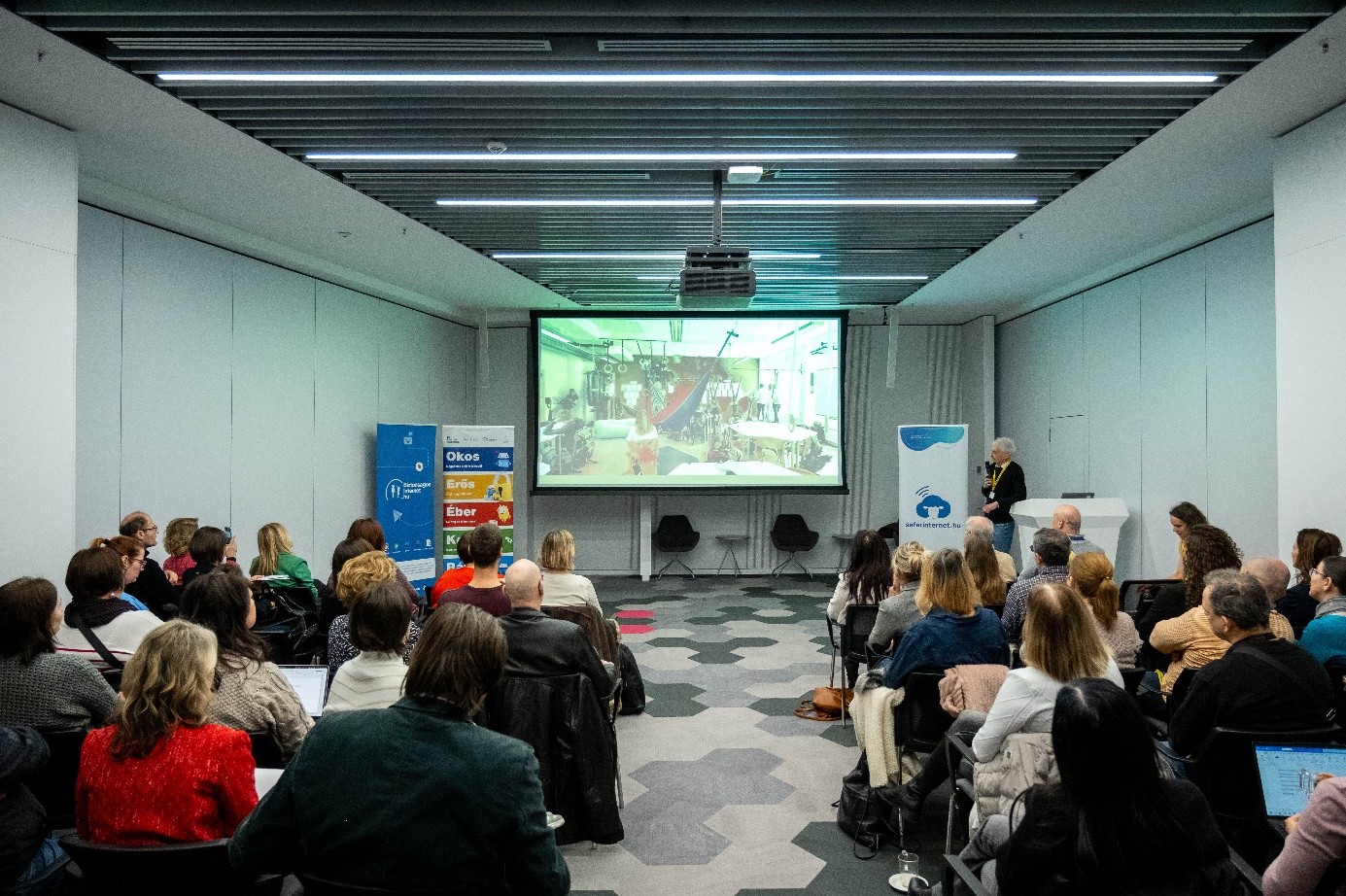
Training for adults
The Safer Internet Centre aimed to raise awareness among adults about the conscious and critical use of AI and digital technologies. To achieve this, experts from a variety of fields were invited to share their insights. The following specialists delivered presentations for the attending adults:
- Dr. György Büki, pediatric neurologist and head of the International Children's Safety Service’s clinic
- Tatjana Turányi, AI ethics and cyberpsychology consultant, voluntary instructor at SIC
- Dr. Borbála Nagy-Balás, children’s rights lawyer and children’s rights officer at UNICEF Hungary
- Melinda Dóczi, marketing manager at Logiscool,
- Dr. Endre Nyitrai, acting head of the Department of Criminalistics at the Faculty of Law Enforcement Sciences of the National University of Public Service and associate professor,
- Andrea Ivánka-Csontos, instructor at the Hungarian SIC and a data protection and information security consultant.
Find out more about Safer Internet Day in Hungary. Alternatively, find more information about the work of the Hungarian Safer Internet Centre, including its awareness raising, helpline, hotline, and youth participation services, or find similar information for other Safer Internet Centres throughout Europe.


More from this author


The Hungarian Safer Internet Centre, operated by the International Children's Safety Service, organised a special internet safety event at the Magyar Telekom headquarters in Budapest to mark Safer Internet Day. Sixty participating children joined interactive sessions led by IT specialists and ethical hackers, while adults attended presentations by renowned experts. One of the highlights of the day was the ceremonial announcement of the results of the national poster competition connected to the event.
The children’s program was hosted by ethical hacker Krisztián Frey. Through interactive games, participants learned about the risks of using open Wi-Fi networks and the dangers of charging devices through USB ports in public places. They also had the opportunity to try out devices such as the Flipper Zero, which can be used to test wireless networks, and the usb Rubber Ducky, a tool used for testing USB security vulnerabilities. The young people particularly enjoyed the creative activities, the photo wall, and the selfie machine.
Over 150 children and young people participate in national AI poster competition
More than 150 entries were submitted to the national poster competition by children aged 8-15, showcasing humorous mistakes made by artificial intelligence. The 20 top entries in each age group were invited to the event for a special awards ceremony. First-place winners received a VR experience and premium LEGO prizes, while second- and third-place winners were also awarded LEGO sets. Fourth- to sixth-place winners received board games as recognition of their creativity and effort.
The Safer Internet Centre received entries from almost every region of the country, including two submissions from abroad. Participation was balanced, with boys and girls represented in roughly equal numbers across all three age groups. In addition, some teachers have been regularly engaging in the competitions alongside their students for years, integrating conscious and responsible internet use into both the curriculum and everyday life.
Training for adults
The Safer Internet Centre aimed to raise awareness among adults about the conscious and critical use of AI and digital technologies. To achieve this, experts from a variety of fields were invited to share their insights. The following specialists delivered presentations for the attending adults:
- Dr. György Büki, pediatric neurologist and head of the International Children's Safety Service’s clinic
- Tatjana Turányi, AI ethics and cyberpsychology consultant, voluntary instructor at SIC
- Dr. Borbála Nagy-Balás, children’s rights lawyer and children’s rights officer at UNICEF Hungary
- Melinda Dóczi, marketing manager at Logiscool,
- Dr. Endre Nyitrai, acting head of the Department of Criminalistics at the Faculty of Law Enforcement Sciences of the National University of Public Service and associate professor,
- Andrea Ivánka-Csontos, instructor at the Hungarian SIC and a data protection and information security consultant.
Find out more about Safer Internet Day in Hungary. Alternatively, find more information about the work of the Hungarian Safer Internet Centre, including its awareness raising, helpline, hotline, and youth participation services, or find similar information for other Safer Internet Centres throughout Europe.
- < Previous article
- Next article >
More from this author
Related articles


