
The Insafe network of helplines collects data about the calls received and is analysed every three months in order to look at possible trends and emerging issues.

The most recent helpline data covers the final period of 2025, from October to December inclusive. Data was collected from 32 helplines in 29 countries and just under 15,000 contacts were received by helplines which related to online issues.
The most common reason for reaching out to a helpline continues to be cyberbullying which accounts for 14 per cent of all contacts. e-crime (defined as chain emails, phishing sites, identity theft, fraud, data theft, copyright infringement, hacking, piracy, etc.) and online sexual coercion and extortion of children (often referred to as sextortion) both accounted for nine per cent of all contacts.
The majority of these contacts (70 per cent) were made by 11–18-year-olds and despite helplines offering many different ways for users to contact them (chat, email, online form), 52 per cent of contacts were made by a phone call.
Many helplines noted that when contact is made by email, online form or chat, AI has often been used to help the caller to write the message and many callers have also said that they were signposted to a helpline when they were using AI tools – in particular ChatGPT.
Where possible, helplines capture information about the platforms where a problem occurred. During this reporting period, 52 per cent of cases involved social media platforms with a further 15 per cent on messaging platforms (e.g. WhatsApp, Signal, Telegram). A further nine percent took place in videogames.
As AI tools are more widely used, AI is featuring in more and more cases that helplines are dealing with. Helplines report that AI is frequently being used to create content with the intention of embarrassing, harassing or humiliating others as well as to extort money in cases of financial sextortion.
Looking at the whole of 2025, helplines received over 57,000 contacts with cyberbullying being the most common reason to ask for support.
The table below shows the percentage of contacts assigned to each category.
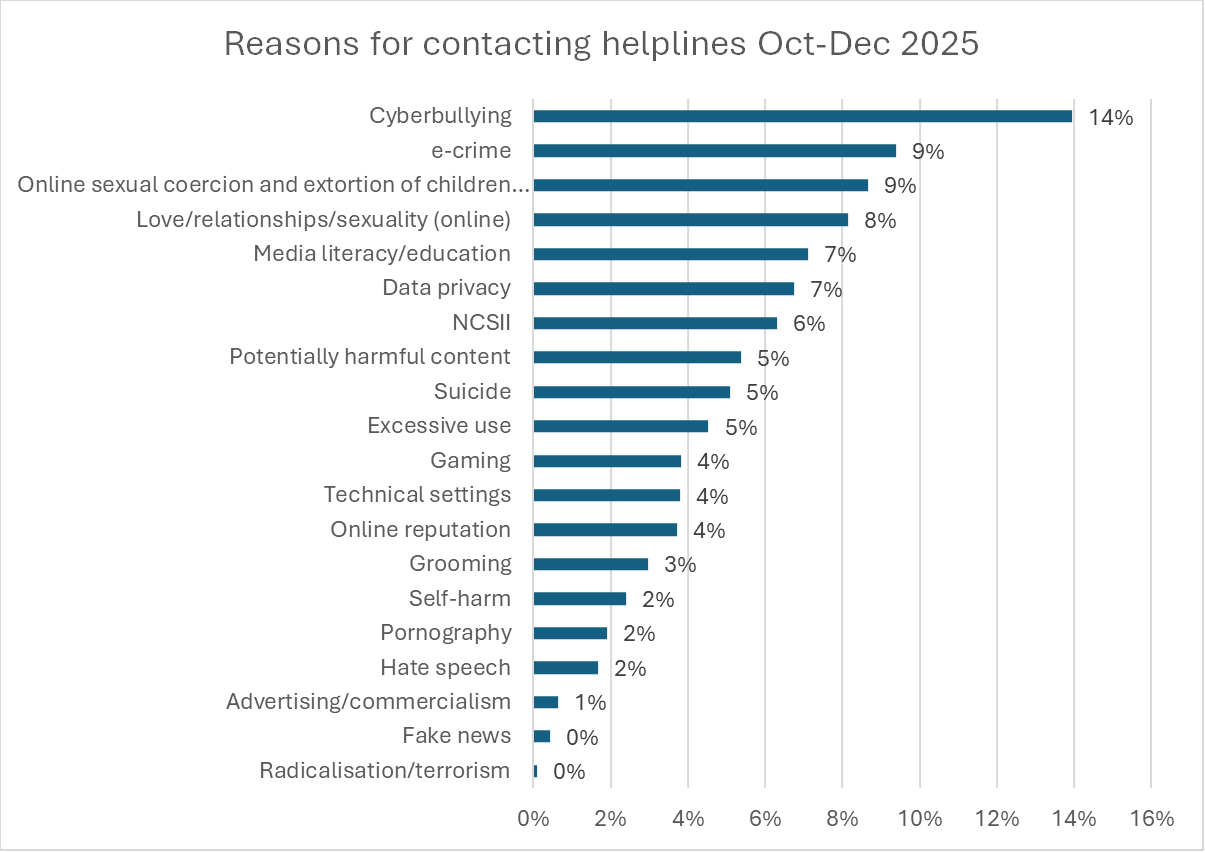
Figure 1 (above). Main reasons for contacting a helpline in Q4 2025 (October – December 2025)
Radicalisation/terrorism | 0.10% |
Fake news | 0.43% |
Advertising/commercialism | 0.65% |
Hate speech | 1.66% |
Pornography | 1.91% |
Self-harm | 2.39% |
Grooming | 2.97% |
Online reputation | 3.71% |
Technical settings | 3.80% |
Gaming | 3.83% |
Excessive use | 4.54% |
Suicide | 5.10% |
Potentially harmful content | 5.37% |
NCSII | 6.31% |
Data privacy | 6.75% |
Media literacy/education | 7.11% |
Love/relationships/sexuality (online) | 8.14% |
Online sexual coercion and extortion of children (sextortion) | 8.67% |
e-crime | 9.39% |
Cyberbullying | 13.96% |
Table 1 (above). Main reasons for contacting a helpline in Q4 2025 (October – December 2025)
The infographic below provides a visual representation of many of the key points in the fourth quarter of 2025, all in the text above, from October to December 2025.
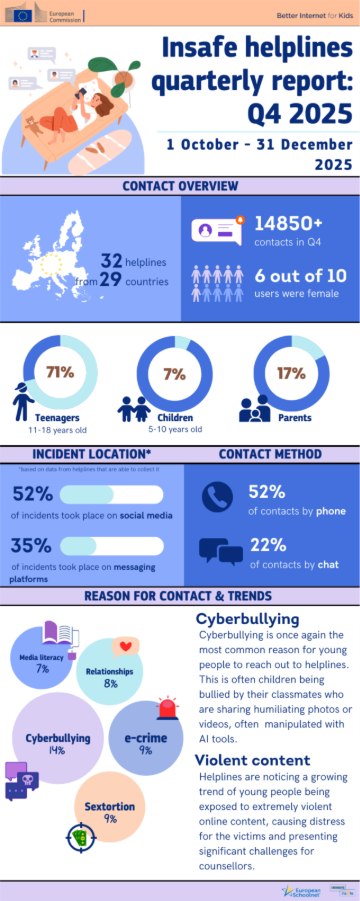
Figure 2 (above). Infographic summarising the main reasons for contacting a helpline in Q4 2025 (October – December 2025). Click the image to see the infographic in full size.
Find out more about country-based helpline services, operating as part of the national Safer Internet Centre and keep up to date with news on helpline services and trends.
More on internet usage, practices and engagement


The Insafe network of helplines collects data about the calls received and is analysed every three months in order to look at possible trends and emerging issues.
The most recent helpline data covers the final period of 2025, from October to December inclusive. Data was collected from 32 helplines in 29 countries and just under 15,000 contacts were received by helplines which related to online issues.
The most common reason for reaching out to a helpline continues to be cyberbullying which accounts for 14 per cent of all contacts. e-crime (defined as chain emails, phishing sites, identity theft, fraud, data theft, copyright infringement, hacking, piracy, etc.) and online sexual coercion and extortion of children (often referred to as sextortion) both accounted for nine per cent of all contacts.
The majority of these contacts (70 per cent) were made by 11–18-year-olds and despite helplines offering many different ways for users to contact them (chat, email, online form), 52 per cent of contacts were made by a phone call.
Many helplines noted that when contact is made by email, online form or chat, AI has often been used to help the caller to write the message and many callers have also said that they were signposted to a helpline when they were using AI tools – in particular ChatGPT.
Where possible, helplines capture information about the platforms where a problem occurred. During this reporting period, 52 per cent of cases involved social media platforms with a further 15 per cent on messaging platforms (e.g. WhatsApp, Signal, Telegram). A further nine percent took place in videogames.
As AI tools are more widely used, AI is featuring in more and more cases that helplines are dealing with. Helplines report that AI is frequently being used to create content with the intention of embarrassing, harassing or humiliating others as well as to extort money in cases of financial sextortion.
Looking at the whole of 2025, helplines received over 57,000 contacts with cyberbullying being the most common reason to ask for support.
The table below shows the percentage of contacts assigned to each category.
Figure 1 (above). Main reasons for contacting a helpline in Q4 2025 (October – December 2025)
Radicalisation/terrorism | 0.10% |
Fake news | 0.43% |
Advertising/commercialism | 0.65% |
Hate speech | 1.66% |
Pornography | 1.91% |
Self-harm | 2.39% |
Grooming | 2.97% |
Online reputation | 3.71% |
Technical settings | 3.80% |
Gaming | 3.83% |
Excessive use | 4.54% |
Suicide | 5.10% |
Potentially harmful content | 5.37% |
NCSII | 6.31% |
Data privacy | 6.75% |
Media literacy/education | 7.11% |
Love/relationships/sexuality (online) | 8.14% |
Online sexual coercion and extortion of children (sextortion) | 8.67% |
e-crime | 9.39% |
Cyberbullying | 13.96% |
Table 1 (above). Main reasons for contacting a helpline in Q4 2025 (October – December 2025)
The infographic below provides a visual representation of many of the key points in the fourth quarter of 2025, all in the text above, from October to December 2025.
Figure 2 (above). Infographic summarising the main reasons for contacting a helpline in Q4 2025 (October – December 2025). Click the image to see the infographic in full size.
Find out more about country-based helpline services, operating as part of the national Safer Internet Centre and keep up to date with news on helpline services and trends.
- < Previous article
- Next article >
More on internet usage, practices and engagement
- < Previous
- Next >
More on internet usage, practices and engagement
Related articles


