
From Osijek and Vinkovci to Zagreb and Zadar, Safer Internet Centre (SIC) Croatia marked European Cybersecurity Month (ECSM) with a series of expert conferences, discussions with parents, and activities focused on protecting children in the digital environment. Throughout October, the centre held more than 80 activities involving over 1,800 children, parents and professionals. Through meetings and discussions on current challenges in the digital environment, the centre highlighted the importance of joint efforts to protect children and young people online.

Osijek: child safety must be a part of cybersecurity
The centre opened this year’s European Cybersecurity Month activities with an expert programme dedicated to protecting children online, as part of the tenth anniversary edition of the Cyber Security Conference 2026 in Osijek. For the fifth consecutive year, a dedicated part of the conference focused specifically on child safety in the digital environment. The programme was organised in cooperation with the Croatian Safer Internet Centre, the Croatian Institute for Cybersecurity, and the Croatian Public Relations Association.
“Child safety must be part of every serious discussion on cybersecurity,” said Drago Žagar, President of the Croatian Institute for Cybersecurity.
Tomislav Ramljak, President of the Centre for Missing and Exploited Children, also addressed discussions about restricting children’s access to social media. He noted that such measures can contribute to child protection but are not sufficient on their own. Children also need support, understanding, and trusted adults they can turn to when they encounter problems online.
Lawyer Vlatka Mišljenović Dasović discussed the legal and real-world consequences of sharing photographs and videos, while Tea Čičić from the centre’s Zagreb office explored digital subcultures as spaces where young people find a sense of belonging and shape their identities, but may also encounter various risks. In the panel discussion “When does a child become news?”, representatives from non-governmental organisations (NGOs), the education system, the media, and public relations profession discussed responsible reporting on violence among children and ways to protect children from further exposure and harm.
Vinkovci: support from the centre becomes more accessible to children, parents and professionals
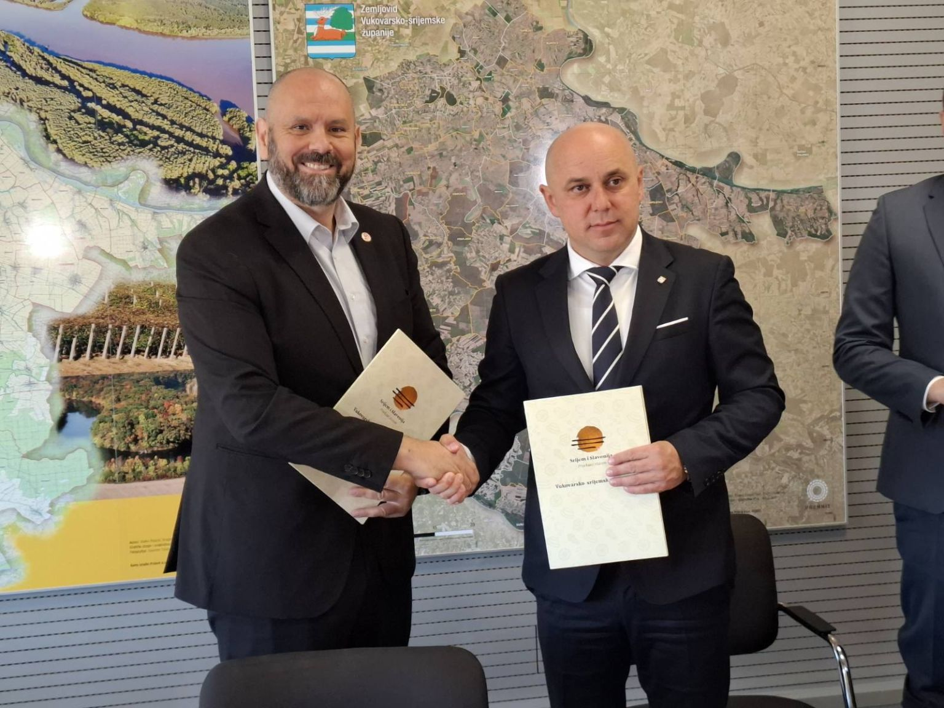
An important step towards expanding support for children and families was also taken in Vinkovci. On the occasion of the International Day of Non-Violence (2 October 2026), Ivan Bosančić, Prefect of Vukovar-Srijem County, and Tomislav Ramljak signed an agreement to fund a Safer Internet Centre office. Vukovar-Srijem County thus became the fifth county in Croatia to provide financial support for the operation of such an office, with the partnership planned to run for three years.
The office is located at 18 Jurja Dalmatinca Street, in premises where the centre has been running a half-day programme for children with behavioural difficulties for 10 years. The opening of the office brings support services closer to children, parents, caregivers and teachers across the county. These services include lectures, workshops, counselling through the free helpline at +385 (0)800 606 606, and the option to anonymously report illegal content online.
Zagreb: CyberGuard 2026 focuses on artificial intelligence
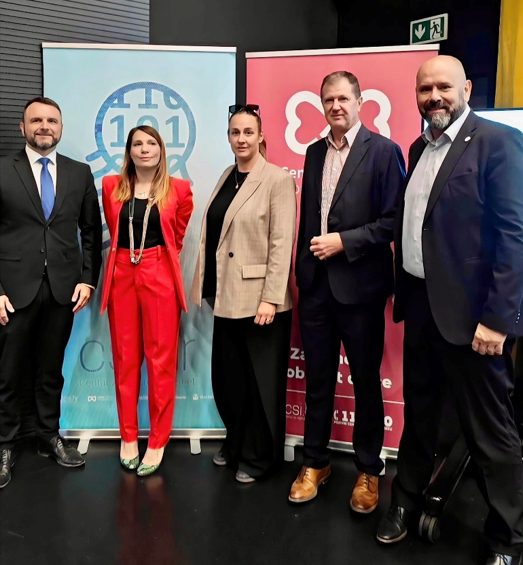
For the third consecutive year, A1 Croatia and the Safer Internet Centre organised the CyberGuard conference, which brought together Croatian and international experts in cybersecurity, online safety, education, technology and regulation on 15 October 2026. This year’s programme focused on the challenges arising from the rapid development of artificial intelligence (AI).
Federico Becchetti, Deputy Head of the Crimes Against Children Unit at Interpol, spoke about how AI is changing the risks children face. Ngaire Alexander from the UK-based Internet Watch Foundation presented concerning figures: during the first six months of 2026, 6,310 AI-generated images depicting child sexual abuse were identified, 40 per cent more than during the whole of 2025. Girls were depicted in 98 per cent of these images.
Alongside technological challenges, an important part of the discussion focused on the role of adults in protecting children. Tomislav Ramljak emphasised that age restrictions on digital platforms are not enough without relationships of trust between children and adults. Children need to know they can seek help without fear of judgement or punishment, even when they have made a mistake.
During the “#BoljiOnline: Safe Behind the Screen” panel, Dunja Marušić Brezetić, Principal of Zagreb’s First Gymnasium, presented the school’s experience of introducing digital literacy as an elective subject developed in cooperation with A1 Croatia and Safer Internet Centre Croatia. The conference also addressed cybersecurity challenges in the business sector. According to data from the national CERT (Computer Emergency Response Team), 1,513 cybersecurity incidents were handled in 2025, an increase of 35.9 per cent compared with the previous year.

Zadar: experts join forces at the “Together for children” conference
The month also featured the “Together for children” conference on child online safety, held in Zadar on 20 October 2026. It was the centre’s first conference in Zadar following the opening of its local office in April, with support from the City of Zadar and Zadar County. The conference brought together more than 160 professionals from public institutions, the education system, academia, civil society, and the technology sector.
Tomislav Ramljak highlighted new risks associated with AI, particularly the manipulation of photographs and video content that can be misused for sexual extortion and child abuse. He stressed the need for a swift, coordinated response to these challenges.
Lucija Vejmelka from the Faculty of Law at the University of Zagreb presented findings from the deSHAME project, which highlight the widespread prevalence of online peer violence among children. According to the findings presented:
- More than one-third of lower secondary school pupils experience online violence at least once a month;
- More than half would not report such violence to anyone;
- Nearly one in seven children had arranged to meet in person with someone they had met online.
Zlatan Morić from Algebra Bernays University spoke about age verification on digital platforms and the European Digital Identity Wallet, while Danijela Perić Krstulović presented experiences from the centre’s day-to-day work.
The panel discussion also addressed whether age restrictions on social media can genuinely improve children’s safety or, in certain circumstances, push them towards less visible and riskier digital spaces.
Working together for a better internet
The activities held during European Cybersecurity Month demonstrated that protecting children online requires continuous effort, knowledge sharing, and cooperation across different sectors. From local communities that support the centre’s work and schools investing in digital literacy, to experts raising awareness of new forms of online violence and the misuse of AI, the shared goal remains the same: to create a digital environment where children can learn, communicate and grow up safely.
The Safer Internet Centre continues to provide support to children, parents, caregivers and professionals. Free and anonymous advice and support are available through the helpline at 0800 606 606 on weekdays from 08:00 to 16:00 CET. Suspected illegal content online can also be reported anonymously via the form on the csi.hr website.
Find more information about the work of the Croatian Safer Internet Centre, including its awareness-raising, helpline, hotline, and youth participation services, or find similar information for other Safer Internet Centres throughout Europe.


From Osijek and Vinkovci to Zagreb and Zadar, Safer Internet Centre (SIC) Croatia marked European Cybersecurity Month (ECSM) with a series of expert conferences, discussions with parents, and activities focused on protecting children in the digital environment. Throughout October, the centre held more than 80 activities involving over 1,800 children, parents and professionals. Through meetings and discussions on current challenges in the digital environment, the centre highlighted the importance of joint efforts to protect children and young people online.
Osijek: child safety must be a part of cybersecurity
The centre opened this year’s European Cybersecurity Month activities with an expert programme dedicated to protecting children online, as part of the tenth anniversary edition of the Cyber Security Conference 2026 in Osijek. For the fifth consecutive year, a dedicated part of the conference focused specifically on child safety in the digital environment. The programme was organised in cooperation with the Croatian Safer Internet Centre, the Croatian Institute for Cybersecurity, and the Croatian Public Relations Association.
“Child safety must be part of every serious discussion on cybersecurity,” said Drago Žagar, President of the Croatian Institute for Cybersecurity.
Tomislav Ramljak, President of the Centre for Missing and Exploited Children, also addressed discussions about restricting children’s access to social media. He noted that such measures can contribute to child protection but are not sufficient on their own. Children also need support, understanding, and trusted adults they can turn to when they encounter problems online.
Lawyer Vlatka Mišljenović Dasović discussed the legal and real-world consequences of sharing photographs and videos, while Tea Čičić from the centre’s Zagreb office explored digital subcultures as spaces where young people find a sense of belonging and shape their identities, but may also encounter various risks. In the panel discussion “When does a child become news?”, representatives from non-governmental organisations (NGOs), the education system, the media, and public relations profession discussed responsible reporting on violence among children and ways to protect children from further exposure and harm.
Vinkovci: support from the centre becomes more accessible to children, parents and professionals
An important step towards expanding support for children and families was also taken in Vinkovci. On the occasion of the International Day of Non-Violence (2 October 2026), Ivan Bosančić, Prefect of Vukovar-Srijem County, and Tomislav Ramljak signed an agreement to fund a Safer Internet Centre office. Vukovar-Srijem County thus became the fifth county in Croatia to provide financial support for the operation of such an office, with the partnership planned to run for three years.
The office is located at 18 Jurja Dalmatinca Street, in premises where the centre has been running a half-day programme for children with behavioural difficulties for 10 years. The opening of the office brings support services closer to children, parents, caregivers and teachers across the county. These services include lectures, workshops, counselling through the free helpline at +385 (0)800 606 606, and the option to anonymously report illegal content online.
Zagreb: CyberGuard 2026 focuses on artificial intelligence
For the third consecutive year, A1 Croatia and the Safer Internet Centre organised the CyberGuard conference, which brought together Croatian and international experts in cybersecurity, online safety, education, technology and regulation on 15 October 2026. This year’s programme focused on the challenges arising from the rapid development of artificial intelligence (AI).
Federico Becchetti, Deputy Head of the Crimes Against Children Unit at Interpol, spoke about how AI is changing the risks children face. Ngaire Alexander from the UK-based Internet Watch Foundation presented concerning figures: during the first six months of 2026, 6,310 AI-generated images depicting child sexual abuse were identified, 40 per cent more than during the whole of 2025. Girls were depicted in 98 per cent of these images.
Alongside technological challenges, an important part of the discussion focused on the role of adults in protecting children. Tomislav Ramljak emphasised that age restrictions on digital platforms are not enough without relationships of trust between children and adults. Children need to know they can seek help without fear of judgement or punishment, even when they have made a mistake.
During the “#BoljiOnline: Safe Behind the Screen” panel, Dunja Marušić Brezetić, Principal of Zagreb’s First Gymnasium, presented the school’s experience of introducing digital literacy as an elective subject developed in cooperation with A1 Croatia and Safer Internet Centre Croatia. The conference also addressed cybersecurity challenges in the business sector. According to data from the national CERT (Computer Emergency Response Team), 1,513 cybersecurity incidents were handled in 2025, an increase of 35.9 per cent compared with the previous year.
Zadar: experts join forces at the “Together for children” conference
The month also featured the “Together for children” conference on child online safety, held in Zadar on 20 October 2026. It was the centre’s first conference in Zadar following the opening of its local office in April, with support from the City of Zadar and Zadar County. The conference brought together more than 160 professionals from public institutions, the education system, academia, civil society, and the technology sector.
Tomislav Ramljak highlighted new risks associated with AI, particularly the manipulation of photographs and video content that can be misused for sexual extortion and child abuse. He stressed the need for a swift, coordinated response to these challenges.
Lucija Vejmelka from the Faculty of Law at the University of Zagreb presented findings from the deSHAME project, which highlight the widespread prevalence of online peer violence among children. According to the findings presented:
- More than one-third of lower secondary school pupils experience online violence at least once a month;
- More than half would not report such violence to anyone;
- Nearly one in seven children had arranged to meet in person with someone they had met online.
Zlatan Morić from Algebra Bernays University spoke about age verification on digital platforms and the European Digital Identity Wallet, while Danijela Perić Krstulović presented experiences from the centre’s day-to-day work.
The panel discussion also addressed whether age restrictions on social media can genuinely improve children’s safety or, in certain circumstances, push them towards less visible and riskier digital spaces.
Working together for a better internet
The activities held during European Cybersecurity Month demonstrated that protecting children online requires continuous effort, knowledge sharing, and cooperation across different sectors. From local communities that support the centre’s work and schools investing in digital literacy, to experts raising awareness of new forms of online violence and the misuse of AI, the shared goal remains the same: to create a digital environment where children can learn, communicate and grow up safely.
The Safer Internet Centre continues to provide support to children, parents, caregivers and professionals. Free and anonymous advice and support are available through the helpline at 0800 606 606 on weekdays from 08:00 to 16:00 CET. Suspected illegal content online can also be reported anonymously via the form on the csi.hr website.
Find more information about the work of the Croatian Safer Internet Centre, including its awareness-raising, helpline, hotline, and youth participation services, or find similar information for other Safer Internet Centres throughout Europe.
- cybersecurity artificial intelligence (AI) data protection illegal content
Related content
- < Previous article
- Next article >
- < Previous
- Next >
Related articles


