
The Insafe network of helplines collects data on calls received and analyses it every three months to identify trends and emerging issues. Helpline data from the second quarter of 2026 (April – June) included data from 23 helplines in 22 countries. The data showed that the helplines processed over 15,700 contacts related to online issues during this period.

Children and young people are the primary stakeholder group in terms of helpline contacts, with 66.5 per cent of calls coming from them. Among these, adolescents (14–18-year-olds) make up 42.1 per cent, older children (11–13-year-olds) 15.6 per cent, and younger children (5–10-year-olds) 8.8 per cent. Parents are the second-largest stakeholder group to contact helplines, accounting for 28.9 per cent. Approximately half of helpline contacts (50.5 per cent) were made by telephone, while slightly over a third (35.6 per cent) were made using chat facilities.
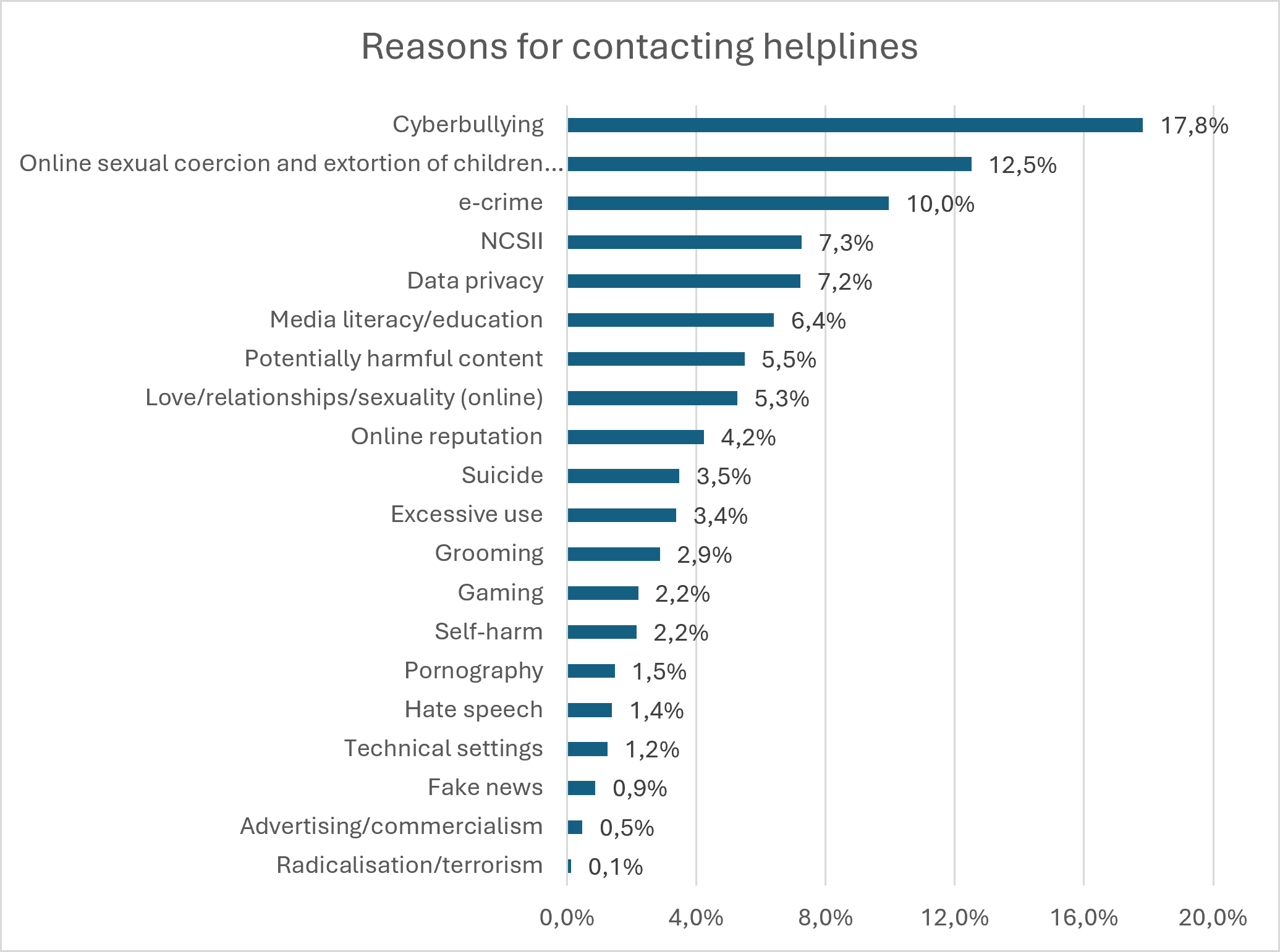
Cyberbullying continues to be the most common reason for contacting a helpline, with 17.8 per cent of all contacts related to this issue in this quarter. A new form of cyberbullying was also reported by some helplines where a child or young person was “put up for sale” on online marketplaces with hurtful, degrading, or dehumanising descriptions.
Sextortion is the second highest reason for contacting a helpline, with 12.5 per cent of contacts during the second quarter. The number of sextortion related calls has also risen by 43.7 per cent compared to the Q1 figure for sextortion. Closely related to these, 7.3 per cent of all calls were about non-consensual sharing of intimate images (NCSII), while 2.9 per cent were about grooming.
e-Crimes, which typically include offences such as phishing, online fraud, malware, and cyber-attacks, were the third most commonly reported issue, with 10 per cent of all calls during this period falling into this category.
Figure1 below shows the reasons for contacting helplines during the second quarter of 2026.
Where possible, helplines are asked to log the platform(s) on which a particular harm took place. Most problems occurred on messaging platforms (46.5 per cent) and social media sites (39.7 per cent), while 9.5 per cent took place within video game environments.
Incidents of violence, coercion, self-harm and sexual abuse were highlighted by various helplines. A research report published by Thorn in May 2026 entitled “Advancing response to sadistic online exploitation in networked youth environments” explores this issue in more detail. The report notes that there are lots of different terms being used to talk about sadistic online exploitation (SOE), which can create a challenge in responding.
| Category | % of contacts |
|---|---|
| Cyberbullying | 17.8% |
| Online sexual coercion and extortion of children (sextortion) | 12.5% |
| e-crime | 10.0% |
| NCSII | 7.3% |
| Data privacy | 7.2% |
| Media literacy/education | 6.4% |
| Potentially harmful content | 5.5% |
| Love/relationships/sexuality (online) | 5.3% |
| Online reputation | 4.2% |
| Suicide | 3.5% |
| Excessive use | 3.4% |
| Grooming | 2.9% |
| Gaming | 2.2% |
| Self-harm | 2.2% |
| Pornography | 1.5% |
| Hate speech | 1.4% |
| Technical settings | 1.2% |
| Fake news | 0.9% |
| Advertising/commercialism | 0.5% |
| Radicalisation/terrorism | 0.1% |
Table 1 (above). Main reasons for contacting a helpline in Q2 2026 (April – June 2026)
The infographic below visually represents many of the key points from the second quarter of 2026.
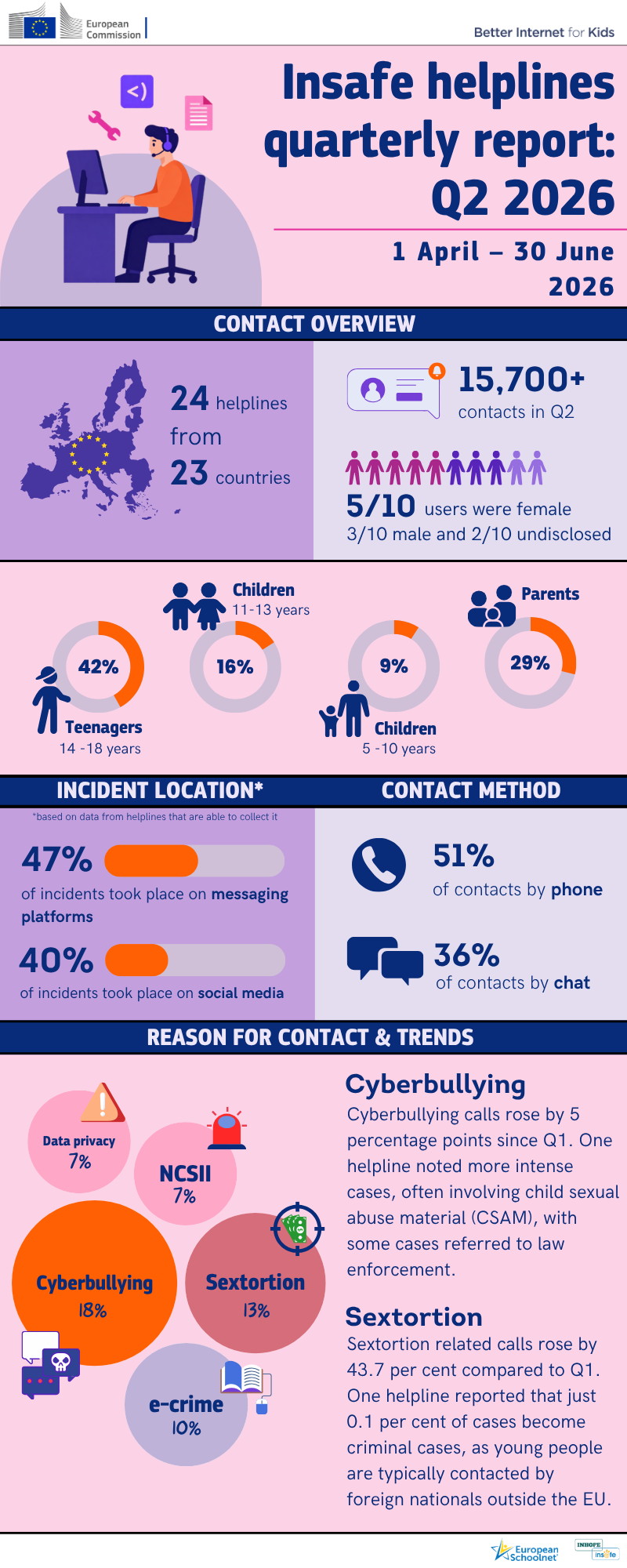
Figure 2 (above). Infographic summarising the main reasons for contacting a helpline in Q2 2026 (April – June 2026). Click the image to see the infographic in full size.
Find out more about country-based helpline services operating as part of the national Safer Internet Centre, and stay up to date on helpline services and trends.


More from this author


The Insafe network of helplines collects data on calls received and analyses it every three months to identify trends and emerging issues. Helpline data from the second quarter of 2026 (April – June) included data from 23 helplines in 22 countries. The data showed that the helplines processed over 15,700 contacts related to online issues during this period.
Children and young people are the primary stakeholder group in terms of helpline contacts, with 66.5 per cent of calls coming from them. Among these, adolescents (14–18-year-olds) make up 42.1 per cent, older children (11–13-year-olds) 15.6 per cent, and younger children (5–10-year-olds) 8.8 per cent. Parents are the second-largest stakeholder group to contact helplines, accounting for 28.9 per cent. Approximately half of helpline contacts (50.5 per cent) were made by telephone, while slightly over a third (35.6 per cent) were made using chat facilities.
Cyberbullying continues to be the most common reason for contacting a helpline, with 17.8 per cent of all contacts related to this issue in this quarter. A new form of cyberbullying was also reported by some helplines where a child or young person was “put up for sale” on online marketplaces with hurtful, degrading, or dehumanising descriptions.
Sextortion is the second highest reason for contacting a helpline, with 12.5 per cent of contacts during the second quarter. The number of sextortion related calls has also risen by 43.7 per cent compared to the Q1 figure for sextortion. Closely related to these, 7.3 per cent of all calls were about non-consensual sharing of intimate images (NCSII), while 2.9 per cent were about grooming.
e-Crimes, which typically include offences such as phishing, online fraud, malware, and cyber-attacks, were the third most commonly reported issue, with 10 per cent of all calls during this period falling into this category.
Figure1 below shows the reasons for contacting helplines during the second quarter of 2026.
Where possible, helplines are asked to log the platform(s) on which a particular harm took place. Most problems occurred on messaging platforms (46.5 per cent) and social media sites (39.7 per cent), while 9.5 per cent took place within video game environments.
Incidents of violence, coercion, self-harm and sexual abuse were highlighted by various helplines. A research report published by Thorn in May 2026 entitled “Advancing response to sadistic online exploitation in networked youth environments” explores this issue in more detail. The report notes that there are lots of different terms being used to talk about sadistic online exploitation (SOE), which can create a challenge in responding.
| Category | % of contacts |
|---|---|
| Cyberbullying | 17.8% |
| Online sexual coercion and extortion of children (sextortion) | 12.5% |
| e-crime | 10.0% |
| NCSII | 7.3% |
| Data privacy | 7.2% |
| Media literacy/education | 6.4% |
| Potentially harmful content | 5.5% |
| Love/relationships/sexuality (online) | 5.3% |
| Online reputation | 4.2% |
| Suicide | 3.5% |
| Excessive use | 3.4% |
| Grooming | 2.9% |
| Gaming | 2.2% |
| Self-harm | 2.2% |
| Pornography | 1.5% |
| Hate speech | 1.4% |
| Technical settings | 1.2% |
| Fake news | 0.9% |
| Advertising/commercialism | 0.5% |
| Radicalisation/terrorism | 0.1% |
Table 1 (above). Main reasons for contacting a helpline in Q2 2026 (April – June 2026)
The infographic below visually represents many of the key points from the second quarter of 2026.
Figure 2 (above). Infographic summarising the main reasons for contacting a helpline in Q2 2026 (April – June 2026). Click the image to see the infographic in full size.
Find out more about country-based helpline services operating as part of the national Safer Internet Centre, and stay up to date on helpline services and trends.
- helplines activity-report cyberbullying
Related content
- < Previous article
- Next article >
More from this author
Related articles


