
Young people now use AI chatbots as a natural part of their digital lives. They ask them questions, look for ideas, generate texts or seek guidance. At the same time, these systems can often feel surprisingly personal. This is the focus of the spring 2026 campaign “AI ≠ Human – Talk to a person” by the Luxembourgish Safer Internet Centre “BEE SECURE”: it raises awareness among young people that AI can be a useful tool, but it has its limits and cannot replace a human being.

AI chatbots have become an integral part of young people’s everyday lives
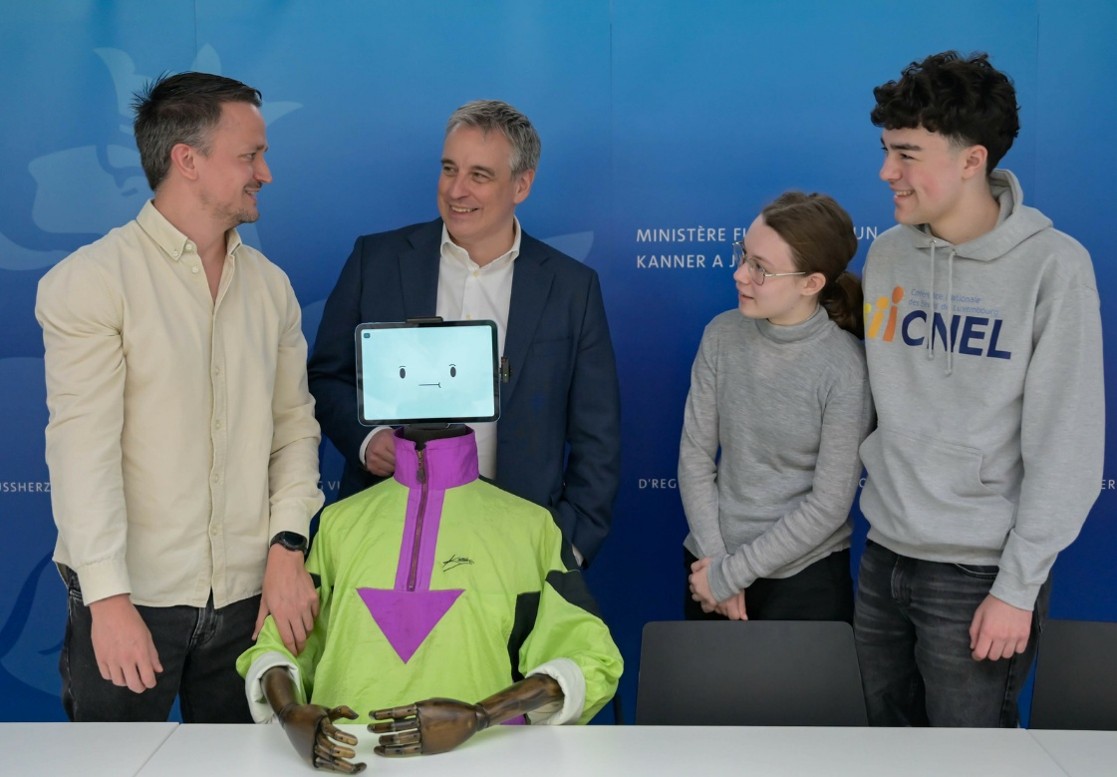
The campaign was presented on 16 April 2026 during a press conference, and took place in spring 2026. It is an initiative of the Ministry of Education, Children and Youth, in collaboration with BEE SECURE, the Psycho-Social and School Support Centre CePAS and the Luxembourgish Student association CNEL.
The aim of the campaign was to raise awareness among young people and their network about a more critical and conscious use of AI chatbots.
The campaign was based on findings from the BEE SECURE Radar 2026. These showed how strongly chatbots had already become part of their everyday life: 96 per cent of 12-to-16-year-olds, and 97 per cent of 17-to-30-year-olds stated they had already used AI tools. Around a quarter stated using them daily.
In addition to practical uses, such as searching for information or helping with writing, another aspect became visible: the conversational style of chatbots can easily create the illusion of a real relationship.
When AI feels like someone you are talking to
17 per cent of young people perceived AI as a kind of friend, 20 per cent used it to feel less alone, and 5 per cent felt that it could replace time spent with other (real) people. Around half used chatbots at least occasionally for personal advice, while around a quarter talked to them about topics they would not share with other people.
These findings show why differentiated awareness-raising was important. The campaign therefore made clear that a chatbot can generate answers and appear available, but it cannot replace real empathy, human closeness, or professional support. Especially when it comes to personal worries, loneliness or uncertainty, talking to a real person remains essential.
Key topics at the centre of the campaign
The campaign focused on five main topics:
- social isolation,
- the substitution of human relationships,
- the decline of real conversations,
- data protection and privacy,
- cognitive outsourcing to AI.
This included, for example, the fact that chatbots can simulate attention and understanding, that sensitive questions may be entrusted to a machine rather than to a trusted person, or that constant AI use can weaken independent thinking and critical reflection. The campaign also highlighted that personal information entered into chatbots is not automatically protected or confidential.
René: the campaign mascot
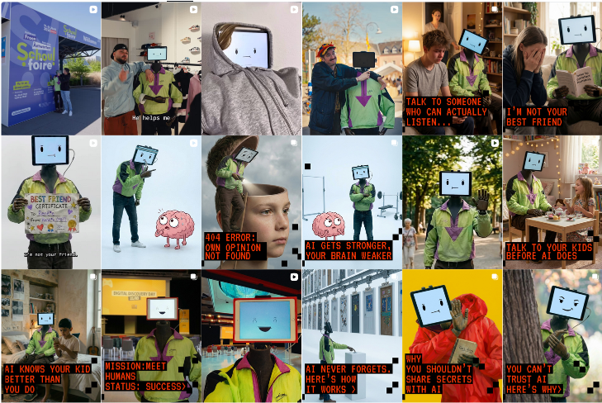
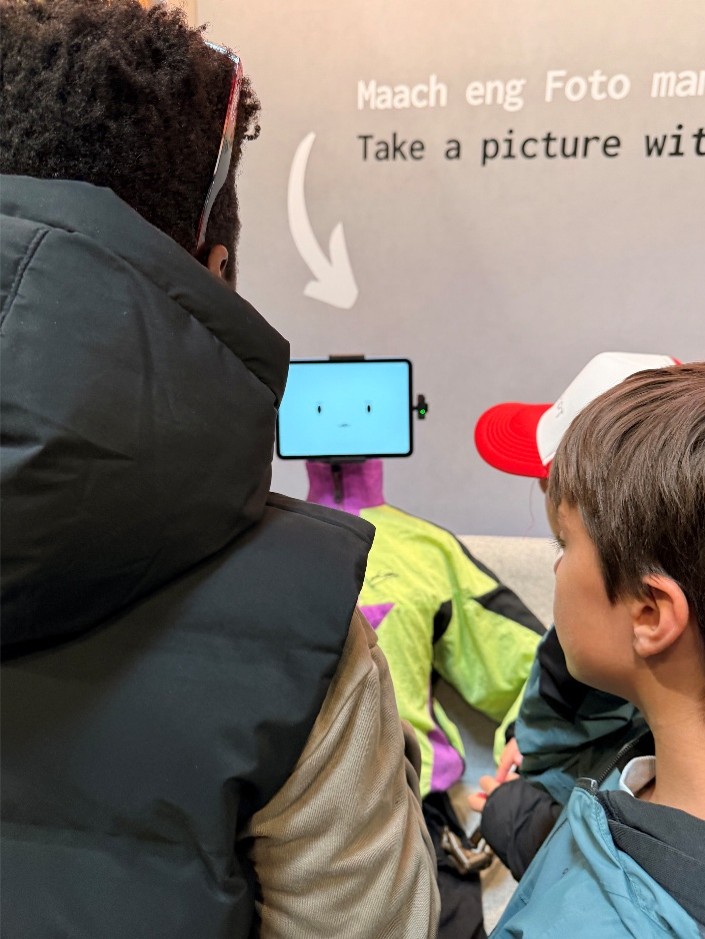
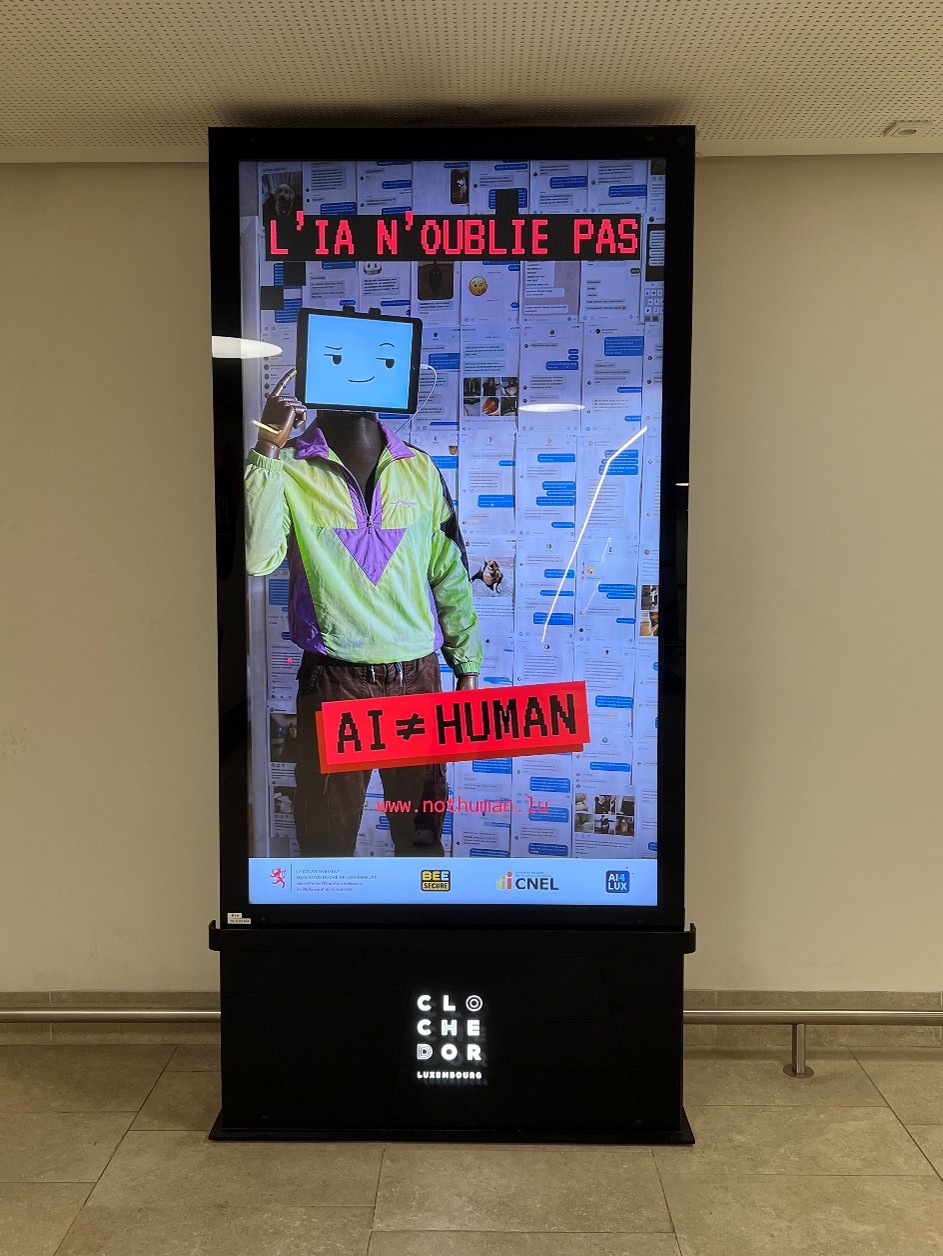
A central element of the campaign was the character “René”. As an interactive character, René made the campaign’s messages more visible and accessible. René appeared both in digital formats and during on-site activities, answered frequently asked questions, provided orientation, and referred people to suitable help and information.
Campaign spread across several channels in spring 2026
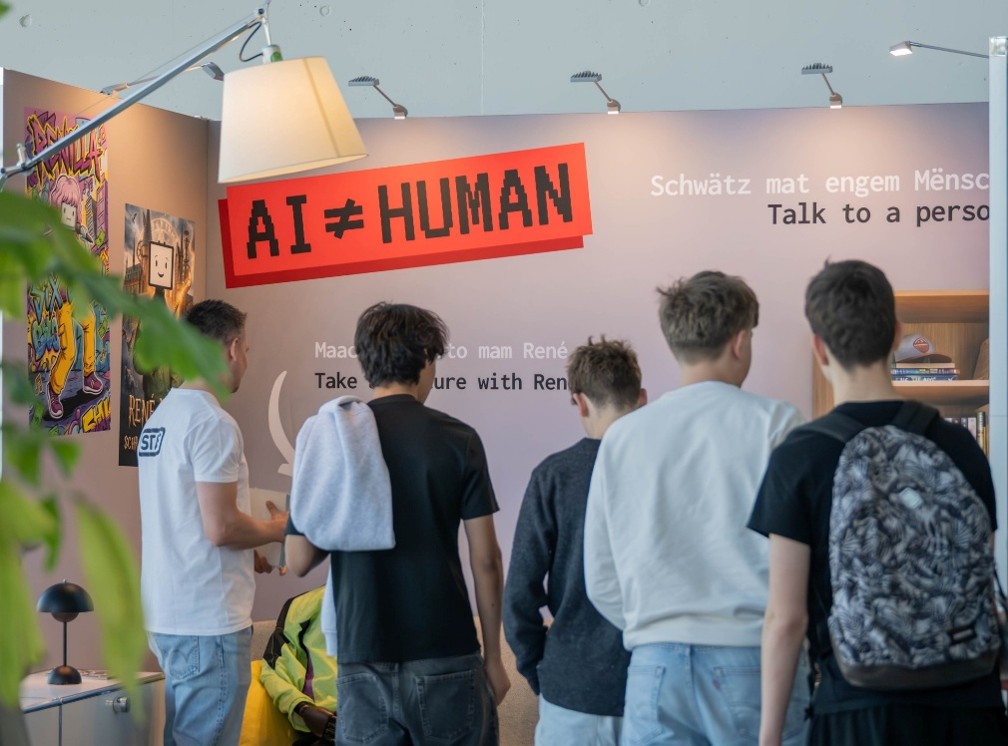
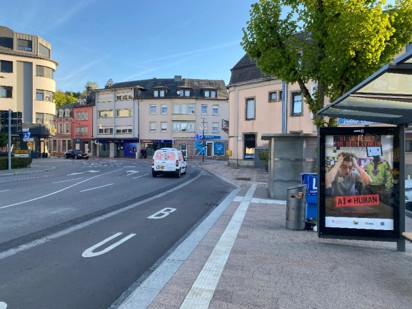
The campaign ran from April to June 2026 across several channels. These included the website nothuman.lu, appearances on Instagram, TikTok and YouTube, BEE SECURE in-person activities in secondary schools and public spaces, as well as collaborations with influencers.
Find more information about the work of the Luxembourgish Safer Internet Centre, including its awareness raising, helpline, hotline, and youth participation services, or find similar information for other Safer Internet Centres throughout Europe.


Young people now use AI chatbots as a natural part of their digital lives. They ask them questions, look for ideas, generate texts or seek guidance. At the same time, these systems can often feel surprisingly personal. This is the focus of the spring 2026 campaign “AI ≠ Human – Talk to a person” by the Luxembourgish Safer Internet Centre “BEE SECURE”: it raises awareness among young people that AI can be a useful tool, but it has its limits and cannot replace a human being.
AI chatbots have become an integral part of young people’s everyday lives
The campaign was presented on 16 April 2026 during a press conference, and took place in spring 2026. It is an initiative of the Ministry of Education, Children and Youth, in collaboration with BEE SECURE, the Psycho-Social and School Support Centre CePAS and the Luxembourgish Student association CNEL.
The aim of the campaign was to raise awareness among young people and their network about a more critical and conscious use of AI chatbots.
The campaign was based on findings from the BEE SECURE Radar 2026. These showed how strongly chatbots had already become part of their everyday life: 96 per cent of 12-to-16-year-olds, and 97 per cent of 17-to-30-year-olds stated they had already used AI tools. Around a quarter stated using them daily.
In addition to practical uses, such as searching for information or helping with writing, another aspect became visible: the conversational style of chatbots can easily create the illusion of a real relationship.
When AI feels like someone you are talking to
17 per cent of young people perceived AI as a kind of friend, 20 per cent used it to feel less alone, and 5 per cent felt that it could replace time spent with other (real) people. Around half used chatbots at least occasionally for personal advice, while around a quarter talked to them about topics they would not share with other people.
These findings show why differentiated awareness-raising was important. The campaign therefore made clear that a chatbot can generate answers and appear available, but it cannot replace real empathy, human closeness, or professional support. Especially when it comes to personal worries, loneliness or uncertainty, talking to a real person remains essential.
Key topics at the centre of the campaign
The campaign focused on five main topics:
- social isolation,
- the substitution of human relationships,
- the decline of real conversations,
- data protection and privacy,
- cognitive outsourcing to AI.
This included, for example, the fact that chatbots can simulate attention and understanding, that sensitive questions may be entrusted to a machine rather than to a trusted person, or that constant AI use can weaken independent thinking and critical reflection. The campaign also highlighted that personal information entered into chatbots is not automatically protected or confidential.
René: the campaign mascot
A central element of the campaign was the character “René”. As an interactive character, René made the campaign’s messages more visible and accessible. René appeared both in digital formats and during on-site activities, answered frequently asked questions, provided orientation, and referred people to suitable help and information.
Campaign spread across several channels in spring 2026
The campaign ran from April to June 2026 across several channels. These included the website nothuman.lu, appearances on Instagram, TikTok and YouTube, BEE SECURE in-person activities in secondary schools and public spaces, as well as collaborations with influencers.
Find more information about the work of the Luxembourgish Safer Internet Centre, including its awareness raising, helpline, hotline, and youth participation services, or find similar information for other Safer Internet Centres throughout Europe.
- artificial intelligence (AI) chatbot
Related content
- < Previous article
- Next article >
- < Previous
- Next >
Related articles


