
About the organisation
The Irish Safer Internet Centre's vision is a positive and inclusive digital world where children are safe and protected.
The Irish SIC is a partnership of four leading organisations (Irish Internet Hotline, ISPCC, National Parents Council and Webwise) with a mission to make the internet a better place for children and young people, under the coordination of the Department of Justice, Home Affairs and Migration.
The consortium was appointed over a decade ago by the European Commission as the Safer Internet Centre in Ireland and is part of the network of Safer Internet Centres in Europe, as well as an integral part of the Insafe-INHOPE network.
The project partners are:
- Irish Internet Hotline: Irish Internet Hotline is the Irish national reporting centre where members of the public can securely, anonymously, and confidentially report concerns in respect of illegal content online, especially child sexual abuse material (CSAM). The removal of child sexual abuse images and videos from the Internet is the core of our work.
- ISPCC: The Irish Society for the Prevention of Cruelty to Children (ISPCC) operates the helpline (Childline), which provides services on a 24/7 basis where children affected by issues encountered on the internet may turn for advice and guidance.
- National Parents Council: The National Parents Council operates the parent/adult helpline, a dedicated helpline for issues related to internet safety, including cyberbullying. The NPC also provides parents with training courses, both online and face-to-face.
- Webwise.ie: This is part of Oide Technology in Education in the Department of Education and Youth. It deals with awareness raising, develops materials and programmes for schools and runs the annual event for Safer Internet Day in Ireland.
Awareness centre
Webwise is the Irish internet safety awareness centre funded by the Department of Education and Youth and co-funded by the European Commission.
Webwise promotes safer, better internet use through awareness-raising and education initiatives targeting teachers, children, young people and parents. Webwise develops and disseminates resources that help teachers integrate digital citizenship and online safety into teaching and learning in their schools. Webwise also provides information, advice, and tools to parents to support their engagement in their children’s online lives.
With the help of the Webwise Youth Advisory Panel, Webwise develops youth-oriented awareness-raising resources and training programmes that promote digital citizenship and address topics such as online wellbeing, cyberbullying and more.
Helpline
The Irish Safer Internet Centre (SIC) has two helplines.
The Irish Society for the Prevention of Cruelty to Children (ISPCC) operates the child helpline on a 24/7/365 basis. Childline by ISPCC is a free, private and confidential service where children and young people can talk about anything via phone, webchat and public message board. Childline.ie allows children the space to explore content on a variety of topics. The ISPCC uses its helpline insights to inform its policy positions on online safety-related matters to advocate for better policies, laws and services.
The NPC was established in 1985. The NPC Helpline is a national confidential service for parents, in existence since 1998. The Bullying Helpline is an extension of the existing NPC Helpline. It is aimed mainly at parents and other adults, operates from 10:00 to 16:00, and is contactable via email: helpline@npc.ie or webchat on www.npc.ie or by phone Tel: 01 8874477.
Opening hours:
Childline by ISPCC is available 24/6/365 via phone (1800 66 66 66) and childline.ie ISPCC is available Monday to Friday 09:00-17:30 via 01 234 2000.
ISPCC’s parent/adult support line is available Monday to Friday 09:00-13:00 via 01 234 2000.
For all queries, email: info@ispcc.ie.
Hotline
Since its inception in 1999, the Irish Internet Hotline has been working to reduce the prevalence of illegal content online while breaking the cycle of abuse and exploitation and contributing to the prevention of repeat victimisation. Irish Internet Hotline’s work specifically relates to illegal online content: online child sexual abuse material (CSAM) activities relating to online child sexual exploitation and intimate image abuse (intimate images and videos shared online without the person’s consent).
You can securely, confidentially and anonymously report suspected illegal content encountered online to the Irish
Internet Hotline. Each report received is assessed by world-class analysts against rigorous standards and by reference to Irish law. When content is classified as contrary to Irish law, action will be taken. You can learn more or submit a report via the website.
The office is open Monday to Friday, 9:00-16:30 Irish standard time; however, the web-reporting form is available 24/7 at www.hotline.ie/report.
Reporting line: +353 86 8116273
Email: general.enquiries@hotline.ie

Youth participation
The Webwise Youth Advisory Panel
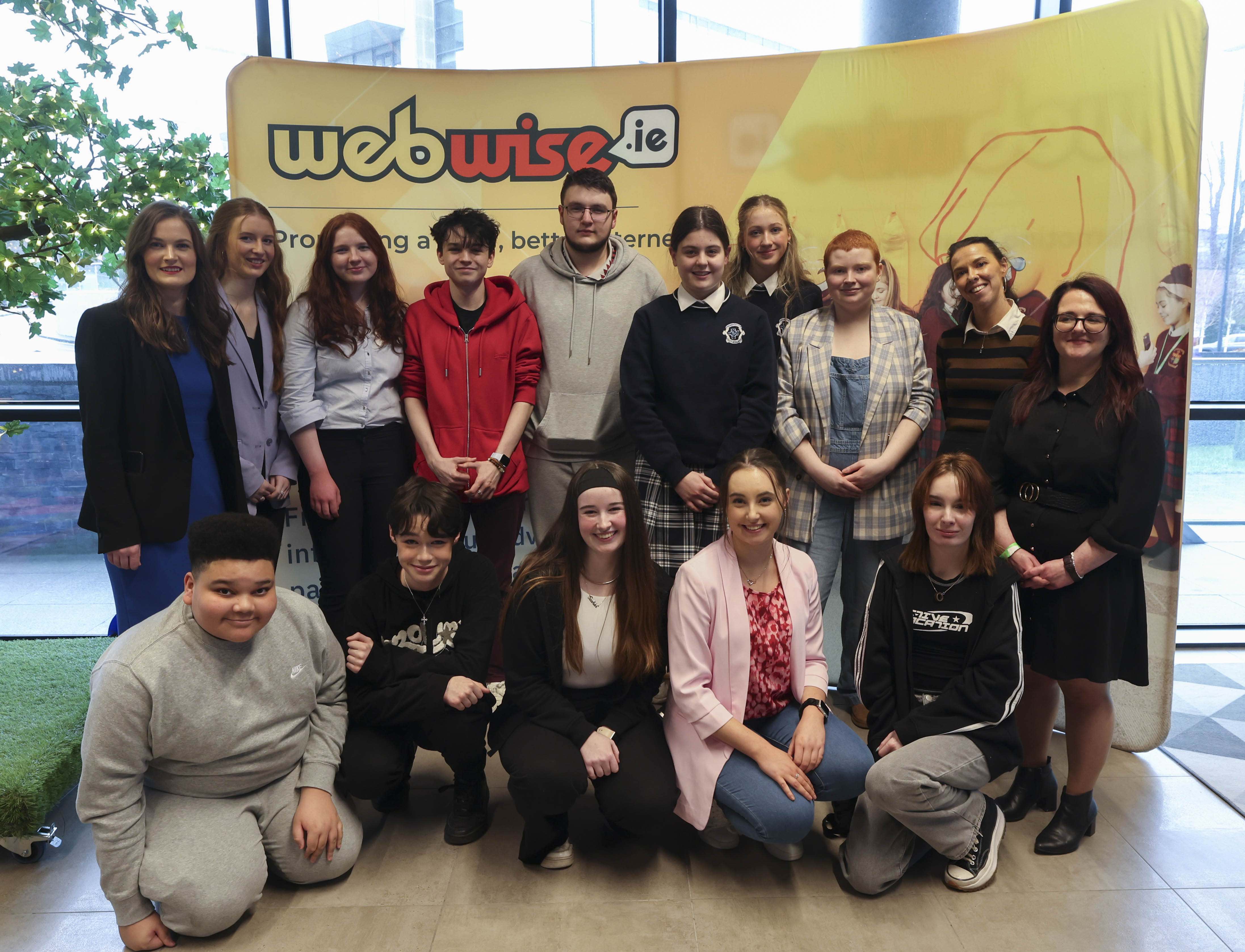
The Webwise Youth Advisory Panel comprises 30 second-level students from across Ireland. It gives teens a platform to share and speak up about their use, priorities, and concerns regarding the internet, social media, and technology. The aim of the Webwise Youth Panel is to give teens the opportunity to share views and opinions at national and European levels on matters such as awareness campaigns, online safety resources and/or legislation, and to give young people a real say on the issues that affect them.
The Webwise Youth Panel offers many benefits and opportunities, including:
- Development of leadership and communication skills.
- Have your voice heard on issues that are important to you.
- Participation in the creation and development of internet safety programmes and resources.
- Participate in global campaigns including Safer Internet Day.
- Panellists will receive training from the Webwise team.
- Opportunity to meet and work with students across Ireland on internet safety campaigns.
- Opportunity to take part in National and European Online Safety events.
Read more about the Webwise Youth Panel here.
Safer Internet Day Ambassador Programme
Webwise runs a peer-led training programme involving teens from across Ireland. The SID Ambassador Programme was designed and led by Webwise Youth Panellists. It encourages and supports post-primary students to address the issue of cyberbullying and other areas in internet safety by leading awareness-raising campaigns in their clubs, schools, and communities. Webwise provides training to the youth ambassadors to empower them to lead safer internet campaigns in their schools. The aim is to make Safer Internet Day a success in communities and schools across Ireland.
Read more about the Safer Internet Day Ambassador Programme here.
How can you get involved?
Children and young people can get involved in the work of the Safer Internet Centre by:
- Joining the Youth Panel
- Participating in the SID Ambassador Training Programme
- Participating in workshops
- Contributing to focus groups and surveys
- Testing resources
Key partners/promoters
The Safer Internet Centre Ireland (SIC IE) has established a broad collaboration with representatives from academic institutions, industry, governmental bodies and law enforcement who meet regularly and exchange expertise. Many of those partners are members of the Irish SIC Advisory Group.
Key partners/supporters:
- Coimisiún na Meán
- Department of Justice, Home Affairs and Migration
- Department of Culture, Communications and Sport
- Department of Education and Youth
- Department of Children, Disability and Equality
- An Garda Síochána
- Brian O’Neill - Emeritus Professor, TU Dublin
- Oide
- Media Literacy Ireland
- DCU Anti-Bullying Centre
- Office of the Data Protection Commissioner
- Ombudsman for Children
- Tusla
The work of the Irish SIC is supported by an Advisory Group made up of members of the Irish SIC, Government Departments and relevant agencies.
Members include:
- Coimisiún na Meán
- Department of Justice, Home Affairs and Migration
- Department of Tourism, Culture, Arts, Gaeltacht, Sport and Media
- Department of Education and Youth
- Department of Children, Disability and Equality
- Department of Enterprise
- An Garda Síochána
- Brian O’Neill - Emeritus Professor, TU Dublin
- Tusla

About the organisation
The Irish Safer Internet Centre's vision is a positive and inclusive digital world where children are safe and protected.
The Irish SIC is a partnership of four leading organisations (Irish Internet Hotline, ISPCC, National Parents Council and Webwise) with a mission to make the internet a better place for children and young people, under the coordination of the Department of Justice, Home Affairs and Migration.
The consortium was appointed over a decade ago by the European Commission as the Safer Internet Centre in Ireland and is part of the network of Safer Internet Centres in Europe, as well as an integral part of the Insafe-INHOPE network.
The project partners are:
- Irish Internet Hotline: Irish Internet Hotline is the Irish national reporting centre where members of the public can securely, anonymously, and confidentially report concerns in respect of illegal content online, especially child sexual abuse material (CSAM). The removal of child sexual abuse images and videos from the Internet is the core of our work.
- ISPCC: The Irish Society for the Prevention of Cruelty to Children (ISPCC) operates the helpline (Childline), which provides services on a 24/7 basis where children affected by issues encountered on the internet may turn for advice and guidance.
- National Parents Council: The National Parents Council operates the parent/adult helpline, a dedicated helpline for issues related to internet safety, including cyberbullying. The NPC also provides parents with training courses, both online and face-to-face.
- Webwise.ie: This is part of Oide Technology in Education in the Department of Education and Youth. It deals with awareness raising, develops materials and programmes for schools and runs the annual event for Safer Internet Day in Ireland.
Awareness centre
Webwise is the Irish internet safety awareness centre funded by the Department of Education and Youth and co-funded by the European Commission.
Webwise promotes safer, better internet use through awareness-raising and education initiatives targeting teachers, children, young people and parents. Webwise develops and disseminates resources that help teachers integrate digital citizenship and online safety into teaching and learning in their schools. Webwise also provides information, advice, and tools to parents to support their engagement in their children’s online lives.
With the help of the Webwise Youth Advisory Panel, Webwise develops youth-oriented awareness-raising resources and training programmes that promote digital citizenship and address topics such as online wellbeing, cyberbullying and more.
Helpline
The Irish Safer Internet Centre (SIC) has two helplines.
The Irish Society for the Prevention of Cruelty to Children (ISPCC) operates the child helpline on a 24/7/365 basis. Childline by ISPCC is a free, private and confidential service where children and young people can talk about anything via phone, webchat and public message board. Childline.ie allows children the space to explore content on a variety of topics. The ISPCC uses its helpline insights to inform its policy positions on online safety-related matters to advocate for better policies, laws and services.
The NPC was established in 1985. The NPC Helpline is a national confidential service for parents, in existence since 1998. The Bullying Helpline is an extension of the existing NPC Helpline. It is aimed mainly at parents and other adults, operates from 10:00 to 16:00, and is contactable via email: helpline@npc.ie or webchat on www.npc.ie or by phone Tel: 01 8874477.
Opening hours:
Childline by ISPCC is available 24/6/365 via phone (1800 66 66 66) and childline.ie ISPCC is available Monday to Friday 09:00-17:30 via 01 234 2000.
ISPCC’s parent/adult support line is available Monday to Friday 09:00-13:00 via 01 234 2000.
For all queries, email: info@ispcc.ie.
Hotline
Since its inception in 1999, the Irish Internet Hotline has been working to reduce the prevalence of illegal content online while breaking the cycle of abuse and exploitation and contributing to the prevention of repeat victimisation. Irish Internet Hotline’s work specifically relates to illegal online content: online child sexual abuse material (CSAM) activities relating to online child sexual exploitation and intimate image abuse (intimate images and videos shared online without the person’s consent).
You can securely, confidentially and anonymously report suspected illegal content encountered online to the Irish
Internet Hotline. Each report received is assessed by world-class analysts against rigorous standards and by reference to Irish law. When content is classified as contrary to Irish law, action will be taken. You can learn more or submit a report via the website.
The office is open Monday to Friday, 9:00-16:30 Irish standard time; however, the web-reporting form is available 24/7 at www.hotline.ie/report.
Reporting line: +353 86 8116273
Email: general.enquiries@hotline.ie
Youth participation
The Webwise Youth Advisory Panel
The Webwise Youth Advisory Panel comprises 30 second-level students from across Ireland. It gives teens a platform to share and speak up about their use, priorities, and concerns regarding the internet, social media, and technology. The aim of the Webwise Youth Panel is to give teens the opportunity to share views and opinions at national and European levels on matters such as awareness campaigns, online safety resources and/or legislation, and to give young people a real say on the issues that affect them.
The Webwise Youth Panel offers many benefits and opportunities, including:
- Development of leadership and communication skills.
- Have your voice heard on issues that are important to you.
- Participation in the creation and development of internet safety programmes and resources.
- Participate in global campaigns including Safer Internet Day.
- Panellists will receive training from the Webwise team.
- Opportunity to meet and work with students across Ireland on internet safety campaigns.
- Opportunity to take part in National and European Online Safety events.
Read more about the Webwise Youth Panel here.
Safer Internet Day Ambassador Programme
Webwise runs a peer-led training programme involving teens from across Ireland. The SID Ambassador Programme was designed and led by Webwise Youth Panellists. It encourages and supports post-primary students to address the issue of cyberbullying and other areas in internet safety by leading awareness-raising campaigns in their clubs, schools, and communities. Webwise provides training to the youth ambassadors to empower them to lead safer internet campaigns in their schools. The aim is to make Safer Internet Day a success in communities and schools across Ireland.
Read more about the Safer Internet Day Ambassador Programme here.
How can you get involved?
Children and young people can get involved in the work of the Safer Internet Centre by:
- Joining the Youth Panel
- Participating in the SID Ambassador Training Programme
- Participating in workshops
- Contributing to focus groups and surveys
- Testing resources
Key partners/promoters
The Safer Internet Centre Ireland (SIC IE) has established a broad collaboration with representatives from academic institutions, industry, governmental bodies and law enforcement who meet regularly and exchange expertise. Many of those partners are members of the Irish SIC Advisory Group.
Key partners/supporters:
- Coimisiún na Meán
- Department of Justice, Home Affairs and Migration
- Department of Culture, Communications and Sport
- Department of Education and Youth
- Department of Children, Disability and Equality
- An Garda Síochána
- Brian O’Neill - Emeritus Professor, TU Dublin
- Oide
- Media Literacy Ireland
- DCU Anti-Bullying Centre
- Office of the Data Protection Commissioner
- Ombudsman for Children
- Tusla
The work of the Irish SIC is supported by an Advisory Group made up of members of the Irish SIC, Government Departments and relevant agencies.
Members include:
- Coimisiún na Meán
- Department of Justice, Home Affairs and Migration
- Department of Tourism, Culture, Arts, Gaeltacht, Sport and Media
- Department of Education and Youth
- Department of Children, Disability and Equality
- Department of Enterprise
- An Garda Síochána
- Brian O’Neill - Emeritus Professor, TU Dublin
- Tusla
- < Previous country profile
- Next country profile >
- < Previous country
- Next country >
Related news and resources


