
On Tuesday, 22 September 2026, three BIK Youth Ambassadors from Belgium, Cyprus and Portugal travelled to Brussels to take part in a Youth Policy Dialogue on cyberbullying and the protection of minors online. Organised by the European Commission, the dialogue brought around 20 young people together with Executive Vice-President Henna Virkkunen and Commissioner Glenn Micallef.

As Kelyan explained:
The youth policy dialogue on cyberbullying and the protection of minors online […] came at a special moment. Just five days earlier, the European Commission had proposed the EU KIDS Act. For those of us who have been part of these conversations for years, it felt like the result of a long collective effort, and proof that what young people say in these rooms really does find its way into policy.
Dimitris left the event feeling optimistic about the direction of the proposed EU KIDS Act:
The most promising aspect of the EU KIDS Act is its avoidance of a blanket ban on social media for minors. Let’s be honest with ourselves: a ban is neither a destination nor a real solution. Anyone who wants to bypass an age wall will inevitably find a way, and trying to police that behaviour is mostly pointless. What we actually need isn't prohibition, but a controlled, safe, and guided entry into the digital space.
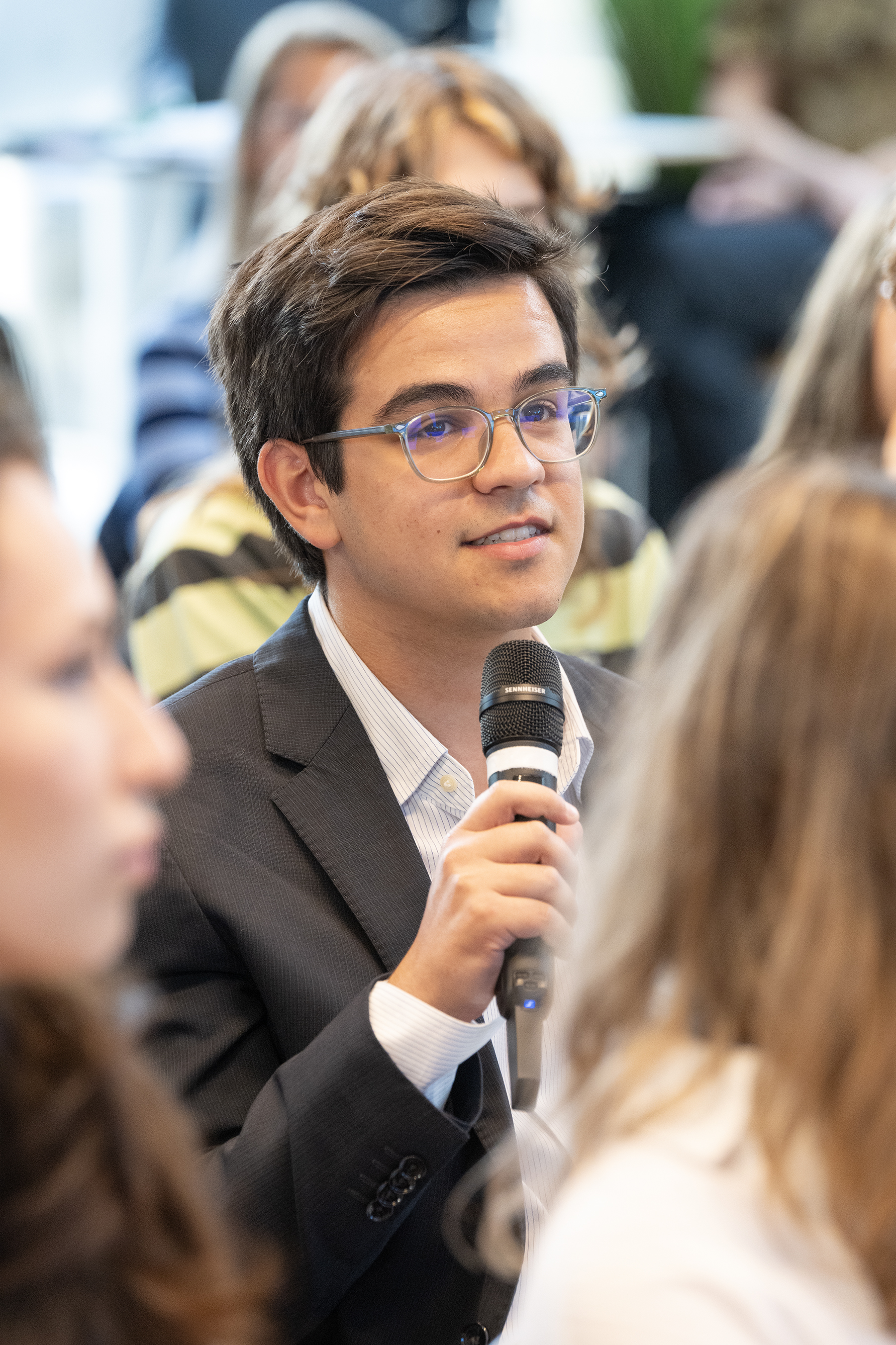
Photos: All rights reserved by DigitalEU
For Kelyan, what stood out most was the quality of the conversation:
Young people are often invited to describe what goes wrong online, and those testimonies matter. This time, the discussion looked firmly ahead. Everything that was said felt relevant, well thought through and, above all, ambitious. People weren't only talking about the harm they had seen or lived through; they were talking about the kind of internet they want to grow up in, and what it would take to get there. It sounded less like a list of problems and more like a vision.
Sofia was equally struck by the overall atmosphere in the room:
I have to admit to being surprised by the level of responsibility and cordiality with which the matter was handled by everybody in the room. It was quite clear that, in that discussion group, online dangers were not so different from those experienced offline, and that they require equal or greater consideration due to their invisibility and potential lifelong harm.
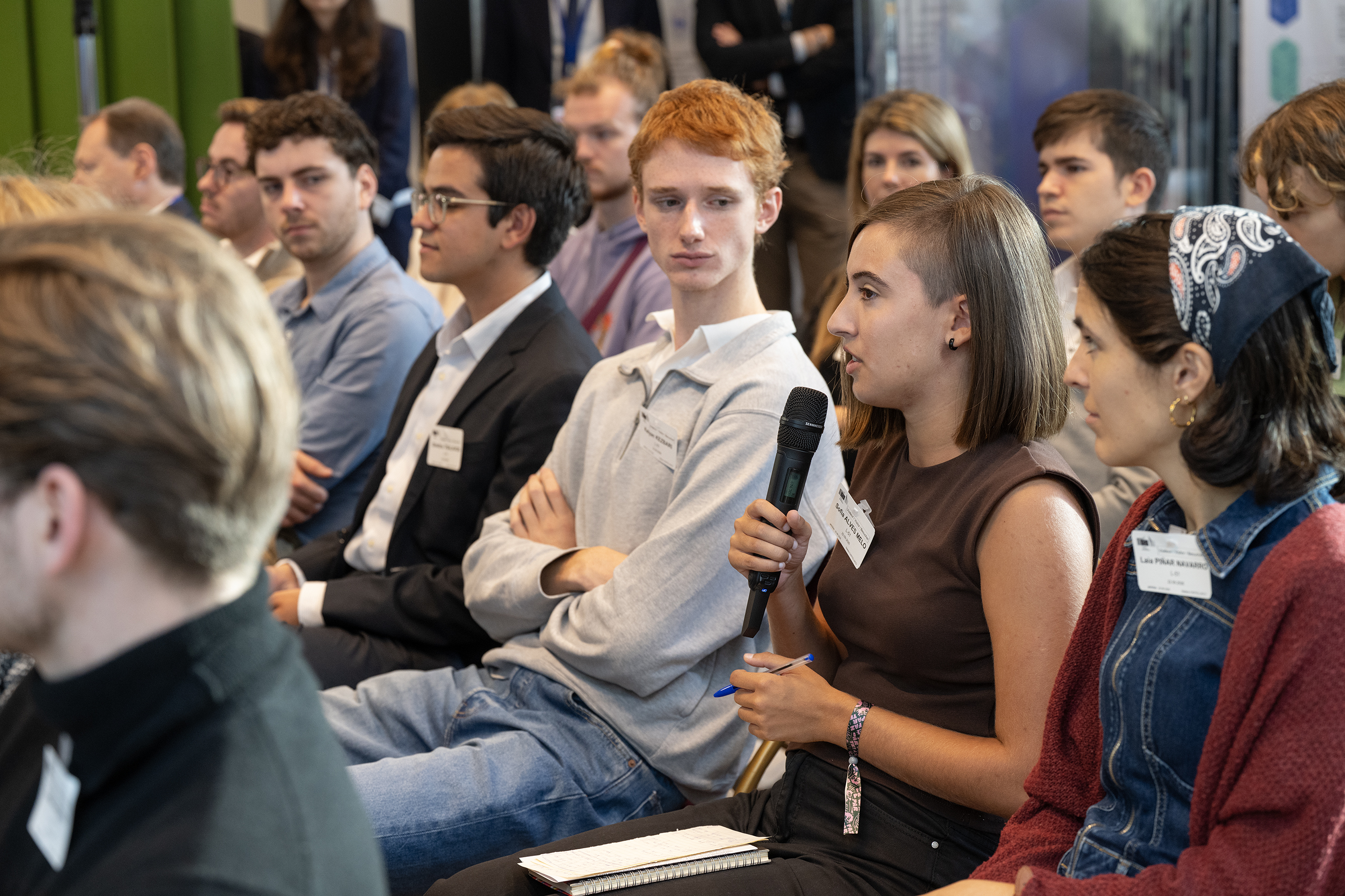
Photos: All rights reserved by DigitalEU
The discussion also covered the EU age verification solution, which lets people prove they meet age requirements without giving away personal data. Dimitris welcomed the technology but urged caution:
While I recognise that privacy-preserving technology like this is a necessary tool, I made a point during our dialogue that we must proceed with this very carefully. Balancing the essential need for child protection with the fundamental right to user privacy is a very fine line, and crossing it could have unintended consequences. This is especially true in a world where foreign actors and external threats are actively seeking to exploit digital vulnerabilities.
We'll leave the final word to Sofia:
It reminds us that, across all borders, political ideologies and ways of seeing the world, when united for a good cause, a lot can change and improve for the better and that everybody is welcome to participate in that transition! Even the younger ones like me are not left out or excluded from having a say!
Learn more about the Youth Policy Dialogues.
Learn more about the BIK Youth programme.


On Tuesday, 22 September 2026, three BIK Youth Ambassadors from Belgium, Cyprus and Portugal travelled to Brussels to take part in a Youth Policy Dialogue on cyberbullying and the protection of minors online. Organised by the European Commission, the dialogue brought around 20 young people together with Executive Vice-President Henna Virkkunen and Commissioner Glenn Micallef.
As Kelyan explained:
The youth policy dialogue on cyberbullying and the protection of minors online […] came at a special moment. Just five days earlier, the European Commission had proposed the EU KIDS Act. For those of us who have been part of these conversations for years, it felt like the result of a long collective effort, and proof that what young people say in these rooms really does find its way into policy.
Dimitris left the event feeling optimistic about the direction of the proposed EU KIDS Act:
The most promising aspect of the EU KIDS Act is its avoidance of a blanket ban on social media for minors. Let’s be honest with ourselves: a ban is neither a destination nor a real solution. Anyone who wants to bypass an age wall will inevitably find a way, and trying to police that behaviour is mostly pointless. What we actually need isn't prohibition, but a controlled, safe, and guided entry into the digital space.
Photos: All rights reserved by DigitalEU
For Kelyan, what stood out most was the quality of the conversation:
Young people are often invited to describe what goes wrong online, and those testimonies matter. This time, the discussion looked firmly ahead. Everything that was said felt relevant, well thought through and, above all, ambitious. People weren't only talking about the harm they had seen or lived through; they were talking about the kind of internet they want to grow up in, and what it would take to get there. It sounded less like a list of problems and more like a vision.
Sofia was equally struck by the overall atmosphere in the room:
I have to admit to being surprised by the level of responsibility and cordiality with which the matter was handled by everybody in the room. It was quite clear that, in that discussion group, online dangers were not so different from those experienced offline, and that they require equal or greater consideration due to their invisibility and potential lifelong harm.
Photos: All rights reserved by DigitalEU
The discussion also covered the EU age verification solution, which lets people prove they meet age requirements without giving away personal data. Dimitris welcomed the technology but urged caution:
While I recognise that privacy-preserving technology like this is a necessary tool, I made a point during our dialogue that we must proceed with this very carefully. Balancing the essential need for child protection with the fundamental right to user privacy is a very fine line, and crossing it could have unintended consequences. This is especially true in a world where foreign actors and external threats are actively seeking to exploit digital vulnerabilities.
We'll leave the final word to Sofia:
It reminds us that, across all borders, political ideologies and ways of seeing the world, when united for a good cause, a lot can change and improve for the better and that everybody is welcome to participate in that transition! Even the younger ones like me are not left out or excluded from having a say!
Learn more about the Youth Policy Dialogues.
Learn more about the BIK Youth programme.
- cyberbullying age assurance childs-privacy EU Kids Online
Related content
- < Previous article
- Next article >
Related articles


