
The meeting, which took place in April 2026, brought together experts from the Safer Internet Centres of Finland, Sweden, Norway, Denmark, and Iceland.

The Nordic Safer Internet Centres network came together at the end of April at the Helsinki Central Library Oodi. This was the third meeting of its kind, with the Finnish Safer Internet Centre serving as host this time around. Previous meetings were organised by the Danish Safer Internet Centre in 2025, and the Swedish Safer Internet Centre in 2024. The goal of this meeting was to share current trends and strengthen cooperation on topics related to internet safety.
Presentations on the Digital Services Act, cyberbullying, and sexual violence
The event was opened by Jarmo Riikonen, a representative of the Finnish Transport and Communications Agency Traficom, who spoke about current matters relating to the EU Digital Services Act (DSA) from the perspective of the supervisory authority. All Safer Internet Centres have a mandate to raise awareness of the DSA in their respective countries and to assist in its implementation, particularly regarding provisions related to the protection of minors.
The meeting also featured presentations from the organisations that are part of the Finnish Safer Internet Centre: the Mannerheim League for Child Welfare (MLL) addressed cyberbullying and presented the key findings of its reportYoung people and cyberbullying 2025. The Finnish Arts and Culture Agency (Kuvi) continued the theme by opening a discussion on the European Commission’s Action plan against cyberbullying, which was launched in February of 2026. Save the Children Finland presented its own recent study: It happens all the time – Children aged 11–17 and their experiences of online sexual violence and sexual messaging between peers. The English version will be published later in spring 2026.
Workshops on various themes
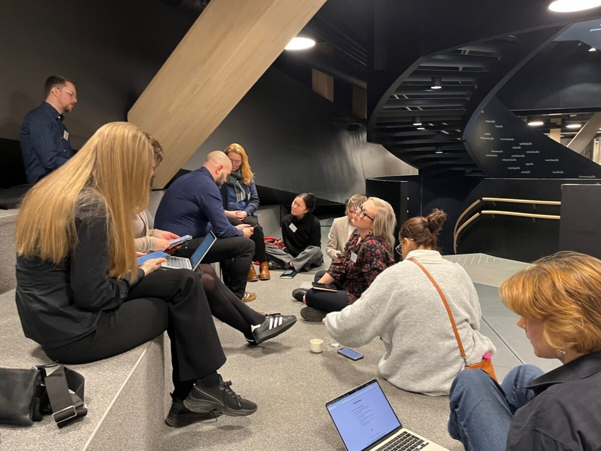
The meeting also included three parallel workshops addressing shared topics.
The first workshop discussed increasing cooperation among the nordic countries, its possibilities, and the potential for a joint campaign.
The second workshop addressed the countries’ views on restricting children’s use of social media. All countries shared an overview of their current situation. The Nordic countries generally appear to share similar thinking on measures related to social media bans and the challenges involved, such as how to define a particular app or platform as social media. The discussion reached a consensus that, rather than imposing an outright ban, restrictions should focus on platforms’ harmful features, particularly dark patterns such as addictive algorithms, disguised ads, missing content reporting tools, and harmful default settings.
The third workshop focused on reaching and engaging young people. Finnish examples included MLL’s YouthNet (Nuortennetti) and Save the Children’s experience with the children’s steering group in the CSAPE project. Other countries shared their own experiences with youth panels as part of their project activities. We learned that young people are involved in projects in many different ways. Some projects work with a settled group of young people on an ongoing basis, while others see more frequent turnover of participants. Some activities are entirely anonymous, while in other cases the young people are known more personally. Collaboration with youth organisations and experts varies, though a contact person can often be found easily when needed. A common thread across countries was that reaching young people is sometimes experienced as challenging, particularly when it comes to reaching vulnerable young people and achieving broad geographical coverage.
The aim going forward is to strengthen cooperation between the Nordic countries. The plan is to also hold a joint Nordic meeting next year in Iceland. The SICs involved look forward to seeing how the collaboration progresses.
This article was originally published on the website of SIC Finland and is here repurposed with permission.
Find more information about the work of the Finnish Safer Internet Centre, including its awareness raising, helpline, hotline, and youth participation services, or find similar information for other Safer Internet Centres throughout Europe.


The meeting, which took place in April 2026, brought together experts from the Safer Internet Centres of Finland, Sweden, Norway, Denmark, and Iceland.
The Nordic Safer Internet Centres network came together at the end of April at the Helsinki Central Library Oodi. This was the third meeting of its kind, with the Finnish Safer Internet Centre serving as host this time around. Previous meetings were organised by the Danish Safer Internet Centre in 2025, and the Swedish Safer Internet Centre in 2024. The goal of this meeting was to share current trends and strengthen cooperation on topics related to internet safety.
Presentations on the Digital Services Act, cyberbullying, and sexual violence
The event was opened by Jarmo Riikonen, a representative of the Finnish Transport and Communications Agency Traficom, who spoke about current matters relating to the EU Digital Services Act (DSA) from the perspective of the supervisory authority. All Safer Internet Centres have a mandate to raise awareness of the DSA in their respective countries and to assist in its implementation, particularly regarding provisions related to the protection of minors.
The meeting also featured presentations from the organisations that are part of the Finnish Safer Internet Centre: the Mannerheim League for Child Welfare (MLL) addressed cyberbullying and presented the key findings of its reportYoung people and cyberbullying 2025. The Finnish Arts and Culture Agency (Kuvi) continued the theme by opening a discussion on the European Commission’s Action plan against cyberbullying, which was launched in February of 2026. Save the Children Finland presented its own recent study: It happens all the time – Children aged 11–17 and their experiences of online sexual violence and sexual messaging between peers. The English version will be published later in spring 2026.
Workshops on various themes
The meeting also included three parallel workshops addressing shared topics.
The first workshop discussed increasing cooperation among the nordic countries, its possibilities, and the potential for a joint campaign.
The second workshop addressed the countries’ views on restricting children’s use of social media. All countries shared an overview of their current situation. The Nordic countries generally appear to share similar thinking on measures related to social media bans and the challenges involved, such as how to define a particular app or platform as social media. The discussion reached a consensus that, rather than imposing an outright ban, restrictions should focus on platforms’ harmful features, particularly dark patterns such as addictive algorithms, disguised ads, missing content reporting tools, and harmful default settings.
The third workshop focused on reaching and engaging young people. Finnish examples included MLL’s YouthNet (Nuortennetti) and Save the Children’s experience with the children’s steering group in the CSAPE project. Other countries shared their own experiences with youth panels as part of their project activities. We learned that young people are involved in projects in many different ways. Some projects work with a settled group of young people on an ongoing basis, while others see more frequent turnover of participants. Some activities are entirely anonymous, while in other cases the young people are known more personally. Collaboration with youth organisations and experts varies, though a contact person can often be found easily when needed. A common thread across countries was that reaching young people is sometimes experienced as challenging, particularly when it comes to reaching vulnerable young people and achieving broad geographical coverage.
The aim going forward is to strengthen cooperation between the Nordic countries. The plan is to also hold a joint Nordic meeting next year in Iceland. The SICs involved look forward to seeing how the collaboration progresses.
This article was originally published on the website of SIC Finland and is here repurposed with permission.
Find more information about the work of the Finnish Safer Internet Centre, including its awareness raising, helpline, hotline, and youth participation services, or find similar information for other Safer Internet Centres throughout Europe.
- Safer Internet Centre (SIC) DSA (Digital Services Act) Insafe
Related content
- < Previous article
- Next article >
- < Previous
- Next >
Related articles


