
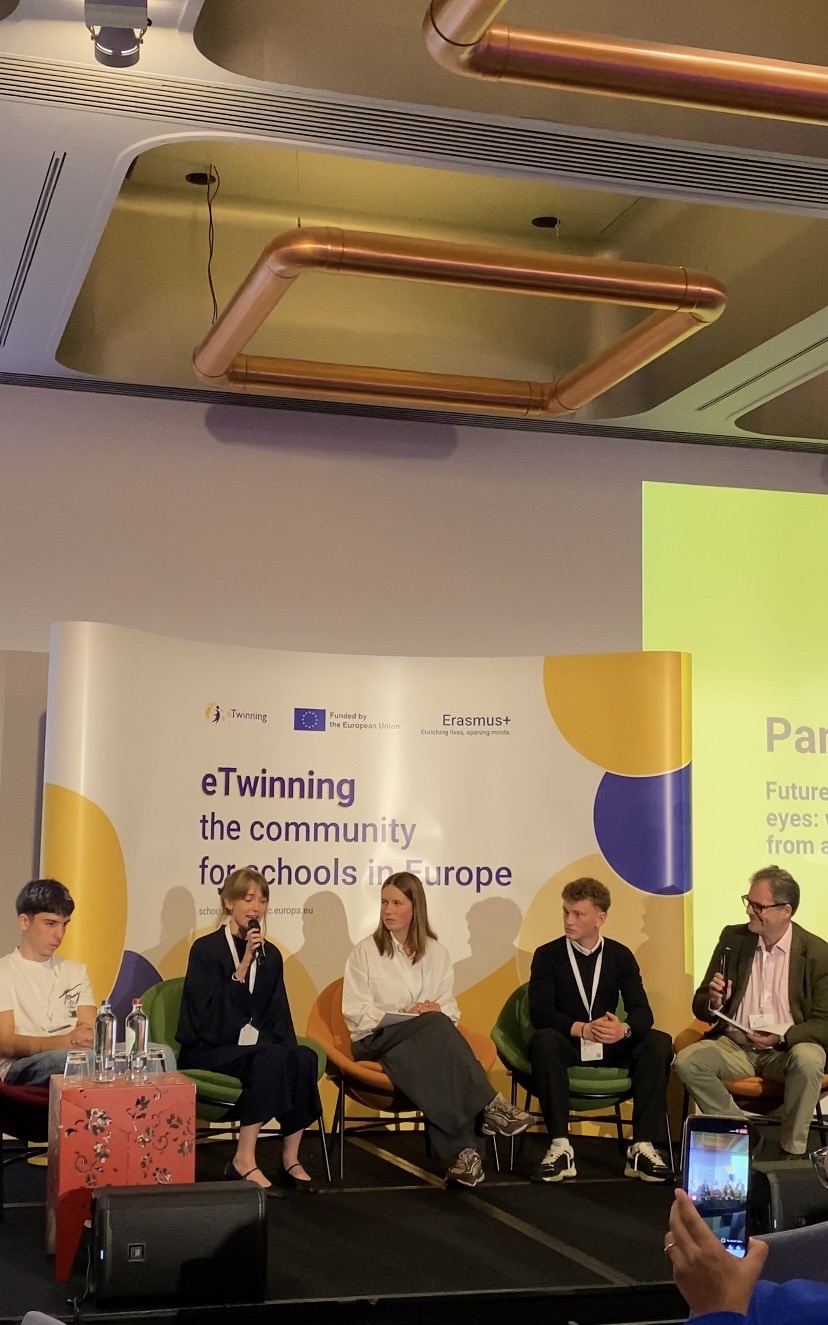
How do we see future-ready schools? On 3 October 2026, the eTwinning annual conference 2026 took place in Brussels. Read more from BIK Youth Ambassador Maja's point of view, who participated in the conference and was part of the students' discussion panel, where young people could reflect on the topic of education in the future.

The room was filled with people who create the everyday educational environment for children and young people, and they were especially interested in what young people expect from the school of the future. It was an amazing opportunity to share our ideas with people who have a direct impact on what school reality can look like. It was also a great space for us, as students, to highlight what is most important to us and to our future.
My three BIK youth ambassador peers from Belgium and I not only explained what our expectations of schools are in terms of learning, but also how we would like to feel in the school environment. This was a very important part for me, as young people spend most of their days at school, and feeling comfortable and seen there can make a huge difference. Having our individual needs recognised can make a huge difference too. Sometimes, young people need someone to help them see that they can achieve many great things. I believe that having somebody believe in us can change our lives and help us grow even more.
Our discussion also touched upon our experiences with participating in programmes that allow us to connect with other young people from different countries. For me, this meant taking part in BIK Youth events and working with fantastic people from across Europe. During the panel, we discussed how initiatives like these can contribute to young people's personal development in the best way possible. Exchanging points of view, practising English, and working creatively together are just some of the benefits we can gain from opportunities like these.
Another highly anticipated and important topic we tackled was technology and the growth of artificial intelligence and its role in learning. We discussed possible restrictions in schools, but mostly focused on education about AI. Now that AI has appeared in our lives, we have to teach young people how to adapt to it and how to use it rationally and responsibly. And education remains paramount. Knowing how to write good prompts, learning how to distinguish AI hallucinations (false or made-up answers), and checking sources were some of the skills that should be included in technologically ready schools.
We also got a chance to reflect for a bit on the EU KIDS Act, which was published recently. It could play a huge role in the online lives of young people. It is an important step forward and makes the dangers children face online more visible. During the panel, we highlighted how important it is not to stop working on this issue and to keep trying to make the digital space a safer place. Young people can face a lot of difficulties online, but they can also benefit greatly from the internet. The internet provides us with many creative tools and is like a second reality where we have to learn how to live. That is why, once again, education is the key, so that young people know how to protect themselves from the dangers of the online world.
Our panel was definitely packed with creative ideas and diverse visions of how to make schools future-ready. I was honoured to participate and share not only my experiences but also ideas on how to make school better for my younger peers. It was truly amazing to see young people included in this dialogue and to have our voices heard on another important topic.
Learn more about the BIK Youth programme.


How do we see future-ready schools? On 3 October 2026, the eTwinning annual conference 2026 took place in Brussels. Read more from BIK Youth Ambassador Maja's point of view, who participated in the conference and was part of the students' discussion panel, where young people could reflect on the topic of education in the future.
The room was filled with people who create the everyday educational environment for children and young people, and they were especially interested in what young people expect from the school of the future. It was an amazing opportunity to share our ideas with people who have a direct impact on what school reality can look like. It was also a great space for us, as students, to highlight what is most important to us and to our future.
My three BIK youth ambassador peers from Belgium and I not only explained what our expectations of schools are in terms of learning, but also how we would like to feel in the school environment. This was a very important part for me, as young people spend most of their days at school, and feeling comfortable and seen there can make a huge difference. Having our individual needs recognised can make a huge difference too. Sometimes, young people need someone to help them see that they can achieve many great things. I believe that having somebody believe in us can change our lives and help us grow even more.
Our discussion also touched upon our experiences with participating in programmes that allow us to connect with other young people from different countries. For me, this meant taking part in BIK Youth events and working with fantastic people from across Europe. During the panel, we discussed how initiatives like these can contribute to young people's personal development in the best way possible. Exchanging points of view, practising English, and working creatively together are just some of the benefits we can gain from opportunities like these.
Another highly anticipated and important topic we tackled was technology and the growth of artificial intelligence and its role in learning. We discussed possible restrictions in schools, but mostly focused on education about AI. Now that AI has appeared in our lives, we have to teach young people how to adapt to it and how to use it rationally and responsibly. And education remains paramount. Knowing how to write good prompts, learning how to distinguish AI hallucinations (false or made-up answers), and checking sources were some of the skills that should be included in technologically ready schools.
We also got a chance to reflect for a bit on the EU KIDS Act, which was published recently. It could play a huge role in the online lives of young people. It is an important step forward and makes the dangers children face online more visible. During the panel, we highlighted how important it is not to stop working on this issue and to keep trying to make the digital space a safer place. Young people can face a lot of difficulties online, but they can also benefit greatly from the internet. The internet provides us with many creative tools and is like a second reality where we have to learn how to live. That is why, once again, education is the key, so that young people know how to protect themselves from the dangers of the online world.
Our panel was definitely packed with creative ideas and diverse visions of how to make schools future-ready. I was honoured to participate and share not only my experiences but also ideas on how to make school better for my younger peers. It was truly amazing to see young people included in this dialogue and to have our voices heard on another important topic.
Learn more about the BIK Youth programme.
- BIK youth artificial intelligence (AI) youth empowerment
Related content
- < Previous article
- Next article >
- < Previous
- Next >
Related articles


